














Angela and Bella's Reunion
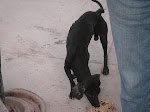
In late 2011, I devoted two of these blogs to Bella, a sick little stray dog trying to live on tourists' handouts near Old Havana's Plaza de las Armas. Angela, an animal loving flight attendant from England, spotted her and tried to feed her. She was pretty pitiful, and probably wouldn't have lasted long if no one had helped her.
Angela was on a two day layover in Cuba, so she couldn't do much, but she got on her computer and found us as soon as she got back home. With a rapid reaction from Nora, Bella was found, given food and medical care, and adopted into the group of dogs who live at the Aniplant headquarters. Soon she was well and happy and not hungry anymore. If it had not been for Angela, Bella would certainly have perished.
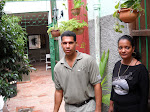
Well, since then Angela had been angling for another trip with a layover in Cuba, and she finally got one. She and her mom got there in early 2012. After the visit, Angela seems as happy as Bella is. Following is Angela's letter describing her reunion with Bella:
Hello,
Mum & I have just got back from a fantastic trip to Havana. I have been dying to email you both but I had no wifi out there.
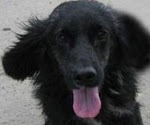
On the first day we went to the Aniplant HQ. There was a bit of a language barrier at first but when we mentioned Nora & Bella we were invited in. We were greeted by a pack of happy waggy-tailed gorgeous dogs. It was amazing and quite emotional. Bella was there, looking gorgeous and so healthy. Alo Presidente came over making a fuss - what a lovely dog he is.
Then Nora arrived - she was exactly how I imagined her. We spoke through a translator - explaining the bags of stuff we had brought; a lot of it had belonged to my mum & dads dog Abbie, my mum had washed them all. We brought loads of toys, collar & leads, dog feeding & water bowls but the dogs favourites were the treats!
It took them 30 seconds to realise what the foreign treats were - each dog was different with them. Alo Presidente was taking his and hiding them which appeared to be a smart move until Bella found his hiding place!!!
We went back the following day. It was lovely how welcome we were made to feel. Also we couldn't believe the difference in the place - they are working so hard for the Aniplant anniversary. Nora was showing us the pictures for the wall.
It was quite emotional leaving. I was desperate to bring Bella home again but it was different leaving her this time as I know she is very happy where she is with her pack of friends and she is getting so much love there.
Also we noticed a huge difference in the stray dogs on the street in just 16 months. Last time we saw one dog on a lead - this time we saw 20+. The things that did upset us though were the thin horses standing most of the time without water and on one main street were people selling extremely young puppies in small cages and birds. I noted the street this was happening on but I don't suppose anything can be done about that?
I have loads of photos & videos to email but I haven't uploaded them yet. I just wanted to email and say a huge thank you again for Bella or 'Belia' as she is known there! And to say how lovely Nora and the rest of the people out there, not forgetting the four legged friends. We can't wait to go back!
Best wishes,
Angela
Les' note: No blog next week—I'm going to Cuba to take part in Aniplant's 25th anniversary celebration on March 4, 2012. More after I return.
Les Inglis
Sunday, February 26, 2012


Saturday, February 18, 2012
Oh Danny Boy, We Loved You So
Oh Danny Boy, We Loved You So
Today is one of those days I'll remember for the rest of my life—not that I want to. We woke a little early to the dogs milling around in our bedroom as usual. But when Charlene prepared to take them downstairs and let them outside, she noticed Danny was still laying in one of his usual spots. She raised her voice to wake him, as he has recently shown some loss of hearing, but to no avail. Danny, our beloved Border Collie had passed away.
We knew it was only a matter of minutes he had been gone as he was still warm and supple. The sad truth gradually enveloped us, and we sat in our living room crying. It was a struggle to get this 60 pound friend down the stairs and into the trunk of my car. He had one more trip to make—to the vet's where his cremation was arranged.
Danny was a few days shy of his thirteenth birthday when he died. Just yesterday, he had been completely normal, and he enthusiastically played catch with me in the back yard—as he did every day of his life with us. At dinnertime last night he attacked his food and polished it off in less than a minute, also completely normal for him.
Danny would be one of the throng of dogs barking at the front door whenever we had visitors. He was the only one of the three who would quiet down on command, and you could observe his herding instincts as he harmlessly nipped at the others until they were quiet too.
We knew how old he was as he had AKC papers—not a source of pride for us. His first owners got him as a puppy, and his medical care came from the vet we shared with them. He was boarded at the vet's office when his master needed surgery more than three years ago. Then he lost his master who died on the operating table, and our vet, on hearing of this situation, showed him to us. It was a great favor to Danny that he did so, as the next day his mistress, who never cared for him, collected him from the vet and left him at the local humane society.
We had talked about Danny the evening of the day we first saw him, and we decided that there was room in our home for a third dog, but he was already gone from the vet's when we called the next morning. We weren't sure which shelter he was in, but we made a few calls and found him right away. We said we wanted him and arranged to pick him up that afternoon. When we got there, he was in a cage in their reception area. He wiggled and wagged and looked at me full of expectation—not sad, but ecstatically happy. He knew right then the rest of his life would be happy.
Thus began a classic tale of love among a dog, a man, and a woman. Every morning he would round the end of my bed and bow as soon as he heard me stirring. To every visitor who sat in our living room, he presented a ball and asked to play catch. I say he trained me to play catch, as I certainly didn't train him. Danny didn't need training for anything, as he always seemed to know what you wanted him to do. Throughout the day he would move from room to room with me, and at mealtimes, he was always lying by my chair.
Yesterday there were eleven souls living in our house, counting the six cats. But today that number was reduced to ten. And it feels so lonely, so still and silent, as I sit here writing this. It was a blessing to have known and loved this special creature. Now, through this blog I hope many others can feel they know him too. Like a dozen others so loved in our family over the years, we thought of him as the best dog ever.
Les Inglis
Today is one of those days I'll remember for the rest of my life—not that I want to. We woke a little early to the dogs milling around in our bedroom as usual. But when Charlene prepared to take them downstairs and let them outside, she noticed Danny was still laying in one of his usual spots. She raised her voice to wake him, as he has recently shown some loss of hearing, but to no avail. Danny, our beloved Border Collie had passed away.
We knew it was only a matter of minutes he had been gone as he was still warm and supple. The sad truth gradually enveloped us, and we sat in our living room crying. It was a struggle to get this 60 pound friend down the stairs and into the trunk of my car. He had one more trip to make—to the vet's where his cremation was arranged.
Danny was a few days shy of his thirteenth birthday when he died. Just yesterday, he had been completely normal, and he enthusiastically played catch with me in the back yard—as he did every day of his life with us. At dinnertime last night he attacked his food and polished it off in less than a minute, also completely normal for him.
Danny would be one of the throng of dogs barking at the front door whenever we had visitors. He was the only one of the three who would quiet down on command, and you could observe his herding instincts as he harmlessly nipped at the others until they were quiet too.
We knew how old he was as he had AKC papers—not a source of pride for us. His first owners got him as a puppy, and his medical care came from the vet we shared with them. He was boarded at the vet's office when his master needed surgery more than three years ago. Then he lost his master who died on the operating table, and our vet, on hearing of this situation, showed him to us. It was a great favor to Danny that he did so, as the next day his mistress, who never cared for him, collected him from the vet and left him at the local humane society.
We had talked about Danny the evening of the day we first saw him, and we decided that there was room in our home for a third dog, but he was already gone from the vet's when we called the next morning. We weren't sure which shelter he was in, but we made a few calls and found him right away. We said we wanted him and arranged to pick him up that afternoon. When we got there, he was in a cage in their reception area. He wiggled and wagged and looked at me full of expectation—not sad, but ecstatically happy. He knew right then the rest of his life would be happy.
Thus began a classic tale of love among a dog, a man, and a woman. Every morning he would round the end of my bed and bow as soon as he heard me stirring. To every visitor who sat in our living room, he presented a ball and asked to play catch. I say he trained me to play catch, as I certainly didn't train him. Danny didn't need training for anything, as he always seemed to know what you wanted him to do. Throughout the day he would move from room to room with me, and at mealtimes, he was always lying by my chair.
Yesterday there were eleven souls living in our house, counting the six cats. But today that number was reduced to ten. And it feels so lonely, so still and silent, as I sit here writing this. It was a blessing to have known and loved this special creature. Now, through this blog I hope many others can feel they know him too. Like a dozen others so loved in our family over the years, we thought of him as the best dog ever.
Les Inglis
Friday, February 10, 2012
Voodoo Killer
VooDoo Killer
In Puerto Rico and some nearby places, a nocturnal predator lurks in the mountains and descends into the nighttime darkness to kill and consume small farm animals like goats, chickens and sheep. Other places near Puerto Rico with reported sightings of this beast include Dominican Republic, Cuba, Bahamas, Florida, and Texas.
This menace is the subject of many drawings and a few photographs, but what pictures exist show scary looking things. Some look like lizards, and others seem more like hairless dogs with very large teeth. A few are flying creatures.
As most of the sightings of this animal have been in Spanish speaking lands, it is not surprising it has attracted a Spanish name. Farmers call it "el chupacabras," a composite Spanish word meaning "sucker" (chupra) of "goats" (cabras) as its victims, often goats, are usually found drained of blood. The name gives rise to the idea the animal is a vampire living on the blood of other animals. Go into a bar in the Dominican Republic, and ask for a chupacabra, and you might get a drink made from tequila and pepper sauce.
If you talk with the campesinos (farmers) in the islands, el chupracabras is not a joke. It is lost income in a place where wealth is more likely measured by the number of animals you own than by the money in your pocket. Any farmer who has come upon a dead goat in one of his pens will testify el chupracabras exists and prowls the farmlands to the detriment of his herds. But you won't find its name in any textbook on animal husbandry or any natural history museum or in any zoo.
So, are we talking about another unicorn or centaur? Is the chupracabra really up there in the mountains or only up there in our imaginations. It's just so easy to dream up an explanation for a loss of valuable property, and humans seem to have a tendency to spread and magnify and mythologize that which we can't otherwise explain, so el chupracabras could be just a figment of many farmers' imaginations.
But then again…
Les Inglis
In Puerto Rico and some nearby places, a nocturnal predator lurks in the mountains and descends into the nighttime darkness to kill and consume small farm animals like goats, chickens and sheep. Other places near Puerto Rico with reported sightings of this beast include Dominican Republic, Cuba, Bahamas, Florida, and Texas.
This menace is the subject of many drawings and a few photographs, but what pictures exist show scary looking things. Some look like lizards, and others seem more like hairless dogs with very large teeth. A few are flying creatures.
As most of the sightings of this animal have been in Spanish speaking lands, it is not surprising it has attracted a Spanish name. Farmers call it "el chupacabras," a composite Spanish word meaning "sucker" (chupra) of "goats" (cabras) as its victims, often goats, are usually found drained of blood. The name gives rise to the idea the animal is a vampire living on the blood of other animals. Go into a bar in the Dominican Republic, and ask for a chupacabra, and you might get a drink made from tequila and pepper sauce.
If you talk with the campesinos (farmers) in the islands, el chupracabras is not a joke. It is lost income in a place where wealth is more likely measured by the number of animals you own than by the money in your pocket. Any farmer who has come upon a dead goat in one of his pens will testify el chupracabras exists and prowls the farmlands to the detriment of his herds. But you won't find its name in any textbook on animal husbandry or any natural history museum or in any zoo.
So, are we talking about another unicorn or centaur? Is the chupracabra really up there in the mountains or only up there in our imaginations. It's just so easy to dream up an explanation for a loss of valuable property, and humans seem to have a tendency to spread and magnify and mythologize that which we can't otherwise explain, so el chupracabras could be just a figment of many farmers' imaginations.
But then again…
Les Inglis
Thursday, February 2, 2012
Time Capsule
Time Capsule
In 2006, while staying at Havana's Hotel Nacional, I met an interesting man named Dr. David Guggenheim. David is a marine researcher. He studies marine life including corals in the seas around Cuba as part of his duties as the Director of The Cuban Marine Research and Conservation Program of The Ocean Foundation.
David and I had a few conversations about his work in Cuba, and his insights helped shape my ideas on the unique opportunity Cuba has to make a real contribution to marine science in particular and to natural conservation in general.
David pointed out Cuba is like a time capsule sealed away inside of the cornerstone of an old building. Time capsules contain little bits of our lives at the time the building construction begins. Presumably, in 50 or 100 years, when the capsule is opened future people can see tangible tokens of the way life was way back when.
David's comments were aimed at explaining the state of the natural environment of Cuba and the seas around it. For 50 years or more, Cuba has been somewhat sealed off from the rest of the world in many ways. In particular, much of the rest of the world has spent the last 50+ years in a hell-bent race for development and industrialization, but not Cuba, where much of the environment is like it was in 1959.
You could say that now Cuba is coming into the modern world. Modern hotels are springing up on the beaches, and even this week we heard of a huge Spanish oil rig beginning to drill in the Florida Straits just 70 miles from Key West. But David points out tht much of Cuba's natural treasures are still there to be seen. Protecting them should be an obligation for Cuba and for nature lovers everywhere.
Actually, within the Cuban government is an appreciation and willingness to protect the country's natural treasures. David himself told me how difficult it is for him to ger licenses and permission to enter vast protected undersea locations. He also talked about how there are many natural preserves like the Zapata swamp and Cayo Coco and Las Terrazas, a UNESCO Biosphere Reserve. But, there remain many more valuable natural areas which could become natural preserves. Now is the time to act while the land values are low and development has not ruined them.
I recently saw a one hour TV show on David's work showing some of Cuba's natural wonders including a rare type of coral that still grows in no other part of the world. The show just renewed my hopes that this natural time capsule—a place with little development during a period of 50 years of helter-skelter development in the rest of the world—will somehow be saved. At least we have some hope that it can happen.
The plants and animals of Cuba are so precious, and the island has a staggering variety from Cuban Crocodiles to Ebony trees. Wouldn't it be great to be able to visit them alive in their natural settings?
Les Inglis
In 2006, while staying at Havana's Hotel Nacional, I met an interesting man named Dr. David Guggenheim. David is a marine researcher. He studies marine life including corals in the seas around Cuba as part of his duties as the Director of The Cuban Marine Research and Conservation Program of The Ocean Foundation.
David and I had a few conversations about his work in Cuba, and his insights helped shape my ideas on the unique opportunity Cuba has to make a real contribution to marine science in particular and to natural conservation in general.
David pointed out Cuba is like a time capsule sealed away inside of the cornerstone of an old building. Time capsules contain little bits of our lives at the time the building construction begins. Presumably, in 50 or 100 years, when the capsule is opened future people can see tangible tokens of the way life was way back when.
David's comments were aimed at explaining the state of the natural environment of Cuba and the seas around it. For 50 years or more, Cuba has been somewhat sealed off from the rest of the world in many ways. In particular, much of the rest of the world has spent the last 50+ years in a hell-bent race for development and industrialization, but not Cuba, where much of the environment is like it was in 1959.
You could say that now Cuba is coming into the modern world. Modern hotels are springing up on the beaches, and even this week we heard of a huge Spanish oil rig beginning to drill in the Florida Straits just 70 miles from Key West. But David points out tht much of Cuba's natural treasures are still there to be seen. Protecting them should be an obligation for Cuba and for nature lovers everywhere.
Actually, within the Cuban government is an appreciation and willingness to protect the country's natural treasures. David himself told me how difficult it is for him to ger licenses and permission to enter vast protected undersea locations. He also talked about how there are many natural preserves like the Zapata swamp and Cayo Coco and Las Terrazas, a UNESCO Biosphere Reserve. But, there remain many more valuable natural areas which could become natural preserves. Now is the time to act while the land values are low and development has not ruined them.
I recently saw a one hour TV show on David's work showing some of Cuba's natural wonders including a rare type of coral that still grows in no other part of the world. The show just renewed my hopes that this natural time capsule—a place with little development during a period of 50 years of helter-skelter development in the rest of the world—will somehow be saved. At least we have some hope that it can happen.
The plants and animals of Cuba are so precious, and the island has a staggering variety from Cuban Crocodiles to Ebony trees. Wouldn't it be great to be able to visit them alive in their natural settings?
Les Inglis
Wednesday, January 25, 2012
Project Fidelity
Project Fidelity
Some animal rights people object to making dogs into servants of mankind. Seeing the use of dogs on chores for men as a form of slavery, they speak against seeing-eye dogs, St Bernard rescues in the Alps, or guard dogs—all long time jobs for man's best friend. But now that we know more about the many ways dogs can help us, the question of ethics in making them work for us is even more important to answer. Now dogs can sense the onset of an epileptic seizure, tend to someone with a PTSD episode, sniff out drugs and many other types of contraband. In short, dogs doing chores for a living is a much bigger subject than it was even a few years ago.
I started thinking about this ethical question years ago sitting in the lounge of a cruise ship preparing to float us from Miami and off to some island. Lined up on the dock were rows of passenger luggage and cargo. Men with handsome dogs loosed them on the cargo, and the dogs gave every item on the dock a thoroughgoing olfactory inspection. On detecting the scent of drugs, their training would have them signal their handlers to make a search of the bag or box. Fortunately no drugs were detected in the cargo that day.
OK, those dogs weren't being paid, and paying them would not help them. All they need is food and medical care and human companionship. Dogs will learn to do a huge variety of chores for people only because they have evolved to live in symbiosis with mankind.
Yes, since that day thousands of years ago when wolves found food after overcoming their fear of men as they drew near to the garbage dumps of people, wolves have been evolving into dogs and developing a mutually beneficial relationship with people.
How can putting dogs to work be slavery? Are not all creatures placed here for them to earn a living somehow? By finding ways for them to earn a living, isn't humankind actually helping his canine friends? Of course taking care of them and treating them as dear companions goes without saying, but that is all but assured by the natural affinity between the two species.
Given humane treatment for the dogs, which arises naturally in normal people, training and using a dog for service to humans is not cruel, not unnatural, and not unfair. It's really part of the natural evolution of both species. Thus, for me, I settled an old niggling ethical question that has consumed the thoughts of many animal rights people.
More recently, through our website, I met Davis Hawn, a most unusual man with a consuming interest in service dogs and service dog training.. He was planning his first trip to Cuba and had many questions about taking his service dog, Booster, to Havana with him. I could help a little, and Davis got his best answers from Bahamas Air which flew him to Cuba with an education exception to the Cuba travel restrictions. I helped him to meet Nora Garcia, Aniplant's President, and she helped him to publicize his ideas about service dogs and their training—something he calls Project Fidelity. Nora had connections to help him produce an informative, professional video piece on CD about Booster and service dogs in particular, and he appeared on Cuban television with Booster.
While in Cuba Davis found a stray dog on Obispo street in downtown Havana and decided to adopt him. He arranged for someone to foster him during the long wait for medical tests, paperwork, and shipping arrangements. Knowing some Cubans have cheated some traveling dog lovers out of money while providing poor or no foster care, I talked Davis into having Nora inspect the foster family and their home. Nora arranged for a different foster family and began the involved process of generating inoculations, medical certificates, and shipping arrangements to send the dog out of Cuba. Davis met Fidelity after a flight of a few hours to Toronto. They flew on to Chicago and then New Orleans area, their home.
And what is Project Fidelity, you ask? It's Davis' masters degree from Bergin University. Davis is proposing granting scholarships to Cubans to support sending young Cubans to Bergin University for an intensive course in training service dogs. These students, on completing their training would return to Cuba, each with a puppy for training, set about training other dogs and the people who need them. Training of people's pets could be undertaken too. Their new positions would be as paid employees of Aniplant. Davis has selected Aniplant to operate the program in Cuba. An ongoing program of training and encouraging the expanded use of service dogs is foreseen.
All this was packaged into a Master's Degree Thesis by Davis and submitted to Bergin University, and I, along with others, was asked by the University to review the thesis and offer comments. Needless to say, Davis got his Master's Degree, and he and Nora are now in the early stages of this exciting program. Scholarship recipients have been tentatively selected, and it appears their training will take place this summer.
I believe this program, Project Fidelity, will offer opportunities for useful, happy lives for many Cuban dogs, and the presentation of this program to the Cuban people by Aniplant and Nora will help assure that success.
Thanks Davis, Nora, Bergin University, and the scholarship recipients for your collaboration in this exciting program.
Les Inglis
Some animal rights people object to making dogs into servants of mankind. Seeing the use of dogs on chores for men as a form of slavery, they speak against seeing-eye dogs, St Bernard rescues in the Alps, or guard dogs—all long time jobs for man's best friend. But now that we know more about the many ways dogs can help us, the question of ethics in making them work for us is even more important to answer. Now dogs can sense the onset of an epileptic seizure, tend to someone with a PTSD episode, sniff out drugs and many other types of contraband. In short, dogs doing chores for a living is a much bigger subject than it was even a few years ago.
I started thinking about this ethical question years ago sitting in the lounge of a cruise ship preparing to float us from Miami and off to some island. Lined up on the dock were rows of passenger luggage and cargo. Men with handsome dogs loosed them on the cargo, and the dogs gave every item on the dock a thoroughgoing olfactory inspection. On detecting the scent of drugs, their training would have them signal their handlers to make a search of the bag or box. Fortunately no drugs were detected in the cargo that day.
OK, those dogs weren't being paid, and paying them would not help them. All they need is food and medical care and human companionship. Dogs will learn to do a huge variety of chores for people only because they have evolved to live in symbiosis with mankind.
Yes, since that day thousands of years ago when wolves found food after overcoming their fear of men as they drew near to the garbage dumps of people, wolves have been evolving into dogs and developing a mutually beneficial relationship with people.
How can putting dogs to work be slavery? Are not all creatures placed here for them to earn a living somehow? By finding ways for them to earn a living, isn't humankind actually helping his canine friends? Of course taking care of them and treating them as dear companions goes without saying, but that is all but assured by the natural affinity between the two species.
Given humane treatment for the dogs, which arises naturally in normal people, training and using a dog for service to humans is not cruel, not unnatural, and not unfair. It's really part of the natural evolution of both species. Thus, for me, I settled an old niggling ethical question that has consumed the thoughts of many animal rights people.
More recently, through our website, I met Davis Hawn, a most unusual man with a consuming interest in service dogs and service dog training.. He was planning his first trip to Cuba and had many questions about taking his service dog, Booster, to Havana with him. I could help a little, and Davis got his best answers from Bahamas Air which flew him to Cuba with an education exception to the Cuba travel restrictions. I helped him to meet Nora Garcia, Aniplant's President, and she helped him to publicize his ideas about service dogs and their training—something he calls Project Fidelity. Nora had connections to help him produce an informative, professional video piece on CD about Booster and service dogs in particular, and he appeared on Cuban television with Booster.
While in Cuba Davis found a stray dog on Obispo street in downtown Havana and decided to adopt him. He arranged for someone to foster him during the long wait for medical tests, paperwork, and shipping arrangements. Knowing some Cubans have cheated some traveling dog lovers out of money while providing poor or no foster care, I talked Davis into having Nora inspect the foster family and their home. Nora arranged for a different foster family and began the involved process of generating inoculations, medical certificates, and shipping arrangements to send the dog out of Cuba. Davis met Fidelity after a flight of a few hours to Toronto. They flew on to Chicago and then New Orleans area, their home.
And what is Project Fidelity, you ask? It's Davis' masters degree from Bergin University. Davis is proposing granting scholarships to Cubans to support sending young Cubans to Bergin University for an intensive course in training service dogs. These students, on completing their training would return to Cuba, each with a puppy for training, set about training other dogs and the people who need them. Training of people's pets could be undertaken too. Their new positions would be as paid employees of Aniplant. Davis has selected Aniplant to operate the program in Cuba. An ongoing program of training and encouraging the expanded use of service dogs is foreseen.
All this was packaged into a Master's Degree Thesis by Davis and submitted to Bergin University, and I, along with others, was asked by the University to review the thesis and offer comments. Needless to say, Davis got his Master's Degree, and he and Nora are now in the early stages of this exciting program. Scholarship recipients have been tentatively selected, and it appears their training will take place this summer.
I believe this program, Project Fidelity, will offer opportunities for useful, happy lives for many Cuban dogs, and the presentation of this program to the Cuban people by Aniplant and Nora will help assure that success.
Thanks Davis, Nora, Bergin University, and the scholarship recipients for your collaboration in this exciting program.
Les Inglis
Saturday, January 14, 2012
Vedado
Vedado
In the early history of Havana, keeping a lookout for unfriendly ships was a key part of defending the city. In those days there were no air forces and armies were no threat to the island nation. So ships and defenses against them were threats until proven otherwise.
You couldn't enter the Bay of Havana with bad intentions except at your own peril. At the mouth of the Bay across the water from the city itself is El Morro Castle, a huge stone structure with thick walls, canon, and a commanding view of anything on the water.
Across the water on the city side is a smaller fort, the San Salvador Castle. Both these forts were finished at the beginning of the seventeenth century. Any invaders by sea would face withering canon fire from opposite directions if these forts wanted to deny them entrance to the bay.
Today, El Morro Castle and its mate, San Salvador still stand watching the entrance to the city. El Morro has a distinctive appearance familiar to many. If an illustrator wants to evoke Cuba, or more specifically, Havana, that fort's picture is often selected.
Another tactic of the city's defenders was to use local high ground for lookouts. Being elevated afforded longer views, which provided more warning of the approach of the enemy. Old Havana with its waterfront is low lying. Moving westward you're in Central Havana with a little more elevation. Westward still brings you to Vedado, a section of the city purposely kept undeveloped for decades. "Vedado" means "prohibited" and building anything there was what was prohibited. The high land in the southern part of Vedado made a great lookout for approaching ships, so the city prevented blocking this view with new construction.
As time passed, reliance on men with telescopes waned, and pressure to build so near the growing city combined to end the prohibition. IT was a golden age, and construction of some of Havana's most elaborate structures began, and a new "embassy row" appeared. Today a walking tour through Vedado is an architect's dream. While many Vedado buildings are not in good condition, Vedado buildings in general are in better shape than other, older parts of the city. The few restored buildings are masterpieces.
My hotel is in Vedado, and embassies and ministries are its neighbors. The very large old homes there are taken over by courts, museums, schools, etc. The truly chic place to live these days is Miramar, further to the west, a suburb reminiscent of some American upscale neighborhoods.
It doesn't take much to entertain me in Havana. Stepping out and walking around the area near the hotel will do it. I don't think of Vedado as a tourist area, at least not the part near my hotel. So, mercifully, there are fewer stray animals on the streets. They prefer more restaurants, parks, etc. as discarded food is a magnet to the "satos" or strays.
Perhaps when I am in Havana, I'm also a "stray." I don't seek food, but to soak up the local ambiance. I could say it's almost European in mood. Anyway, strolling through this special part of town has occupied many happy idle hours over the last several years.
Les Inglis.
In the early history of Havana, keeping a lookout for unfriendly ships was a key part of defending the city. In those days there were no air forces and armies were no threat to the island nation. So ships and defenses against them were threats until proven otherwise.
You couldn't enter the Bay of Havana with bad intentions except at your own peril. At the mouth of the Bay across the water from the city itself is El Morro Castle, a huge stone structure with thick walls, canon, and a commanding view of anything on the water.
Across the water on the city side is a smaller fort, the San Salvador Castle. Both these forts were finished at the beginning of the seventeenth century. Any invaders by sea would face withering canon fire from opposite directions if these forts wanted to deny them entrance to the bay.
Today, El Morro Castle and its mate, San Salvador still stand watching the entrance to the city. El Morro has a distinctive appearance familiar to many. If an illustrator wants to evoke Cuba, or more specifically, Havana, that fort's picture is often selected.
Another tactic of the city's defenders was to use local high ground for lookouts. Being elevated afforded longer views, which provided more warning of the approach of the enemy. Old Havana with its waterfront is low lying. Moving westward you're in Central Havana with a little more elevation. Westward still brings you to Vedado, a section of the city purposely kept undeveloped for decades. "Vedado" means "prohibited" and building anything there was what was prohibited. The high land in the southern part of Vedado made a great lookout for approaching ships, so the city prevented blocking this view with new construction.
As time passed, reliance on men with telescopes waned, and pressure to build so near the growing city combined to end the prohibition. IT was a golden age, and construction of some of Havana's most elaborate structures began, and a new "embassy row" appeared. Today a walking tour through Vedado is an architect's dream. While many Vedado buildings are not in good condition, Vedado buildings in general are in better shape than other, older parts of the city. The few restored buildings are masterpieces.
My hotel is in Vedado, and embassies and ministries are its neighbors. The very large old homes there are taken over by courts, museums, schools, etc. The truly chic place to live these days is Miramar, further to the west, a suburb reminiscent of some American upscale neighborhoods.
It doesn't take much to entertain me in Havana. Stepping out and walking around the area near the hotel will do it. I don't think of Vedado as a tourist area, at least not the part near my hotel. So, mercifully, there are fewer stray animals on the streets. They prefer more restaurants, parks, etc. as discarded food is a magnet to the "satos" or strays.
Perhaps when I am in Havana, I'm also a "stray." I don't seek food, but to soak up the local ambiance. I could say it's almost European in mood. Anyway, strolling through this special part of town has occupied many happy idle hours over the last several years.
Les Inglis.
Friday, January 6, 2012
Casa de las Americas
Casa de las Americas
My hotel in Havana is hardly two blocks from the Florida Straits, which separate Cuba from Florida. To get to the water's edge, you leave the hotel, walk north along Avenida de los Presidentes for two blocks, cross the Malecón, Havana's seaside esplanade, and you're there.
The first time I took this walk, I had gone one block, and I was in front of a truly remarkable Art Deco building about ten stories high. It looked like a big temple with a steeple or tower, and there was no cross on top. There seemed to be a bookstore on the first floor, but it was closed the first evening I saw the building. A huge replica of North and South America in relief filled a plain space above the main entrance. I learned its name was Casa de las Americas or The house of the Americas.
Havana, like Miami has a fair number of Art Deco buildings, and some in both cities are really good examples, and many of those in Havana are deteriorating. But this beauty shows no neglect, and it's a pleasure to see when you pass by. It intrigued me, so I set out to learn what I could about it. I found out it opened in April 1959, four months after Castro's Cuban Revolution was won. It was one of the first buildings to be finished after Castro came to power, and one of a relative few to be built in the 63 years since. Its purpose was to house a center to promote Cuban and Latin American Culture and literature. This organization was founded by Haydée Santamaría.
Haydée was one of two women in the little band of revolutionries which attacked the Moncado, one of Batista's military buildings in Eastern Cuba in 1956. She survived their one-sided defeat, was captured and sent to a Batista prison where she was tortured. In Cuba there is no status higher than to be one of the original revolutionaries. Haydée was one before Castro went to Mexico, came back in the boat Granma, lodged himself and his platoon in the eastern mountains, and began to take over the country.
After victory one of Haydée's rewards was the Casa de las Americas. There she changed from political warrior to culture warrior. She established an annual prize for literature Called the Casa de las American Prize, and many famous Latin American authors have won that prize.
Havana has bigger, taller, more celebrated buildings, but this one has lodged in my head.
Every time I walk by it, I reflect on its role in promoting culture. Cuba has an old, interesting culture, but it has no humane laws, no municipal humane shelters, and a not-well-developed humane ethic. Perhaps the animals of Cuba deserve a book about them—perhaps one good enough to win the Casa de las Americas Prize.
We'll have to start talking this up.
Les Inglis
My hotel in Havana is hardly two blocks from the Florida Straits, which separate Cuba from Florida. To get to the water's edge, you leave the hotel, walk north along Avenida de los Presidentes for two blocks, cross the Malecón, Havana's seaside esplanade, and you're there.
The first time I took this walk, I had gone one block, and I was in front of a truly remarkable Art Deco building about ten stories high. It looked like a big temple with a steeple or tower, and there was no cross on top. There seemed to be a bookstore on the first floor, but it was closed the first evening I saw the building. A huge replica of North and South America in relief filled a plain space above the main entrance. I learned its name was Casa de las Americas or The house of the Americas.
Havana, like Miami has a fair number of Art Deco buildings, and some in both cities are really good examples, and many of those in Havana are deteriorating. But this beauty shows no neglect, and it's a pleasure to see when you pass by. It intrigued me, so I set out to learn what I could about it. I found out it opened in April 1959, four months after Castro's Cuban Revolution was won. It was one of the first buildings to be finished after Castro came to power, and one of a relative few to be built in the 63 years since. Its purpose was to house a center to promote Cuban and Latin American Culture and literature. This organization was founded by Haydée Santamaría.
Haydée was one of two women in the little band of revolutionries which attacked the Moncado, one of Batista's military buildings in Eastern Cuba in 1956. She survived their one-sided defeat, was captured and sent to a Batista prison where she was tortured. In Cuba there is no status higher than to be one of the original revolutionaries. Haydée was one before Castro went to Mexico, came back in the boat Granma, lodged himself and his platoon in the eastern mountains, and began to take over the country.
After victory one of Haydée's rewards was the Casa de las Americas. There she changed from political warrior to culture warrior. She established an annual prize for literature Called the Casa de las American Prize, and many famous Latin American authors have won that prize.
Havana has bigger, taller, more celebrated buildings, but this one has lodged in my head.
Every time I walk by it, I reflect on its role in promoting culture. Cuba has an old, interesting culture, but it has no humane laws, no municipal humane shelters, and a not-well-developed humane ethic. Perhaps the animals of Cuba deserve a book about them—perhaps one good enough to win the Casa de las Americas Prize.
We'll have to start talking this up.
Les Inglis
Subscribe to:
Posts (Atom)
