















Moving Around Cuba
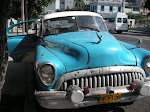
Transportation in Cuba is unique and very strange to Americans or to others in the western world. We have mental pictures of the 1950's cars kept running by Cuba's street mechanics for all these years, but because they once plied our streets, they aren't really so foreign to us. If we think of them as strange, we may be too young to remember when they were common here. For the 50's cars, strangeness is more of a time warp effect.
But the first time I saw a camello, an old fashioned Cuban bus, I thought, "that's really weird." I've mentioned camellos before in these blogs. They are basically tractor trailers where the trailer is fitted out as a bus. The center part of the trailer is lowered to make the step up from or the step down to the street surface easy. The front and back of the trailer are raised to give head room to the passengers riding above the wheels. This gives a two-humped (camel-like) look, and thus the Spanish name, camello, or camel in English.
When I first visited Cuba, camellos were common. They could hold a prodigious number of passengers, and you might guess one was coming when a busy corner on a main artery would be packed with a couple hundred commuters. The old tractor would limp to a stop and pandemonium would ensue as one hundred who wanted to leave the bus had to get by another hundred trying to get on the bus—all through the same set of doors. When finally everyone was on or off as he wished, the tractor would accelerate, grinding up through its gears to repeat the drama at the next bus stop.
Thankfully camellos made their last runs a few years ago, and today a fleet of sleek Chinese buses get people where they are going.
Cuba's intercity buses and trains have some of that weird flavor too. You can ride them and pay in the old Cuban Pesos or pay for a higher class of service in CUC's, Cuba's convertible currency, mostly used by tourists. If you use the old Peso buses, you have a much lower class of service. If you pay in CUC's, you ride in a different train or bus, generally with well-to-do people. This was being discussed recently in our email, and I quote Nora's words to describe the low class service:
Dear Les,
Of course it is much cheaper, but for this very reason it is a very difficult way to travel. Normally they are problematic—as much for the schedules, which are not respected, but for the people who operate them and the people who use them. I would not recommend this option—much less for a vacation in the eastern part of Cuba. As a Cuban, I would never use those trains or regular buses (paid in Pesos).
Nora
Of course many third world countries have trains and buses most of us would avoid, but Cuba may be the only one with two classes of service paid for with two different Cuban currencies. Adding to the transportation weirdness are Co-co taxis, basically a motor scooter for three, Asian style human powered pedicabs, and bicitaxis, a strange cross between a bike and a pedicab.
It's all part of the fun of being in a strange place.
Les Inglis
Friday, December 23, 2011


Saturday, December 3, 2011
Rebecca's Cat House
Rebecca's Cat House
After a few trips to Cuba, I had seen a few dog refuges, so I asked Nora to arrange for us to visit a cat refuge. Aniplant does not operate an animal refuge, but they help several with rations of food and some veterinary care.
Nora chose Rebecca's cat refuge, and after not finding her at home the first time, we found her the second time. Rebecca is an older woman, perhaps 80, and she lives in what was once a very luxurious house not far from our hotel and a stone's throw from the Florida Straits, which border Havana to the north.
Rebecca's house is a fairly large one floor home with a front porch all across the front face. The ceilings are high and the windows are huge. All stand open as there is no air conditioning, and the cats move from the inside to the porch by jumping through the windows. The porch roof is supported by Corinthian columns. All around the house is a tall wrought iron fence, and the lower eight feet of the fence is covered by sheet iron wired to the fence. That sheet iron is what keeps Rebecca's 30 or more cats inside her yard.
Rebecca's family was once wealthy as you might expect from the large house and the proximity to the water. She told us that when she was a little girl there was no Malecon (Havana's waterside Esplanade, and the sandy beach (now nonexistent) used to extend the two blocks up to her house. Rebecca received us on her large front porch, so I never got to see the inside of the house, although I could peek in the windows and through the screened front door. Years of deferred maintenance, chipped paint, and rusty iron sheets on the fence told me that her situation was more pressed now than when she was young.
And the cats? You ask. Well, they were everywhere you looked--front yard, inside, outside, porch. Frankly, they didn't look too healthy with their fur ruffled and dirty and many with ticks and fleas. At least Rebecca feeds them and water bowls were visible in several places.
Nora tells me Rebecca is very headstrong and doesn't easily accept suggestions about caring for the cats. After many decades of keeping such a collection of cats, she believes she has most of the answers. Nora knows differently, of course. Not every cat is neutered, which means the population will never decline. Once in a while Nora can get her to neuter her females or use a flea treatment on them. Nora knows she has to bring up suggestions for better care slowly and in a spirit of helpfulness. If Rebecca took offence, then the whole refuge would become worse off, so Nora displays her considerable patience and tries for gradual improvements.
Rebecca may have no money at all, but she can't be moved from her house. Until last month, all Cuban real estate was owned by the state, but now this is changing, and Cubans can buy and sell real estate. Rebecca inherited the right to live in her house from her parents, and she will undoubtedly stay there with her cats until she dies.
Then will come the hard choices of what to do with the cats. Not many people are ready to accept a cat or a few cats into their home. They may be killed by the crews of prisoners who patrol the city picking up stray, sick or ownerless animals. Who knows?
All I can say for sure is her cats are one notch better off than homeless. At least they have food and a safe place to sleep.
Les Inglis
After a few trips to Cuba, I had seen a few dog refuges, so I asked Nora to arrange for us to visit a cat refuge. Aniplant does not operate an animal refuge, but they help several with rations of food and some veterinary care.
Nora chose Rebecca's cat refuge, and after not finding her at home the first time, we found her the second time. Rebecca is an older woman, perhaps 80, and she lives in what was once a very luxurious house not far from our hotel and a stone's throw from the Florida Straits, which border Havana to the north.
Rebecca's house is a fairly large one floor home with a front porch all across the front face. The ceilings are high and the windows are huge. All stand open as there is no air conditioning, and the cats move from the inside to the porch by jumping through the windows. The porch roof is supported by Corinthian columns. All around the house is a tall wrought iron fence, and the lower eight feet of the fence is covered by sheet iron wired to the fence. That sheet iron is what keeps Rebecca's 30 or more cats inside her yard.
Rebecca's family was once wealthy as you might expect from the large house and the proximity to the water. She told us that when she was a little girl there was no Malecon (Havana's waterside Esplanade, and the sandy beach (now nonexistent) used to extend the two blocks up to her house. Rebecca received us on her large front porch, so I never got to see the inside of the house, although I could peek in the windows and through the screened front door. Years of deferred maintenance, chipped paint, and rusty iron sheets on the fence told me that her situation was more pressed now than when she was young.
And the cats? You ask. Well, they were everywhere you looked--front yard, inside, outside, porch. Frankly, they didn't look too healthy with their fur ruffled and dirty and many with ticks and fleas. At least Rebecca feeds them and water bowls were visible in several places.
Nora tells me Rebecca is very headstrong and doesn't easily accept suggestions about caring for the cats. After many decades of keeping such a collection of cats, she believes she has most of the answers. Nora knows differently, of course. Not every cat is neutered, which means the population will never decline. Once in a while Nora can get her to neuter her females or use a flea treatment on them. Nora knows she has to bring up suggestions for better care slowly and in a spirit of helpfulness. If Rebecca took offence, then the whole refuge would become worse off, so Nora displays her considerable patience and tries for gradual improvements.
Rebecca may have no money at all, but she can't be moved from her house. Until last month, all Cuban real estate was owned by the state, but now this is changing, and Cubans can buy and sell real estate. Rebecca inherited the right to live in her house from her parents, and she will undoubtedly stay there with her cats until she dies.
Then will come the hard choices of what to do with the cats. Not many people are ready to accept a cat or a few cats into their home. They may be killed by the crews of prisoners who patrol the city picking up stray, sick or ownerless animals. Who knows?
All I can say for sure is her cats are one notch better off than homeless. At least they have food and a safe place to sleep.
Les Inglis
Friday, November 25, 2011
Drop by Drop
In Spanish, "el cuentagotas" means medicine dropper. It is one of a weird collection of Spanish words with a plural feminine ending that is, indeed, masculine and singular. The word literally means count ("cuenta") drops (gotas"). We've all used these little droppers to dispense drops of medicine into eyes or ears or wherever.
I'm reminded of what's going on between Cuba and America as both governments take tiny, tentative, and measured steps toward a more normal relationship. Pride seems to prevent either side's launching an all-out peace initiative, but economic necessity presses both sides to relax its long time sanctions against the other. Neither country seems ready to wage peace, but both keep throwing little teasers out to see what will happen.
Consider these relaxations on the part of Cuba in recent years:
1. Cubans can now have and use cell phones.
2. Cubans can stay in tourist hotels now.
3. Cubans can now buy and sell their houses and cars.
And, not to be outdone, the US has made these changes:
1. Many Bush era restrictions on travel to Cuba have been dropped.
2. Educational and people to people tours have been restored
3. Many US airports are now allowed to offer direct, non-stop flights to Cuba.
Personally, I rejoice at each liberalizing change. At the present time we are planning a trip to Havana next March. When I called Alex, my travel agent in Miami, to get some information for the trip, I was worried when his office told me he was no longer with that firm. They were nice enough to tell me he had moved to Tampa and to give me his new phone number.
Why did Alex move? Well, Tampa is one of the new group of several cities authorized to have direct flights to Cuba. And,a s Alex is a smart businessman; he knows Tampa has a very large Cuban population--probably due to the old cigar industry in Tampa and to the large shipping trade between Tampa and Havana before the embargo.
It seems obvious that more traffic between Cuba and America means more jobs here, and maybe more there as well. Also, instead of being a mystery to Americans, Cuba will be better understood and perhaps both countries will treat each other better.
Not all people see these changes as good for America. Some stick by the policies of the last 50 years, insisting that any interchange between the two countries is appeasement to Cuba's leaders and should be avoided. With such a sharp division in beliefs regarding better relations, we should not expect rapid change from our ossified Congress of recent years.
But I'm celebrating that I'll be flying out of Tampa instead of Miami, and in the process, I'll avoid 300 miles of driving, renting a motel room for an additional night, and having to get up at 4:00 am to catch a flight.
Les Inglis
In Spanish, "el cuentagotas" means medicine dropper. It is one of a weird collection of Spanish words with a plural feminine ending that is, indeed, masculine and singular. The word literally means count ("cuenta") drops (gotas"). We've all used these little droppers to dispense drops of medicine into eyes or ears or wherever.
I'm reminded of what's going on between Cuba and America as both governments take tiny, tentative, and measured steps toward a more normal relationship. Pride seems to prevent either side's launching an all-out peace initiative, but economic necessity presses both sides to relax its long time sanctions against the other. Neither country seems ready to wage peace, but both keep throwing little teasers out to see what will happen.
Consider these relaxations on the part of Cuba in recent years:
1. Cubans can now have and use cell phones.
2. Cubans can stay in tourist hotels now.
3. Cubans can now buy and sell their houses and cars.
And, not to be outdone, the US has made these changes:
1. Many Bush era restrictions on travel to Cuba have been dropped.
2. Educational and people to people tours have been restored
3. Many US airports are now allowed to offer direct, non-stop flights to Cuba.
Personally, I rejoice at each liberalizing change. At the present time we are planning a trip to Havana next March. When I called Alex, my travel agent in Miami, to get some information for the trip, I was worried when his office told me he was no longer with that firm. They were nice enough to tell me he had moved to Tampa and to give me his new phone number.
Why did Alex move? Well, Tampa is one of the new group of several cities authorized to have direct flights to Cuba. And,a s Alex is a smart businessman; he knows Tampa has a very large Cuban population--probably due to the old cigar industry in Tampa and to the large shipping trade between Tampa and Havana before the embargo.
It seems obvious that more traffic between Cuba and America means more jobs here, and maybe more there as well. Also, instead of being a mystery to Americans, Cuba will be better understood and perhaps both countries will treat each other better.
Not all people see these changes as good for America. Some stick by the policies of the last 50 years, insisting that any interchange between the two countries is appeasement to Cuba's leaders and should be avoided. With such a sharp division in beliefs regarding better relations, we should not expect rapid change from our ossified Congress of recent years.
But I'm celebrating that I'll be flying out of Tampa instead of Miami, and in the process, I'll avoid 300 miles of driving, renting a motel room for an additional night, and having to get up at 4:00 am to catch a flight.
Les Inglis
Saturday, November 19, 2011
Veterinary Politics
Veterinary Politics
Lots of things don't get done in Cuba because of the generally stressful state of the economy. This is certainly true of veterinary care for the people's dogs and cats. It isn't that Cuba doesn't have enough vets--they do. But the free vet education comes with a price; you have to work for the government. Thus after graduation, vets take jobs as meat inspectors, airport inspectors, teachers, public health officials, and the like. Domestic pets don't get much priority from the government, so there are precious few positions available in animal hospitals.
What makes vet care available for domestic pets is that vet salaries working for the government are very low--about $20 a month. So in a country of pet lovers, many vets turn to moonlighting. Many neighborhoods have a vet who has turned a garage or spare room into a vet office or surgery.
More than ten years ago Nora Garcia, Aniplant's President realized she could improve the availability of vet care for Havana's dogs and cats. She began establishing vet offices around the town and charging the clients whatever they could afford for the vet treatments. As a tribute to her energy and motivation, Aniplant soon operated ten branch vet office locations and was planning to open more. And Aniplant now had a source of income for its other programs.
Unfortunately some of the moonlighting vets with their own part time offices began to regard the chain of Aniplant vet offices as competition, a dirty word in a Communist country. The vets filed a complaint. A difference of this kind is settled between the different ministries involved after considering the position of the organizations within their oversight. All Cuban private organizations are overseen by one of the government ministries. In Aniplant's case, the overseer is the Ministry of Agriculture, and the veterinarians have a different ministry.
The way it worked out, Aniplant was obligated to close their vet offices, but they were allowed to operate one only. In 2005 when I first knew Aniplant, they were not even operating the one branch they were permitted, as their headquarters was hard to find and up eight flights of stairs.
Today, with Aniplant's new easy to find Central Havana street level headquarters, Aniplant is building a new vet office with special assistance from Dr. Richard White, a world traveling veterinarian from the UK. His generous support is helping the new clinic to come into being.
We keep finding new friends for the animals of Cuba.
Les Inglis
Lots of things don't get done in Cuba because of the generally stressful state of the economy. This is certainly true of veterinary care for the people's dogs and cats. It isn't that Cuba doesn't have enough vets--they do. But the free vet education comes with a price; you have to work for the government. Thus after graduation, vets take jobs as meat inspectors, airport inspectors, teachers, public health officials, and the like. Domestic pets don't get much priority from the government, so there are precious few positions available in animal hospitals.
What makes vet care available for domestic pets is that vet salaries working for the government are very low--about $20 a month. So in a country of pet lovers, many vets turn to moonlighting. Many neighborhoods have a vet who has turned a garage or spare room into a vet office or surgery.
More than ten years ago Nora Garcia, Aniplant's President realized she could improve the availability of vet care for Havana's dogs and cats. She began establishing vet offices around the town and charging the clients whatever they could afford for the vet treatments. As a tribute to her energy and motivation, Aniplant soon operated ten branch vet office locations and was planning to open more. And Aniplant now had a source of income for its other programs.
Unfortunately some of the moonlighting vets with their own part time offices began to regard the chain of Aniplant vet offices as competition, a dirty word in a Communist country. The vets filed a complaint. A difference of this kind is settled between the different ministries involved after considering the position of the organizations within their oversight. All Cuban private organizations are overseen by one of the government ministries. In Aniplant's case, the overseer is the Ministry of Agriculture, and the veterinarians have a different ministry.
The way it worked out, Aniplant was obligated to close their vet offices, but they were allowed to operate one only. In 2005 when I first knew Aniplant, they were not even operating the one branch they were permitted, as their headquarters was hard to find and up eight flights of stairs.
Today, with Aniplant's new easy to find Central Havana street level headquarters, Aniplant is building a new vet office with special assistance from Dr. Richard White, a world traveling veterinarian from the UK. His generous support is helping the new clinic to come into being.
We keep finding new friends for the animals of Cuba.
Les Inglis
Saturday, November 12, 2011
Cojimar
Cojimar
A few miles east of Havana lies the coastal fishing town of Cojimar, sitting on a lovely bay opening to the Florida Straits. It's a short drive from Ernest Hemingway's estate, Finca Vegia, which sits generally south of Havana. Connecting the finca and Cojimar are good roads and about 20 minutes are required to drive between the finca and the town.
For Hemingway, fishing seemed more important than living, and thus he bought his fishing boat, Pilar, a few years before he bought his Cuba home, the finca. Originally he rented dock space for the new boat at the Havana waterfront near his hotel, the Hotel Ambos Mundos, where he stayed and where he wrote some of his best known books. But soon he found a home for the boat in Cojimar. Thereafter, this little town was the base of his maritime operations.
He sometimes made the trip to Cojimar several times a week, and he soon found a favorite restaurant and bar in the little town. That restaurant, La Terraza is there today as is the rest of the town, seemingly unchanged from Hemingway's era. Like most tourist spots it is owned by the Cuban government, and it is kept in perfect condition.
The first thing you notice on entering La Terraza is the immaculate polished wooden floors. You enter directly into the bar room, and you see the back bar with nearly a hundred bottles of liquor, lined up precisely. A bar man awaits the requests of any tourists. Few locals drink or dine here as the prices (about what they would be here at home) are well beyond what fishermen can afford. But if the food and drink now are what they were like in Hemingway's time, it's no wonder this was one of his favorite haunts.
The Pilar had two first mates at different times. The first was Carlos Gutierrez, and the last was Gregorio Fuentes. Gutierrez might have been the inspiration for The Old Man and the Sea (although some academics think that Papa saw himself as the model for the old man). But Fuentes way outlasted Gutierrez, living right there until he was 104 years old in 2002 and picking up money from tourists by posing for photos.
Cojimar is a sleepy little place today, as it was way back when. If there is any action at all it's out beyond sight--beyond the reef--where the epic fights for huge fish are engaged. The locals bring in their catch, and some of it ends up in the hands of the head chef at La Terraza. Nora and I have had lunch there a couple of times, but, being vegetarians, we bypassed the fish on the menu. The chef is happy to fix anything you want, and for us the last time he made us a fine vegan dish of rice, vegetables and spices, which he declined to enumerate.
We sat at the table we'd used once before--in the corner, partly surrounded by windows on two sides looking out and down to the bay and off to the deep blue water of the Gulf Stream. Far below us a lone fisherman fired up his outboard and chugged out to sea. I watched him and thought how what I was watching could have been the same scene played out in the late 1930's when I was a toddler, when Papa was in his prime, and since when the town and its people remain unchanged.
Les Inglis
A few miles east of Havana lies the coastal fishing town of Cojimar, sitting on a lovely bay opening to the Florida Straits. It's a short drive from Ernest Hemingway's estate, Finca Vegia, which sits generally south of Havana. Connecting the finca and Cojimar are good roads and about 20 minutes are required to drive between the finca and the town.
For Hemingway, fishing seemed more important than living, and thus he bought his fishing boat, Pilar, a few years before he bought his Cuba home, the finca. Originally he rented dock space for the new boat at the Havana waterfront near his hotel, the Hotel Ambos Mundos, where he stayed and where he wrote some of his best known books. But soon he found a home for the boat in Cojimar. Thereafter, this little town was the base of his maritime operations.
He sometimes made the trip to Cojimar several times a week, and he soon found a favorite restaurant and bar in the little town. That restaurant, La Terraza is there today as is the rest of the town, seemingly unchanged from Hemingway's era. Like most tourist spots it is owned by the Cuban government, and it is kept in perfect condition.
The first thing you notice on entering La Terraza is the immaculate polished wooden floors. You enter directly into the bar room, and you see the back bar with nearly a hundred bottles of liquor, lined up precisely. A bar man awaits the requests of any tourists. Few locals drink or dine here as the prices (about what they would be here at home) are well beyond what fishermen can afford. But if the food and drink now are what they were like in Hemingway's time, it's no wonder this was one of his favorite haunts.
The Pilar had two first mates at different times. The first was Carlos Gutierrez, and the last was Gregorio Fuentes. Gutierrez might have been the inspiration for The Old Man and the Sea (although some academics think that Papa saw himself as the model for the old man). But Fuentes way outlasted Gutierrez, living right there until he was 104 years old in 2002 and picking up money from tourists by posing for photos.
Cojimar is a sleepy little place today, as it was way back when. If there is any action at all it's out beyond sight--beyond the reef--where the epic fights for huge fish are engaged. The locals bring in their catch, and some of it ends up in the hands of the head chef at La Terraza. Nora and I have had lunch there a couple of times, but, being vegetarians, we bypassed the fish on the menu. The chef is happy to fix anything you want, and for us the last time he made us a fine vegan dish of rice, vegetables and spices, which he declined to enumerate.
We sat at the table we'd used once before--in the corner, partly surrounded by windows on two sides looking out and down to the bay and off to the deep blue water of the Gulf Stream. Far below us a lone fisherman fired up his outboard and chugged out to sea. I watched him and thought how what I was watching could have been the same scene played out in the late 1930's when I was a toddler, when Papa was in his prime, and since when the town and its people remain unchanged.
Les Inglis
Saturday, November 5, 2011
A Step in the RIght Direction
A Step in the Right Direction
I know these blogs are supposed to be about animals (mostly dogs and cats) in Cuba, but the quality of those animal lives is closely tied to that of their people. And Cuban people have many crosses to bear. So when a major change in the fortunes of the Cuban people takes place, it's good news for the animals as well. Such a change took place this week when the Cuban government allowed its citizens to buy and sell real estate.
Previously you couldn't buy or sell your home; you only had the right to trade properties with other Cubans. In a difficult maneuver with a lawyer officiating, you could swap homes with another Cuban. We became involved in this "permutta" system when a number of years ago Nora, Aniplant's president, found someone in central Havana who wanted to trade places with Aniplant's old headquarters. Finding such a willing fellow swapper wasn't easy as the old Aniplant headquarters was on the 8th floor of a building with a dead elevator hopelessly beyond repair. The other guy's place (to be Aniplant's new headquarters) was on the street level of a well-known street, and it served as that man's family home.
We found out about the arranged swap in 2006 when Nora told us of it and told us the average wait to formalize a swap was 4 years. She had already waited two years. "Can't it be expedited?" we asked. "Yes for a bribe of $150," we were told.
Think of it; a lack of $150 caused a four year wait for two parties who both wanted the swap. Someone in our group reached into his pocket, dug out $150, and gave it to Nora to get the project moving. Two days later, the lawyer moved Nora's file to the top of the pile, and the swap was done.
It wasn't all roses, however. The "new" headquarters is a 200 year old one story building needing roof work, a new roof top water tank, and every light switch, ceiling fixture, and wall plug had been removed and left with the old owner. Much additional time and donated money was needed to make the new headquarters into the showplace it is today.
But this week all those machinations became history as people gained the right to buy and sell their residences without prior government approval. Already some are predicting a new wave of prosperity as people take pride in their possessions and fix them up. Others predict an exodus as people with some cash from selling their homes leave for other countries. No one knows for sure what will happen, but it's a pretty good bet people will be better off.
What's good for the Cuban citizen is usually also good for his dog or cat. If nothing else, it will be a little easier to feed that animal if his master has more money in his pocket. And a rising tide floats all boats. More money in a man's hands means more work, more pay, better homes, etc. etc.
The first time I saw Havana, I was struck by the blotchy walls on large buildings made so by decades of no paint. I imagined a huge tanker floating into the harbor filled with white paint. It was a day dream, of course, but this city with many gorgeous buildings, some dating back to the 1700's could, in my mind's eye, be one of the most beautiful in the world. Paint and maintenance seemed all that stood between dishevelment and splendor.
Maybe now our Cuban neighbors (and their companion animals) will find a way toward a greater society with a higher standard of living.
When you work on the problems of animals, you dare not be a pessimist.
Les Inglis
I know these blogs are supposed to be about animals (mostly dogs and cats) in Cuba, but the quality of those animal lives is closely tied to that of their people. And Cuban people have many crosses to bear. So when a major change in the fortunes of the Cuban people takes place, it's good news for the animals as well. Such a change took place this week when the Cuban government allowed its citizens to buy and sell real estate.
Previously you couldn't buy or sell your home; you only had the right to trade properties with other Cubans. In a difficult maneuver with a lawyer officiating, you could swap homes with another Cuban. We became involved in this "permutta" system when a number of years ago Nora, Aniplant's president, found someone in central Havana who wanted to trade places with Aniplant's old headquarters. Finding such a willing fellow swapper wasn't easy as the old Aniplant headquarters was on the 8th floor of a building with a dead elevator hopelessly beyond repair. The other guy's place (to be Aniplant's new headquarters) was on the street level of a well-known street, and it served as that man's family home.
We found out about the arranged swap in 2006 when Nora told us of it and told us the average wait to formalize a swap was 4 years. She had already waited two years. "Can't it be expedited?" we asked. "Yes for a bribe of $150," we were told.
Think of it; a lack of $150 caused a four year wait for two parties who both wanted the swap. Someone in our group reached into his pocket, dug out $150, and gave it to Nora to get the project moving. Two days later, the lawyer moved Nora's file to the top of the pile, and the swap was done.
It wasn't all roses, however. The "new" headquarters is a 200 year old one story building needing roof work, a new roof top water tank, and every light switch, ceiling fixture, and wall plug had been removed and left with the old owner. Much additional time and donated money was needed to make the new headquarters into the showplace it is today.
But this week all those machinations became history as people gained the right to buy and sell their residences without prior government approval. Already some are predicting a new wave of prosperity as people take pride in their possessions and fix them up. Others predict an exodus as people with some cash from selling their homes leave for other countries. No one knows for sure what will happen, but it's a pretty good bet people will be better off.
What's good for the Cuban citizen is usually also good for his dog or cat. If nothing else, it will be a little easier to feed that animal if his master has more money in his pocket. And a rising tide floats all boats. More money in a man's hands means more work, more pay, better homes, etc. etc.
The first time I saw Havana, I was struck by the blotchy walls on large buildings made so by decades of no paint. I imagined a huge tanker floating into the harbor filled with white paint. It was a day dream, of course, but this city with many gorgeous buildings, some dating back to the 1700's could, in my mind's eye, be one of the most beautiful in the world. Paint and maintenance seemed all that stood between dishevelment and splendor.
Maybe now our Cuban neighbors (and their companion animals) will find a way toward a greater society with a higher standard of living.
When you work on the problems of animals, you dare not be a pessimist.
Les Inglis
Sunday, October 30, 2011
Pissing Contests
Pissing Contests
A guy I used to work with told a story about Junior Finchley, one of his boyhood friends. His crowd would hold what they somewhat indelicately called pissing contests where the kids would line up along the curb and see how far each could urinate out into the street. Junior Kelly was their all time champion as he could urinate completely across Kipling Avenue, then a two lane road.
Junior had a slight malformation that constricted his urethral duct and acted like putting your thumb over the end of a running garden hose to water plants further away. For Junior his malady allowed him to propel his urine to almost incredible distances. Well, any doctor will tell you that such a condition can be dangerous, and most would advise a surgical correction. Thus Mr. and Mrs. Finchley had Junior fixed, and he lost his notoriety. After the surgery, Junior couldn't piss beyond the toes of his shoes.
Why do I tell you this? Well, I guess I'm trying to show that pissing contests expend time and energy, but prove nothing worth knowing. Cuba and the US have been in such a contest for more than 50 years, gaining neither side anything worth having and losing both sides much that is valuable. I'm not here to judge which side has won, is winning, or will win this useless waste of time and treasure.
To discuss this conflict, we might begin by examining the words each side uses to describe it. In Cuba, it isn't an "embargo," it's a "bloqueo" or a blockade. Webster says a blockade is a shutting of ports of a belligerent by its enemy--clearly an act of war. In the US, we call it an embargo which is defined as shutting your own ports to commerce with an opponent, certainly an act a little less belligerent than a blockade.
As my work in Cuba involves the plight of domestic companion animals, let's consider how Cuba's economic problems affect those animals. First most dogs and cats don't have collars or ID tags, and few are ever walked on leashes. Many city dwellers have no yards so dogs are let outside to relieve themselves. On the street, how do you tell which animals have homes and which are stray? My way to tell is the only way I've come up with, and it isn't very accurate--I look to see if his ribs are showing, telling me how well fed an animal is. When public dog catchers come through your neighborhood, they pretty well take the dogs they can catch because they have the same problems I have in telling family dogs from strays. Thus large numbers of family dogs disappear each year into a killing machine designed to avoid shocking tourists with sick, dying, or dead animals on the streets.
I say this tragedy is caused by the embargo or blockade or whatever you want to call it. Surely Cubans love their dogs, but their standard of living, beaten down by privations imposed on Cuba, leaves no room for the cost of collars and tags. And consider this: Nowhere in Cuba can you get your dog microchipped. This, the best way of identifying domestic animals, is completely unavailable in an economy that has a hard enough time feeding its humans, much less its pets.
And speaking of feeding your animals, how does Fido get enough to eat in Cuba? For the most part he gets scraps and leftovers from his master's table. The average Cuban, paid in old Cuban Pesos (or Moneda Nacional) cannot buy the small amount of pet food Cuba imports which is sold only in CUC's (pronounced "kooks"), a money system pretty well restricted to tourist use. Thus you may find a few places which sell pet food, but it's priced in money the average Cuban citizens don't have and can't earn.
And what about vet care? Cuba, with its good educational system, educates many veterinarians each year, but remember, this is a Communist economy, and these vets are schooled to become public employees like meat inspectors, agricultural managers, and airport officials. If a vet offers his or her services to treat domestic pets, it's usually as a part-time sideline run out of his garage for his neighbors. His day job has nothing to do with companion animals.
The point of all this is that Cuba could be a better home for family animals if it weren't so stressed by the embargo. How could there be a more innocent group of beings hurt by a failed political policy? And if we see signs of suffering among the animals of Cuba, think of how the man in the street must be suffering too.
These family critters are in our world to make life better for people. Both sides in this pissing contest between neighboring nations should admit it is a failure hurting the wrong victims and go about creating a better world for people and their animals.
Les Inglis
A guy I used to work with told a story about Junior Finchley, one of his boyhood friends. His crowd would hold what they somewhat indelicately called pissing contests where the kids would line up along the curb and see how far each could urinate out into the street. Junior Kelly was their all time champion as he could urinate completely across Kipling Avenue, then a two lane road.
Junior had a slight malformation that constricted his urethral duct and acted like putting your thumb over the end of a running garden hose to water plants further away. For Junior his malady allowed him to propel his urine to almost incredible distances. Well, any doctor will tell you that such a condition can be dangerous, and most would advise a surgical correction. Thus Mr. and Mrs. Finchley had Junior fixed, and he lost his notoriety. After the surgery, Junior couldn't piss beyond the toes of his shoes.
Why do I tell you this? Well, I guess I'm trying to show that pissing contests expend time and energy, but prove nothing worth knowing. Cuba and the US have been in such a contest for more than 50 years, gaining neither side anything worth having and losing both sides much that is valuable. I'm not here to judge which side has won, is winning, or will win this useless waste of time and treasure.
To discuss this conflict, we might begin by examining the words each side uses to describe it. In Cuba, it isn't an "embargo," it's a "bloqueo" or a blockade. Webster says a blockade is a shutting of ports of a belligerent by its enemy--clearly an act of war. In the US, we call it an embargo which is defined as shutting your own ports to commerce with an opponent, certainly an act a little less belligerent than a blockade.
As my work in Cuba involves the plight of domestic companion animals, let's consider how Cuba's economic problems affect those animals. First most dogs and cats don't have collars or ID tags, and few are ever walked on leashes. Many city dwellers have no yards so dogs are let outside to relieve themselves. On the street, how do you tell which animals have homes and which are stray? My way to tell is the only way I've come up with, and it isn't very accurate--I look to see if his ribs are showing, telling me how well fed an animal is. When public dog catchers come through your neighborhood, they pretty well take the dogs they can catch because they have the same problems I have in telling family dogs from strays. Thus large numbers of family dogs disappear each year into a killing machine designed to avoid shocking tourists with sick, dying, or dead animals on the streets.
I say this tragedy is caused by the embargo or blockade or whatever you want to call it. Surely Cubans love their dogs, but their standard of living, beaten down by privations imposed on Cuba, leaves no room for the cost of collars and tags. And consider this: Nowhere in Cuba can you get your dog microchipped. This, the best way of identifying domestic animals, is completely unavailable in an economy that has a hard enough time feeding its humans, much less its pets.
And speaking of feeding your animals, how does Fido get enough to eat in Cuba? For the most part he gets scraps and leftovers from his master's table. The average Cuban, paid in old Cuban Pesos (or Moneda Nacional) cannot buy the small amount of pet food Cuba imports which is sold only in CUC's (pronounced "kooks"), a money system pretty well restricted to tourist use. Thus you may find a few places which sell pet food, but it's priced in money the average Cuban citizens don't have and can't earn.
And what about vet care? Cuba, with its good educational system, educates many veterinarians each year, but remember, this is a Communist economy, and these vets are schooled to become public employees like meat inspectors, agricultural managers, and airport officials. If a vet offers his or her services to treat domestic pets, it's usually as a part-time sideline run out of his garage for his neighbors. His day job has nothing to do with companion animals.
The point of all this is that Cuba could be a better home for family animals if it weren't so stressed by the embargo. How could there be a more innocent group of beings hurt by a failed political policy? And if we see signs of suffering among the animals of Cuba, think of how the man in the street must be suffering too.
These family critters are in our world to make life better for people. Both sides in this pissing contest between neighboring nations should admit it is a failure hurting the wrong victims and go about creating a better world for people and their animals.
Les Inglis
Subscribe to:
Comments (Atom)
