














Cristo de La Habana
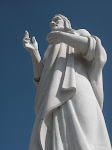
From many parts of Old Havana you can see Havana’s harbor, and as you look across the water to the cliffs on the other side, two landmarks stand out—El Morro Castle, once a prison, and a large statue of Christ. The castle is an ancient Spanish fort, placed there to protect the harbor, and it is pictured in many tourist brochures. The huge statue of Christ is not so well known as the fort, but it too has an interesting story.
The monument was a gift to the people of Havana from Fulgencio Batista, Cuba’s last dictator before the Castro Revolution. A plaque at the base of the monument used to name the donor, but in recent years it has been removed. The date of dedication, Christmas Day of 1958, is interesting. That date was exactly one week before Batista’s downfall and retreat into exile and Castro’s triumph on January 1, 1959.
Latin America has its share of huge statues of Christ. Arguably the most famous and one of the largest (130 feet tall) is Christo Redentor which stands, arms outstretched to his flock, looking over Rio de Janeiro. And Christ of the Andes is also well-known—standing on the Argentina-Bolivia border on the summit of a mountain range. The tallest and newest is Cristo de la Concordia in Cochabamba, Bolivia. This one is not so well-known. But I’ll argue Cristo de La Habana (at 65 feet tall) is one of the most beautiful of all. It is a white marble realistic rendition of Christ wearing a flowing robe. Arms are not outstretched, but held up in front of the body in a teaching pose.
Christo de la Redentor which stands on a mountain-top overlooking Rio is taller, better known, and has a setting unmatchable in Cuba, but as a product of the 1920’s and 1930’s it has an unfortunate (and I think inappropriate) art-deco feel to it, which Havana’s Christ avoids to the credit of its sculptor. And Rio’s statue of reinforced concrete will never match Havana’s white marble.
If you tunnel under the water and drive to the crest of the hill, you’ll find the monument stands in a well kept park with a wonderful view of the city. Sometimes local kids set up a ticket booth and try to sell tickets to the park, but it really is a free park. Other kids offer to explain the history of the park and the harbor. We tried that one and found he didn’t know much about history or where in the bay the USS Maine had been sunk.
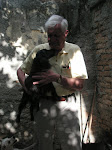
On my most recent visit to the park, I discovered how the park stays looking so good. A man with a herd of goats was urging them around the grassy areas. These Cuban lawnmowers make no noise, pose no danger to the herdsman, and don’t require gasoline. It seems to be a win-win solution for man and animal.
Les Inglis
(See lots more about Cuba and its animals on our new website: http://theaniplantproject.org )
Friday, August 27, 2010


Friday, August 20, 2010
Aló Presidente
Aló Presidente
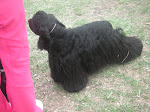
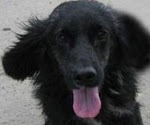
I’ve told this story before in our newsletters, but many readers have yet to see it. It’s the story of Aló Presidente, a beautiful little Cuban dog who looks something like a black Cocker Spaniel with long, curly hair. Lilian and Diana and Nora and I were walking back to our hotel from an Italian restaurant near Nora’s house. We’d had a good meal and were carrying a box with some left-over pizza. We came upon this little dog, not yet fully grown, and decided from his slight build that he might be hungry. Lilian tried to break up a slice of pizza into bite sized pieces and offered it to him.
This little guy either wasn’t hungry or didn’t like Italian food, but Diana got him to lap up some water we poured out for him out of her bottle.
He was so cute, we couldn’t help ourselves, and as we resumed our walk, he followed us. After a couple of blocks, we were talking of keeping him and finding him a home. When we came near to our hotel, the Presidente, he was still with us, and we were buzzing about what we had to do to foster him. We crossed to the wide parkway in the Avenida de los Presidentes, and he stayed right with us. The ladies decided we needed to have him checked out by a vet before we put him into a home with other dogs. The little dog and I stayed there in the wide, grassy parkway, and he curled up in a little depression in the lawn. They were gone at least 15 minutes, and I passed the time gently petting the sleeping dog. I noticed my hand was very dirty from petting him—he really needed a bath.
The ladies came back with no clues on finding a vet. It was 5:00pm on a Saturday, so we decided to back track in the parkway, and Nora spotted a man playing with his dog in the grass. She went over to him, and he offered to give us a place in his garage for the night. Well, we got some clothesline and found a flattened cardboard box to use as a bed. While we were milling around, he walked out of the garage and kept going. I followed him trying not to seem as if I were chasing him. In about a block, he jumped up into a flowerpot and curled up in a grassy depression. I gently carried him back to the garage, petting him as I walked. The girls had fashioned a harness and long tether for him, and we left him for the night tied to the front bumper of a dusty 1954 Chevy Bel Aire. He had a plate of pizza and a bowl of water.
We made plans to meet early the next morning; Nora went home to work the telephone, while the rest of us went back to the hotel.
I had decided to name him Aló Presidente. The Presidente part was that we were in the shadow of our hotel when we decided to keep him. The Aló part was for the warm, tail-wagging way he greeted us. Venezuela’s President Hugo Chávez broadcasts his talks each weekend to those who will listen, and he calls his talks, Aló Presidente, so now our dog was named for a series of political talks.
In the morning Aniplant volunteers sought out Aló in his garage, and we were disheartened to learn he had slipped his bonds and was gone. I started on foot back toward the flowerpot, and sure enough, there he was in his grassy depression and, for the second time, I carried him back to the garage.
Nora had convinced Lourdes, an active Aniplant volunteer, to take Aló at least until we could get him to a vet. Nora’s Aniplant Treasurer, Eva Rivero, picked us up at the hotel in her miniscule Fiat. We barely fit into the Fiat with Nora and Aló in the rear seat and Eva and I in front. We set off for Lourdes” house dodging potholes in the residential neighborhoods—some that seemed as big as the car itself.
Nora had water and flea spray with her as she always does, and Aló got the first flea treatment of his life in the back seat of the car. When we got to Lourdes’ house, we saw that Lourdes had rigged a little run for Aló on her balcony segregated from her other dogs. We soon had to go, and I snapped a picture of Aló on the balcony as we left.
We were about to leave Cuba, but Nora kept us up to date on our new friend. He cleaned up beautifully, was neutered, and joined Lourdes’ family of three other dogs. Later, Nora took Aló back from Lourdes when she was sick, and he became a permanent resident of Aniplant’s new headquarters where he joined seven other dogs, all females—all spayed of course.
I’ve felt as if Aló was my dog ever since we picked him up, and I’ve often thought of bringing him home to Florida with me. But he belongs to all of us, and, as I verified in two later visits, he is so happy to be a headquarters resident. The food there is good, the care is superb, and there are always nice, animal-loving people around. No, as much as I love him, he has already found his forever home, and I wouldn’t change that for the world.
I’ll have to love him from afar.
Les Inglis
AND A SPECIAL ANNOUNCEMENT:
A Big Step Forward
A couple of months ago, we decided, after a solid push from Charlene, that we had to act like a real charity. Thus she set out on a course to incorporate The Aniplant Project, Inc. (TAP) as a not-for-profit corporation, to obtain a 501 (c)(3) rating from the IRS so that donations are tax deductible, to register as a charity with the State of Florida, and finally to apply for an OFAC license to send people to Cuba for charity business. She did it all herself, and did a great job of it. All but the OFAC license are done deals, and it is pending. About two weeks ago, as work on all this slowed down, she began work on a new website for TAP.
Today that website is up and running, thanks entirely to Charlene’s hard work. It’s beautiful, and I hope you’ll look over every page we have posted. You’ll learn lots of interesting stuff and see lots of new photos if you do. We’re really proud of it, and I’m proud of Charlene for all her dedication and hard work. Go to:
http://theaniplantproject.org
You’ll be glad you did.
Les Inglis
I’ve told this story before in our newsletters, but many readers have yet to see it. It’s the story of Aló Presidente, a beautiful little Cuban dog who looks something like a black Cocker Spaniel with long, curly hair. Lilian and Diana and Nora and I were walking back to our hotel from an Italian restaurant near Nora’s house. We’d had a good meal and were carrying a box with some left-over pizza. We came upon this little dog, not yet fully grown, and decided from his slight build that he might be hungry. Lilian tried to break up a slice of pizza into bite sized pieces and offered it to him.
This little guy either wasn’t hungry or didn’t like Italian food, but Diana got him to lap up some water we poured out for him out of her bottle.
He was so cute, we couldn’t help ourselves, and as we resumed our walk, he followed us. After a couple of blocks, we were talking of keeping him and finding him a home. When we came near to our hotel, the Presidente, he was still with us, and we were buzzing about what we had to do to foster him. We crossed to the wide parkway in the Avenida de los Presidentes, and he stayed right with us. The ladies decided we needed to have him checked out by a vet before we put him into a home with other dogs. The little dog and I stayed there in the wide, grassy parkway, and he curled up in a little depression in the lawn. They were gone at least 15 minutes, and I passed the time gently petting the sleeping dog. I noticed my hand was very dirty from petting him—he really needed a bath.
The ladies came back with no clues on finding a vet. It was 5:00pm on a Saturday, so we decided to back track in the parkway, and Nora spotted a man playing with his dog in the grass. She went over to him, and he offered to give us a place in his garage for the night. Well, we got some clothesline and found a flattened cardboard box to use as a bed. While we were milling around, he walked out of the garage and kept going. I followed him trying not to seem as if I were chasing him. In about a block, he jumped up into a flowerpot and curled up in a grassy depression. I gently carried him back to the garage, petting him as I walked. The girls had fashioned a harness and long tether for him, and we left him for the night tied to the front bumper of a dusty 1954 Chevy Bel Aire. He had a plate of pizza and a bowl of water.
We made plans to meet early the next morning; Nora went home to work the telephone, while the rest of us went back to the hotel.
I had decided to name him Aló Presidente. The Presidente part was that we were in the shadow of our hotel when we decided to keep him. The Aló part was for the warm, tail-wagging way he greeted us. Venezuela’s President Hugo Chávez broadcasts his talks each weekend to those who will listen, and he calls his talks, Aló Presidente, so now our dog was named for a series of political talks.
In the morning Aniplant volunteers sought out Aló in his garage, and we were disheartened to learn he had slipped his bonds and was gone. I started on foot back toward the flowerpot, and sure enough, there he was in his grassy depression and, for the second time, I carried him back to the garage.
Nora had convinced Lourdes, an active Aniplant volunteer, to take Aló at least until we could get him to a vet. Nora’s Aniplant Treasurer, Eva Rivero, picked us up at the hotel in her miniscule Fiat. We barely fit into the Fiat with Nora and Aló in the rear seat and Eva and I in front. We set off for Lourdes” house dodging potholes in the residential neighborhoods—some that seemed as big as the car itself.
Nora had water and flea spray with her as she always does, and Aló got the first flea treatment of his life in the back seat of the car. When we got to Lourdes’ house, we saw that Lourdes had rigged a little run for Aló on her balcony segregated from her other dogs. We soon had to go, and I snapped a picture of Aló on the balcony as we left.
We were about to leave Cuba, but Nora kept us up to date on our new friend. He cleaned up beautifully, was neutered, and joined Lourdes’ family of three other dogs. Later, Nora took Aló back from Lourdes when she was sick, and he became a permanent resident of Aniplant’s new headquarters where he joined seven other dogs, all females—all spayed of course.
I’ve felt as if Aló was my dog ever since we picked him up, and I’ve often thought of bringing him home to Florida with me. But he belongs to all of us, and, as I verified in two later visits, he is so happy to be a headquarters resident. The food there is good, the care is superb, and there are always nice, animal-loving people around. No, as much as I love him, he has already found his forever home, and I wouldn’t change that for the world.
I’ll have to love him from afar.
Les Inglis
AND A SPECIAL ANNOUNCEMENT:
A Big Step Forward
A couple of months ago, we decided, after a solid push from Charlene, that we had to act like a real charity. Thus she set out on a course to incorporate The Aniplant Project, Inc. (TAP) as a not-for-profit corporation, to obtain a 501 (c)(3) rating from the IRS so that donations are tax deductible, to register as a charity with the State of Florida, and finally to apply for an OFAC license to send people to Cuba for charity business. She did it all herself, and did a great job of it. All but the OFAC license are done deals, and it is pending. About two weeks ago, as work on all this slowed down, she began work on a new website for TAP.
Today that website is up and running, thanks entirely to Charlene’s hard work. It’s beautiful, and I hope you’ll look over every page we have posted. You’ll learn lots of interesting stuff and see lots of new photos if you do. We’re really proud of it, and I’m proud of Charlene for all her dedication and hard work. Go to:
http://theaniplantproject.org
You’ll be glad you did.
Les Inglis
Friday, August 13, 2010
Lunch TIme
Lunch Time
We all have asked for a doggie bag when we can’t finish a good restaurant meal. Sometimes I wonder if the waiter thinks, “That’s for him, not the dogs.” Well, he is justified in thinking so, as many little bags and boxes of leftovers have waited in my refrigerator for my appetite to return. In our house, the dogs eat well, usually without leftovers, and some of them need special food anyway.
In Cuba, few people fail to take home the leftovers, and they often eat them themselves, like I do. We were at a large lunch gathering in a restaurant near Havana’s harbor when my friend, Nora Garcia, spoke up for all the leftovers. I knew these would go to the dogs as she has more than a dozen at home, and 8 more living at Aniplant’s headquarters. She always comes prepared with plastic bags. Food doesn’t go to waste in Cuba whether for dogs or people.
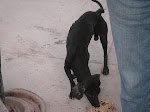
Nora and I had a plastic bag of beef chunks with us as we walked away from the restaurant, and we didn’t go half a block through the Plaza de las Armas, when we found a cute black dog wagging his tail and hoping for a treat.
It was as though he knew what was in Nora’s purse, and, of course, we stopped to feed him. He could have been a stray or he might have belonged to one of the booksellers in the Plaza. (Collars and tags are rare in Cuba.) Either way, his slender build suggested he could use some extra calories.
Well, you know the rest of the story—he got the leftover beef, and he will probably remember that meal for the rest of his life. Another time we were at the same restaurant at a table on the sidewalk, and I saw another dog out near the street hoping for a handout. I had some leftovers, so I took them out front and left them on the sidewalk for the dog, who happily attacked the food. The restaurant manager looked like he didn’t want the mess right in front of his place. I told him not to worry; it would all be cleaned up.
Sure enough, the dog “licked the platter clean,” meaning the sidewalk. The manager was satisfied, I felt really good at making that dog’s day, and nothing went to waste.
We usually visit Havana’s Bario Chino for a Chinese meal on each trip. I always order moros y cristianos, that is rice and beans, and the serving is unusually large, so I leave with leftovers. A couple of blocks away is a square block that has been torn down and made into a not-very-busy parking lot. It is fenced and the operator has three dogs. I ask permission to feed them, he gives it, and I parcel it out in three portions to the delight of the dogs. The man says he remembers me from year to year, but I’m not so sure.
Still, I know the dogs remember.
Les Inglis
We all have asked for a doggie bag when we can’t finish a good restaurant meal. Sometimes I wonder if the waiter thinks, “That’s for him, not the dogs.” Well, he is justified in thinking so, as many little bags and boxes of leftovers have waited in my refrigerator for my appetite to return. In our house, the dogs eat well, usually without leftovers, and some of them need special food anyway.
In Cuba, few people fail to take home the leftovers, and they often eat them themselves, like I do. We were at a large lunch gathering in a restaurant near Havana’s harbor when my friend, Nora Garcia, spoke up for all the leftovers. I knew these would go to the dogs as she has more than a dozen at home, and 8 more living at Aniplant’s headquarters. She always comes prepared with plastic bags. Food doesn’t go to waste in Cuba whether for dogs or people.
Nora and I had a plastic bag of beef chunks with us as we walked away from the restaurant, and we didn’t go half a block through the Plaza de las Armas, when we found a cute black dog wagging his tail and hoping for a treat.
It was as though he knew what was in Nora’s purse, and, of course, we stopped to feed him. He could have been a stray or he might have belonged to one of the booksellers in the Plaza. (Collars and tags are rare in Cuba.) Either way, his slender build suggested he could use some extra calories.
Well, you know the rest of the story—he got the leftover beef, and he will probably remember that meal for the rest of his life. Another time we were at the same restaurant at a table on the sidewalk, and I saw another dog out near the street hoping for a handout. I had some leftovers, so I took them out front and left them on the sidewalk for the dog, who happily attacked the food. The restaurant manager looked like he didn’t want the mess right in front of his place. I told him not to worry; it would all be cleaned up.
Sure enough, the dog “licked the platter clean,” meaning the sidewalk. The manager was satisfied, I felt really good at making that dog’s day, and nothing went to waste.
We usually visit Havana’s Bario Chino for a Chinese meal on each trip. I always order moros y cristianos, that is rice and beans, and the serving is unusually large, so I leave with leftovers. A couple of blocks away is a square block that has been torn down and made into a not-very-busy parking lot. It is fenced and the operator has three dogs. I ask permission to feed them, he gives it, and I parcel it out in three portions to the delight of the dogs. The man says he remembers me from year to year, but I’m not so sure.
Still, I know the dogs remember.
Les Inglis
Friday, August 6, 2010
The Embargo
The Embargo
In southwest Florida we are blessed with a few stations of National Public Radio. The Naples station, WGCU, which I can receive, has a show called “Sound off with Sasha” every Friday at noon. Sasha is the genial hostess of the show which presents interviews with public figures including telephone caller participation. Topics cover a wide range, but politics and public policy are the most common.
Sasha is very well informed on the topics she covers, and her accent tells us she is from Eastern Europe, but her English is as good as any American’s, and her shows are always interesting and educational. My wife, Charlene, told me in advance Sasha was going to have a former State Department employee talk about US policy toward Cuba and suggested I be one of the callers because of my interest in Cuba.
The appointed Friday arrived, and I called in. I waited through the questions and answers of a couple of callers ahead of me while listening to the show on the Internet. When my turn came I described my being in Cuba on the night Barack Obama won the Presidency. There had been a huge interest in our election among the Cubans, and many of them asked me if I was as happy with the result as they were. (I was.) As my brief time with the guest grew short, I asked this challenging question, “What benefits does US policy toward Cuba (the embargo and the travel restrictions) offer to US citizens?”
Perhaps there had once been reasons for those sanctions, but clearly none can be found today. The guest, somewhat surprised, basically just said my question was rhetorical and didn’t answer it. That’s a cheap cop-out, I thought, but I was already off the air. Everything else the guest had said that day was supportive of US policy toward Cuba, but after his having presented so much in that vein, I was surprised he had ducked my question.
But, on further thought, the reason is easy to understand—the embargo and the travel restrictions do nothing for US citizens and our citizenry is beginning to understand that. These policies, which help us not one bit, can’t possibly do the man on the street in Cuba any good either. Meanwhile, over the last fifty years Cuban leaders have seemed to thrive, so our policies only punish the average Cuban. Governments are often irrational. This one (ours) is keeping in place an embargo and travel restrictions that serve only as historic relics of the Cold War. All those who set this policy in place are long since dead, as is the Cold War, but the insanity goes on. In an age when we need exports, we turn our back on 11 million close neighbors who all would love to have access to American products.
These posts are usually about animals in Cuba, so let me ask, how do you suppose the animals fare when life is made more difficult for their human guardians who can’t get parts for their cars and many other necessities? Of course, the animals in a household rank even lower that the poor people who are oppressed by our policy. It’s not a good thing when a 50 year old flap for nearly forgotten reasons makes things tough for an entire country and its cats and dogs.
Les Inglis
In southwest Florida we are blessed with a few stations of National Public Radio. The Naples station, WGCU, which I can receive, has a show called “Sound off with Sasha” every Friday at noon. Sasha is the genial hostess of the show which presents interviews with public figures including telephone caller participation. Topics cover a wide range, but politics and public policy are the most common.
Sasha is very well informed on the topics she covers, and her accent tells us she is from Eastern Europe, but her English is as good as any American’s, and her shows are always interesting and educational. My wife, Charlene, told me in advance Sasha was going to have a former State Department employee talk about US policy toward Cuba and suggested I be one of the callers because of my interest in Cuba.
The appointed Friday arrived, and I called in. I waited through the questions and answers of a couple of callers ahead of me while listening to the show on the Internet. When my turn came I described my being in Cuba on the night Barack Obama won the Presidency. There had been a huge interest in our election among the Cubans, and many of them asked me if I was as happy with the result as they were. (I was.) As my brief time with the guest grew short, I asked this challenging question, “What benefits does US policy toward Cuba (the embargo and the travel restrictions) offer to US citizens?”
Perhaps there had once been reasons for those sanctions, but clearly none can be found today. The guest, somewhat surprised, basically just said my question was rhetorical and didn’t answer it. That’s a cheap cop-out, I thought, but I was already off the air. Everything else the guest had said that day was supportive of US policy toward Cuba, but after his having presented so much in that vein, I was surprised he had ducked my question.
But, on further thought, the reason is easy to understand—the embargo and the travel restrictions do nothing for US citizens and our citizenry is beginning to understand that. These policies, which help us not one bit, can’t possibly do the man on the street in Cuba any good either. Meanwhile, over the last fifty years Cuban leaders have seemed to thrive, so our policies only punish the average Cuban. Governments are often irrational. This one (ours) is keeping in place an embargo and travel restrictions that serve only as historic relics of the Cold War. All those who set this policy in place are long since dead, as is the Cold War, but the insanity goes on. In an age when we need exports, we turn our back on 11 million close neighbors who all would love to have access to American products.
These posts are usually about animals in Cuba, so let me ask, how do you suppose the animals fare when life is made more difficult for their human guardians who can’t get parts for their cars and many other necessities? Of course, the animals in a household rank even lower that the poor people who are oppressed by our policy. It’s not a good thing when a 50 year old flap for nearly forgotten reasons makes things tough for an entire country and its cats and dogs.
Les Inglis
Friday, July 30, 2010
Cuba's Humane HIstory
Cuba’s Humane History
Jeannette Ryder was an American doctor’s wife who moved to Cuba and founded El Bando de Piedad de la Isla de Cuba (The Cuban Group for Compassion) in 1905. Originally she worked for alleviating the problems of humans and animals, but eventually she focused on the protection of animals, notably militating against bullfights and rescuing strays from the streets. El Bando de Piedad worked tirelessly for animal welfare until Jeannette’s death in 1931. She is remembered today in Cuba as the mother of Cuba’s humane movement. A Cuban airmail stamp was issued in her honor in 1957.
Today, Ryder’s gravesite is a must-see point of interest in Havana’s huge Colón Cemetery, where it is known as La Tumba de la Lealdad (the tomb of loyalty). The grave is covered with a beautiful sculpture of Jeannette lying peacefully, while curled at her feet, lies Rinti, her faithful dog, who, at her passing, found her grave and lied there refusing food and water until he also died. Fernando Boarda did the sculpture in 1944, thus immortalizing Ryder’s lifetime of work for the animals.
Aniplant (Asociación Cubana para la Protección de Animales y Plantas) is the modern day successor to El Bando de Piedad , having organized in 1986 under the then new Cuban law #54. Aniplant is the only organization doing animal protection work permitted in Cuba. Originators of Aniplant included Alicia Alonso, world famous ballerina, and María Alvarez Ríos, nationally famous singer and author. (María is Nora García’s adoptive mother.)
Nora García began her work in Aniplant as Secretary of the organization, after having pursued her interest in animals since childhood. In 1992 she was named President of Aniplant, and there began a notable expansion of the organization’s work. Today, Aniplant, under Nora’s leadership, spays or neuters more than 2000 animals per year, disseminates humane education through two weekly radio shows and a television show., aids dog and cat refuges, and promotes adoption of dogs and cats. Nora is known throughout Havana, and she is constantly stopped on the street to answer questions about people’s pets.
Aniplant is embarking on an expansion program, and in the last few months has absorbed an informal local group in Varadero, Cuba’s beach playground to the east of Havana. Look for other such mergers as time goes on.
When I started researching the humane movement in Cuba, I was struck by the parallels between Jeannette Ryder and Nora García and between El Bando and Aniplant. Both leaders—indeed both organizations—were driven by a need to help the animals who suffered through ignorance, neglect, or fate. Today’s Aniplant is the modern image of El Bando de la Piedad, and Nora is surely the reincarnation of Jeannette Ryder.
The animals of Cuba owe much to these two remarkable women whose work inspires us.
Les Inglis
Jeannette Ryder was an American doctor’s wife who moved to Cuba and founded El Bando de Piedad de la Isla de Cuba (The Cuban Group for Compassion) in 1905. Originally she worked for alleviating the problems of humans and animals, but eventually she focused on the protection of animals, notably militating against bullfights and rescuing strays from the streets. El Bando de Piedad worked tirelessly for animal welfare until Jeannette’s death in 1931. She is remembered today in Cuba as the mother of Cuba’s humane movement. A Cuban airmail stamp was issued in her honor in 1957.
Today, Ryder’s gravesite is a must-see point of interest in Havana’s huge Colón Cemetery, where it is known as La Tumba de la Lealdad (the tomb of loyalty). The grave is covered with a beautiful sculpture of Jeannette lying peacefully, while curled at her feet, lies Rinti, her faithful dog, who, at her passing, found her grave and lied there refusing food and water until he also died. Fernando Boarda did the sculpture in 1944, thus immortalizing Ryder’s lifetime of work for the animals.
Aniplant (Asociación Cubana para la Protección de Animales y Plantas) is the modern day successor to El Bando de Piedad , having organized in 1986 under the then new Cuban law #54. Aniplant is the only organization doing animal protection work permitted in Cuba. Originators of Aniplant included Alicia Alonso, world famous ballerina, and María Alvarez Ríos, nationally famous singer and author. (María is Nora García’s adoptive mother.)
Nora García began her work in Aniplant as Secretary of the organization, after having pursued her interest in animals since childhood. In 1992 she was named President of Aniplant, and there began a notable expansion of the organization’s work. Today, Aniplant, under Nora’s leadership, spays or neuters more than 2000 animals per year, disseminates humane education through two weekly radio shows and a television show., aids dog and cat refuges, and promotes adoption of dogs and cats. Nora is known throughout Havana, and she is constantly stopped on the street to answer questions about people’s pets.
Aniplant is embarking on an expansion program, and in the last few months has absorbed an informal local group in Varadero, Cuba’s beach playground to the east of Havana. Look for other such mergers as time goes on.
When I started researching the humane movement in Cuba, I was struck by the parallels between Jeannette Ryder and Nora García and between El Bando and Aniplant. Both leaders—indeed both organizations—were driven by a need to help the animals who suffered through ignorance, neglect, or fate. Today’s Aniplant is the modern image of El Bando de la Piedad, and Nora is surely the reincarnation of Jeannette Ryder.
The animals of Cuba owe much to these two remarkable women whose work inspires us.
Les Inglis
Friday, July 23, 2010
Advertising
Advertising
Advertising is so common here in the US that we filter out most of it from our consciousness, and so for us it’s difficult to sense the absence of something we filter out. Thus, my first couple of days in Cuba were accompanied by a faint feeling something was missing. Of course it was advertising, one of the essential tools of capitalism.
In Cuba billboards are non-existent except when the government wants to tell you something. Pull open the glass door of a tourist shop, and there are no Visa or MasterCard decals on it. If you listen to a Cuban radio station, it has no commercials. Life in Cuba, for all its serious problems, is free of voices, signs, billboards trying to get your attention, and it generates sort of a vague, empty feeling at first, until you realize what’s going on.
In the communist “utopia” central planning decides on one source for whatever is needed. Thus: no competition and no need for advertising. Stores don’t hang out signs touting their wares, and even the iconic Cuban cigar makers don’t spend money touting their products. Somehow everyone finds out where to get what he or she must have, but it isn’t through advertising. Signs promoting products somehow seem anti-communist and are clearly frowned upon. One source for each product, a communist ideal, kills Madison Avenue’s Tower of Babel.
Well, there is an exception, and that is the government. It can and does place billboards with political messages wherever it chooses. The scarcity of billboards makes the political messages all the more powerful. Driving south from my hotel, we climb a hill and wind through a park. “Venceremos,” (we shall win) shouts a billboard we pass by. A park in front of the US Interests Section (the equivalent of our embassy) sports several billboards with partisan slogans and even an unflattering caricature of George Bush. Allusions to nazism in America are common.
We aren’t above playing this same game; an electrically lit signboard with a moving message was installed high on the US Interests Section building, and it showed political messages from the US point of view. It caused lots of attention as it could be seen for many blocks along the Malecón, Havana’s seaside expressway. Not to be outdone in his own capital, Fidel planted a field of 50 flagpoles with large black flags which effectively hid the moving message board from drivers on the Malecón. El Comandante won this battle and the US signboard came off the building.
While grown men, leaders of their countries, played tit for tat or one-up-manship, Nora Garcia, President of Aniplant took advantage of the prohibition of advertising to promote the protection of animals. One of her volunteers is a top-flight photographer who blew up pictures of some of Cuba’s dogs and cats and put them on signboards that other volunteers could carry in public places. (A la the old “Eat at Joe’s” type signs you used to see men carrying to promote restaurants in the US,) The volunteers with their signboards provoke many questions, and they promote Aniplant spay-neuter clinics, solicit membership, and dispense general humane information.
Even Fidel doesn’t silence voices in support of animals.
Les Inglis
Advertising is so common here in the US that we filter out most of it from our consciousness, and so for us it’s difficult to sense the absence of something we filter out. Thus, my first couple of days in Cuba were accompanied by a faint feeling something was missing. Of course it was advertising, one of the essential tools of capitalism.
In Cuba billboards are non-existent except when the government wants to tell you something. Pull open the glass door of a tourist shop, and there are no Visa or MasterCard decals on it. If you listen to a Cuban radio station, it has no commercials. Life in Cuba, for all its serious problems, is free of voices, signs, billboards trying to get your attention, and it generates sort of a vague, empty feeling at first, until you realize what’s going on.
In the communist “utopia” central planning decides on one source for whatever is needed. Thus: no competition and no need for advertising. Stores don’t hang out signs touting their wares, and even the iconic Cuban cigar makers don’t spend money touting their products. Somehow everyone finds out where to get what he or she must have, but it isn’t through advertising. Signs promoting products somehow seem anti-communist and are clearly frowned upon. One source for each product, a communist ideal, kills Madison Avenue’s Tower of Babel.
Well, there is an exception, and that is the government. It can and does place billboards with political messages wherever it chooses. The scarcity of billboards makes the political messages all the more powerful. Driving south from my hotel, we climb a hill and wind through a park. “Venceremos,” (we shall win) shouts a billboard we pass by. A park in front of the US Interests Section (the equivalent of our embassy) sports several billboards with partisan slogans and even an unflattering caricature of George Bush. Allusions to nazism in America are common.
We aren’t above playing this same game; an electrically lit signboard with a moving message was installed high on the US Interests Section building, and it showed political messages from the US point of view. It caused lots of attention as it could be seen for many blocks along the Malecón, Havana’s seaside expressway. Not to be outdone in his own capital, Fidel planted a field of 50 flagpoles with large black flags which effectively hid the moving message board from drivers on the Malecón. El Comandante won this battle and the US signboard came off the building.
While grown men, leaders of their countries, played tit for tat or one-up-manship, Nora Garcia, President of Aniplant took advantage of the prohibition of advertising to promote the protection of animals. One of her volunteers is a top-flight photographer who blew up pictures of some of Cuba’s dogs and cats and put them on signboards that other volunteers could carry in public places. (A la the old “Eat at Joe’s” type signs you used to see men carrying to promote restaurants in the US,) The volunteers with their signboards provoke many questions, and they promote Aniplant spay-neuter clinics, solicit membership, and dispense general humane information.
Even Fidel doesn’t silence voices in support of animals.
Les Inglis
Friday, July 16, 2010
Getting Around Town
Getting Around Town
Less than 300 miles from where I sit is a city of 2,000,000 people with a poor excuse for a transportation system. Havana has no subway, no ell, no streetcars, an antiquated and inefficient bus system, and the average citizen can’t afford to use the taxis. Fortunately the city is tightly compacted so most people walk to where they want to go.
When I first visited there, the busses were camellos hardly more than semi trucks where the passengers rode in the trailers. I was amazed at the rush-hour crowds waiting at main intersections—often more than two hundred people. Amazed, that is, until I saw a camello pull up, more than 100 people get out of the double doors in the middle of the trailer. Then more than 100 got on the trailer, and the tired old tractor truck ground through its gears to get up a little speed between stops. Of course there was no air conditioning, and every window was wide open.
The camello name (means camel) came from the twin humps of the trailer as the mid section with the doors was built closer to the street to make entrance and exit a step rather than a climb. Fidel and company replaced the last camellos only very recently with new busses from China, but there still aren’t enough of them.
Taxis prowl the city—usually clean new Peugeots or Hyundais. But they cost too much, and they only accept CUC’s, the Cuban convertible currency which average people don’t use. Thus taxis are only for tourists.
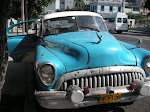
Using the old 50’s style US cars that local mechanics have kept running for 50 years or more is a possibility for a Cuban with a long way to go. They all know a hand signal code to ask for rides from the jitney driver. Nora Garcia showed us how that works as she stepped into the street to flag down a 53 Buick for a ride out to the suburbs. Nora quickly negotiated a price for our ride out to and back from the National Zoo in the suburbs.
Some people think of these iconic relics as collector cars, but most are beyond restoration and in bad condition that would not interest collectors. This one growled with a broken muffler and had two wires sticking out of a hole in the dashboard where the radio used to be. To start the engine the driver touched the two wires together and the engine started. I saw a floor shift and asked the driver about it as Buick got rid of those more than a dozen years before this one was new. The driver told me the car had a Toyota truck chasis, engine, and transmission. The only part of the old Buick left was the shell of the car. Some of these old cars have been rebuilt with Toyota engines repeatedly.
There is a train in Cuba, and it can take you from Old Havana east to Cardenas and Matanzas. A few use the trains to commute, but two legs and shoe leather are the most common transportation.
Everywhere you go you see dogs in the streets. All are loose, and many are pets with homes, but a good number are strays with a bleak future. Old, sick, and dying dogs out in public are bad for the tourist business, and the government rounds them up using teams of prisoners and trucks. The strays are kept for a few days and then dispatched with strychnine—a very unpleasant way to die.
But, more about Cuba’s treatment of man’s best friend in a later chapter.
Les Inglis
Less than 300 miles from where I sit is a city of 2,000,000 people with a poor excuse for a transportation system. Havana has no subway, no ell, no streetcars, an antiquated and inefficient bus system, and the average citizen can’t afford to use the taxis. Fortunately the city is tightly compacted so most people walk to where they want to go.
When I first visited there, the busses were camellos hardly more than semi trucks where the passengers rode in the trailers. I was amazed at the rush-hour crowds waiting at main intersections—often more than two hundred people. Amazed, that is, until I saw a camello pull up, more than 100 people get out of the double doors in the middle of the trailer. Then more than 100 got on the trailer, and the tired old tractor truck ground through its gears to get up a little speed between stops. Of course there was no air conditioning, and every window was wide open.
The camello name (means camel) came from the twin humps of the trailer as the mid section with the doors was built closer to the street to make entrance and exit a step rather than a climb. Fidel and company replaced the last camellos only very recently with new busses from China, but there still aren’t enough of them.
Taxis prowl the city—usually clean new Peugeots or Hyundais. But they cost too much, and they only accept CUC’s, the Cuban convertible currency which average people don’t use. Thus taxis are only for tourists.
Using the old 50’s style US cars that local mechanics have kept running for 50 years or more is a possibility for a Cuban with a long way to go. They all know a hand signal code to ask for rides from the jitney driver. Nora Garcia showed us how that works as she stepped into the street to flag down a 53 Buick for a ride out to the suburbs. Nora quickly negotiated a price for our ride out to and back from the National Zoo in the suburbs.
Some people think of these iconic relics as collector cars, but most are beyond restoration and in bad condition that would not interest collectors. This one growled with a broken muffler and had two wires sticking out of a hole in the dashboard where the radio used to be. To start the engine the driver touched the two wires together and the engine started. I saw a floor shift and asked the driver about it as Buick got rid of those more than a dozen years before this one was new. The driver told me the car had a Toyota truck chasis, engine, and transmission. The only part of the old Buick left was the shell of the car. Some of these old cars have been rebuilt with Toyota engines repeatedly.
There is a train in Cuba, and it can take you from Old Havana east to Cardenas and Matanzas. A few use the trains to commute, but two legs and shoe leather are the most common transportation.
Everywhere you go you see dogs in the streets. All are loose, and many are pets with homes, but a good number are strays with a bleak future. Old, sick, and dying dogs out in public are bad for the tourist business, and the government rounds them up using teams of prisoners and trucks. The strays are kept for a few days and then dispatched with strychnine—a very unpleasant way to die.
But, more about Cuba’s treatment of man’s best friend in a later chapter.
Les Inglis
Subscribe to:
Posts (Atom)
