



Donate to The Aniplant Project to help Cuban animals

Sunday, January 19, 2014


Yo-yo

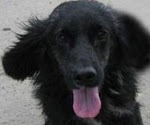
Yo-yo was a beautiful tri-color hound running loose in a town near our farm.  He came right up to Charlene when she tried to pet him.  We were in town for a meeting, but Charlene kept leaving the meeting to go out and watch the dog.  The town had an unofficial dog warden, who was known to capture stray dogs and euthanize them.  Charlene was adamantly opposed to such culling, and while we were at the meeting she decided that Yo-yo had to have a home.  That meant our home, of course, although we already had three dogs living with us. I came out of the meeting to find Yo-yo locked in our Jeep, and—Shazam— we were a four dog family.

He was barely full grown and I thought he looked like an American Fox Hound with his white, brown, and black markings.  Whatever breed he was, he was one of the best looking dogs I'd ever seen.  Of course he wasn't yet named Yo-yo—that was my contribution later after having seen a performance of Tommy Smothers with his yo-yo tricks. Yo-yo lived in our 2 acre fenced yard with two of our other three dogs.  In a short time the dogs sorted out their pecking order and settled into their own little society.

I don't like to say one animal is my favorite, but if it has to be said, then I guess Yo-yo was my favorite in a growing bunch.  By the time we moved to Florida we had six dogs and a passel of cats.  In Florida the dog yard was smaller, but still fenced.  Yo-yo became a house dog not much later, but he still romped with the others a couple of hours every day.

With Yo-yo so close at hand, he and I began a relationship so close it's hard to describe.  He was always nearby, within arm's reach for copious petting.  I used to kiss him on top of his pretty white nose near the point right between his eyes.  Yo-yo was a shedding dog His long silky fur could be found all over the house, but Charlene did not complain.  She did wear out a couple of vacuum cleaners while he lived with us.

He always had regular checkups, and years later at one of them, Marty, our vet, moaned a little when he discovered a swollen thyroid and diagnosed a lymphoma.  My best friend and constant companion had a fatal disease.  Marty could create a remission, but only for a little while.  He told us that in a couple of months we'd know when the right time to put him to sleep came.  We even went to a veterinary oncologist and tried chemotherapy.  I was heartbroken at the prospect of saying goodbye to this noble, beautiful best friend.  And still the time came, and he passed into eternal sleep with us at his side.  He was about 14 years old.

Weeks later at Christmas, Charlene gave me a coffee cup with Yo-yo's picture transferred onto it.  On the back side the cup says, "I loved you so."  She couldn't have found a better gift, although I tear up sometimes when I use it.  The coffee cup picture is in color and you can still see those three primary colors, but the colors are fading.  I expect the fading, for after all the cup is now thirteen years old.  Each time I use it, I gaze at his lovely eyes staring out at me, and I notice the fading is slightly more pronounced.  It's like a sea fog settling in,

I feel some wry amusement imagining a tiny spark of Yo-yo's consciousness lives on there inside the cup behind those adoring eyes, and I imagine that he is wondering if I, his master, am slowly being obscured same thickening fog.

Les Inglis

Friday, December 13, 2013

                      
                                                        Dogcatcher's Dumpster


Animal Control the Right Way

Cuba has a homeless dog problem.  They have had it for years.  Tourists see the dogs in public parks, around hotels and near museums and tourist attractions.  Dog and cat lovers often go back home from Cuba wishing they could do something to help their hapless furry friends.  They spend a little time on the Internet and write us to see what can be done.

Cubans know what their government does about the strays, and it isn't pretty.  Gangs of prisoners cruise the city in trucks looking for the strays.  If they spot a healthy dog or cat, it usually can elude these jailbird dog catchers, but they usually capture the old, the sick, and the nursing females and their puppies.  Those animals unlucky enough to be caught are tossed into metal dumpsters trailed behind trucks for a hot, bumpy ride to a "zoonosis" center about 15 miles west of Havana.  "Zoonosis" is Cuban for animal killing center.

Those sweeps for strays are the government's way of making a good impression on tourists, Cuba's biggest source of hard currency, but, judging by the comments of travelers, the effort is largely a failure.  Not publicized by the governments is what happens to the captured animals.  At the zoonosis center (named Arroyo), new arrivals are placed in large barred cells, perhaps 20 to a cage.  They are given water, but no food for a few days as they are watched for signs of rabies.  After the quarantine period, their hunger is satisfied with a meal laced with strychnine.  Then begins an hour's long intense suffering as the poison does its work, and finally all is quiet, and the dead animals are removed to a landfill.

The government provides no money for humane euthanasia medicines, even though much of the staff at Arroyo is trained to administer the needed intravenous injections.  The lack of trained people is rarely a problem in Cuba because of its good free education system.  So the main problem is lack of humane euthanasia medicines.

Since TAP began helping Aniplant helping Cuban animals in 2005, we have concentrated on supplying anesthesia medicines to Aniplant's spay-neuter clinics.  Aniplant has progressed steadily from 500 sterilizations per year to over 5000 per year.  This work has been more effective in reducing strays on the street than all the years of roving prisoner dog catchers.  Without sterilization, Arroyo killed about 14000 animals a year.  But in the years since TAP augmented Aniplant's supplies of anesthetics, the number of animals killed in Arroyo has declined to about 6000 a year, a 57 percent drop in cruel killings with poison.

The use of strychnine is no secret.  Your hotel bellboy can probably tell you what happens to the strays who hang around tourist areas when they get sick.  What he probably won't tell you is we've already cut down the slaughter by 8000 animals per year.

The Humane Society of the United States has said that the only log-term effective solution to animal homelessness is massive spay-neuter campaigns like the ones Aniplant provides.  We subscribe to that belief, and our most important work, helping Aniplant's spay-neuter clinics, is having the desired its desired effect in curtailing the number of poisonings.

Think about it; what good does killing 14000 dogs a year do if those who remain are free to breed and replace their numbers within a year?  It's far better to restrict their ability to breed and gradually curtail the poisonings and their associated suffering.  Your donations to TAP make this possible.

Les Inglis


Sunday, November 3, 2013


                                           Nora, Gerry Hill, Bob Skogland,Xenia Mathews


Logistics for the Animals

In 2007 we began our aid to Aniplant in Cuba with shipments of Ketamine, an injectable animal anesthetic.  This enabled a large increase in the number of animals sterilized by Aniplant in Cuba.  Shipping medicines into Cuba is legal under the rules of the US embargo against Cuba.  US law specifically states that medicines and medical supplies "shall not be restricted."  We interpret this to mean they shall not be prohibited, taxed or licensed, all of which are restrictions on commerce.  Of course rules regulating the handling of controlled drugs still apply.

But more recently, as we considered ways we can help Cuban animals, we realized that Aniplant needs lots of vet meds and shelter supplies that are not controlled.  These items are easy to buy in the US and can be shipped to Cuba in accordance with the above provision of the embargo.  In a conversation with Bob Skogland, a TAP director and Vice President, we began to develop a list of non-controlled medicines we could supply to Cuba.  For the most part, these items are hard to find or expensive in Cuba.  Remember, in Cuba no government assistance is provided to animal protectors, so they must raise whatever funds they need by themselves.

Bob got together with his vet, Dr. Dean Ebert of Venice, Florida and constructed of items Aniplant might need.  Without this collaboration I couldn't have made much of a list myself.  Bob has more knowledge about vet meds than I do, but he still needed Dr Ebert's help to get a really good list.

We began with shelter needs—meds for mange, fleas, ticks, worms, etc.  Then Nora added a list of meds to supply their new clinic and surgery in Aniplant's headquarters—things like antibiotics, sutures, and steroids. Once Bob and Dr. Ebert reviewed all items for cost, weight (to minimize shipping costs), and need, we had a good list.

Nora had to submit the list for government approval (they even have to approve the makers of the drugs).  Once we have their OK, we can buy the items through Dr. Ebert and gather and pack them for shipment to our freight forwarder in Miami.  Then they go via air to Havana for delivery within Havana to Nora's doorstep. 

While anesthetics are crucial to our sterilization efforts, a huge range of other meds are needed to supply a first class veterinary activity in Havana.  We are committed to making this supply line work for the benefit of Cuba's animals.

And here's a big thank you to Bob Skogland and Dr. Dean Ebert—indispensable parts of the machinery we are assembling to help the animals of Cuba.

Les Inglis

Tuesday, October 22, 2013


                                                                Nora and Friends


Rehoming

It always surprises me how much interest there is among tourists visiting Cuba in helping out the stray animals they encounter.  Many are eager to adopt a dog they've seen and ship him home, wherever that may be.

We try to be careful in enabling these projects as the adopter needs to be realistic about how long it can take and how much it might cost.  Even faced with the costs, many still want to adopt a Cuban dog and ship him home.

A couple of years back we learned of the rigorous requirements the UE imposes on importing dogs.  They are so tough, it is nearly impossible to accomplish rehoming in the UE.  I was corresponding with Nora Garcia, Aniplant's President, when I received her comments on rehoming, and I felt they were worth sharing with you.  As you'll see, not all of these projects end up with a dog as well adapted as Pablo is. (Pablo is the rehomed dog pictured below romping on the beach at Malibu.)  Nora's words show the loving spirit that prompts Aniplant's work for the animals of Cuba.  Nora wrote:

We have sent 2 animals to Germany—a dog and a cat, and I have photos of thanks from those persons.  Also we've sent to Canada and several to the US.  (The US count is 14 counting Pablo and Christian,)  Two dogs, brothers, went to Spain.  The UE regulations are tough but achievable when there is true interest on the other side and they really want the animal.  One American official shipped 8 dogs at one time—a really memorable event.

I believe I told you of two young people visiting in Trinidad, Cuba who found and picked up a little dog with malformed feet, saved him, and wanted to take him with them..They had true interest because when they got to the tourist bus to return, the driver wouldn't let them board the bus with the dog.  So they rented a car and arrived here in Havana with him.

They asked us for shelter, and I got the husband of an Aniplant employee to promise to care for him.  We supplied his food and we paid 90 CUC (about $90) for three months fostering, grooming, vaccinating, and a blood test.  When the paid time was used up and the dog was healthy and we were ready to send the blood sample, the young men wrote us and said that they had no money to pay for all that was needed.  I needed to tell the foster parent what had happened.  I thought he would keep the dog out of love for him.  When I told him, he told me definitely if we didn't have the money, we couldn't have the dog.

We were faced with the impossibility of placing an adult dog with twisted feet whom we all adored.  I offered the foster parent half of what was owed, and he accepted, and ever since then we've paid 360 pesos in his expenses and supplied his food.  These are the risks of taking a dog for eventual shipping.  The only pay we get is to know the dog is happy.  In this case, the foster parents don't mistreat him, and he is very loving to them.  They care well for him.  The foster parent is on a fixed salary, and what we pay for the dog's care is a big help to them.

We have setbacks, but we keep going forward, after 27 years, in this business, Aniplant has a long history with many stories to tell.

Nora


Saturday, October 12, 2013


                                                              Princess


                                                               Pablo at the beach

Animal Emotions

Animals got a bad deal when they were put on earth without the ability to speak.  We humans are a little better off because we can easily transmit our thoughts and feelings to one another through speech.  There are some people who think of animals as dumb brutes and who go so far as to hold that animals have no souls, emotions, spirits, or even self consciousness.  They think that animals are ours to use, however we like.  If you buy into that idea it's easy to justify the cruelty we apply to food animals, lab animals, and working animals.  After all, they say, animals don't tell us they object to the cruel treatment we give them.

Anyone who ever loved and lived with a dog or even a cat will deny such a blunt, mechanistic view of animals. You can't have a dog for a pet and think he has no emotions, self consciousness, etc.  A dog will bond for life with his master in a very short time.  Even though he can't tell me how he feels in words, I still know he has a big range of emotions from observing his interaction with me.  He shows it by his physical reactions to our emotions like tail wagging, racing, bowing, licking, or even barking.  He reads the emotions of our lives and shows us his reactions.  Be it anger, fear, calmness, rush, sleep, love, he has a reaction tailored to our feelings.  How could he understand and differentiate out moods and actions and react to each one appropriately if he didn't have emotions and self consciousness himself?

With a faint stirring of her tail, my sweet little Princess responds to my recognition of her.  If I look like I want to pet her, she comes to me, rolls over and presents her tummy for a scratching. I always thought my dogs were better at reading my emotions and moods than most other people are, even though I can speak to people about my feelings.  Think about it—wouldn't you develop a keener perception about others' feelings if you didn't have speech to help you?

At the top of this posting is one of my favorite pictures of an animal.  It's Pablo at the beach in Malibu.  I've used this picture and Pablo's story before, but this time I do it just to ask you a question.  Is this dog angry, upset, sick, loveless?  Or is he bursting with joy, loving life, and at peace with his situation?

Those are easy questions, so here's a tougher one: What is Pablo trying to say to Amanda, his owner and the woman behind the camera?  Clearly he's telling us how great he's feeling and returning her love.  Keep in mind Pablo had a many months-long bout with illness until he was healthy enough to be flown to the US and his new home with Amanda.  Chances are  in his entire life he never had a moment of pure joy like the one the camera caught on California's most famous beach.

You might notice that when I refer to animals with relative pronouns, I do it with "who," not "which," and when I use personal pronouns for animals, Princess is "she, and Danny was "he."  Stuffy grammarians say doing this is "anthropomorphizing" (attributing human qualities to an animal) and prescribe against it.  But I emphatically deny this is wrong.  These companions are emotional little beings who share their feelings with me and understand mine as well.

Our penchant for political correct language finally made "chairman" into "chair" and "spokesman" into "spokesperson."  I'm hoping it won't be too long until we honor our animal companions with "he" or "she" instead of the godless, cold, inert "which."
Les Inglis

Les Inglis

Wednesday, September 25, 2013


                                                                       Scavanging


Decades of Discord

The cold war was about 13 years old when Fidel Castro came to power in Cuba, pushing a host of changes in how the island nation thinks and acts, and precipitating a long period of enmity between Cuba and the US.  That contentious era continues to this day, and is now 54 years old and shows few signs of moderating.

Oh, a few hopeful signs of better relations between the two counties have made news recently.  The negotiations to normalize postal cooperation are the most recent.  Right now if you if you mail a package to Cuba, you pay $10 per pound postage and get no guarantee of delivery within Cuba from USPS,  All they'll promise is to get it to Cuba, and they don't promise delivery within Cuba.  A postal cooperation would be a boon to people on both sides of the Florida Straits.

But it is still a baby step toward normal relations.

Obama's relaxation of the crazy rules affecting travelers is another small, but welcome change.  I do, however, think it was done more to poke a finger in the eye of his US opposition (Republican conservatives) than to bring about a new era of friendship.  But don't get me wrong; I support relaxation of the travel rules.

I hate to say it, but I really believe the long term spat had begun to widen the cultural differences that separate the two countries.  In Cuba, all those years of authoritarian government have produced an almost cynical pessimism among Cubans hoping for a change.  The prevailing attitude seems to be, "It is what it is," and that seems to be replacing any advocacy for improvement.

One the US side, our Congress and political parties, who never did much anyway, have now found a detent in which a minority of elected legislators can prevent nearly any bill from being passed.  This minority is dead set against admitting immigrants to the US, and this includes Cubans.  So, any suggestion we moderate our tough policy against Cuba is met with legislative deadlock.  There'll be no easing of restrictions under the law until our Congress grows up and decides to work for the good of the country on needed legislation.

Clearly, if the people on both sides don't expect a rapprochement, it isn't likely to happen.  Thus a customs agent or a postal inspector in Cuba can and does stop a package for the tiniest infraction.  An immigration officer in the US will apply the letter of the law and send a Cuban refugee rafter back home, even after he crossed 90 miles of rough water at great peril and now stands only ankle deep in the waves lapping at our shore.  But, once the Cuban's feet are dry and he stands on US territory, the refugee gets special treatment no other foreign national gets.  He gets instantly a green card permitting him the right to work in the US, practically free health care, and counseling to help him achieve a new productive life in America.

That almost sounds incongruous.  Why whisk an arriving man back to Cuba if he is still in the water on the one hand and yet give him a warm welcome and much help to settle in here if he actually has made it all the way to shore?  But who ever said government policies on either side make sense?

On a practical level, if you're trying to help the animals of Cuba, you might want to send medicines and medical supplies from here to there.  But you can't without jumping through bureaucratic hoops, both Cuban and American.  You might want to send a computer for animal protectors there to use in communicating with their American counterparts.  You might want to rehab a sick puppy and send him to an American home, but you think twice before running the gauntlet of government and veterinary rules and regulations enforced by stern faced airport and airline people.  And the scrutiny of Americans in Cuba is more severe than for others while vice versa is also true.

You can title this lament, Leslie's Complaint, for I have offered no real solution.  All we can do is try to comply with red tape, expect delays, refusals, and next to no official help in doing what we want to do.  It's easy to see that everything is more difficult and everything takes longer in both countries if Cuban and American cooperation is involved.

In both Florida and Havana live two warring camps—those who want normalization between the two countries and those who don't.  I decided a long time ago not to take sides in those political fights, as it is easy to make enemies

I just wish someone could show me how this bitter dispute has helped even one person on either side or how it has helped even one sick, stray dog begging for food in a Havana public park.

Les Inglis

Thursday, September 12, 2013


                                                                    Malecon


Mala Agua

You have to hand it to Diana Nyad, the 64 year old long distance swimmer who on Labor Day was the first person ever to complete a Cuba to US marathon swim without the protection of a shark cage.  Diana offers us all an object lesson in perseverance.  She first tried and failed in 1978, and finally succeeded on her fifth attempt thirty five years later.

A friend, speaking for Diana, said she wanted to send a message of peace, love, friendship, and happiness to the people of the US and Cuba.

Well said, Diana, I say, and congratulations too.

One of the worst hazards in the cross-straits swim is stinging from jellyfish.  They had stopped her before, but this time a partial face mask helped her to success.  Thinking about her feat, I was reminded of a little walk I took one day from my hotel in Havana,

I headed north on Avenida de los Presidentes, and in two blocks I was at the Malecon, Havana's seaside highway.  Built in the early twentieth century the Malecon is a wide coastal expressway separated from the sea by a four foot high splash wall.  Sometimes when the surf is up, the waves break against the wall and the large rocks below causing huge displays of spray that dwarf even large trucks on the street.  On rare occasions high surf closes the street.

In quieter weather, the top of the wall is a spot to sit, sun, read, talk to friends, cuddle with a lover, or fish.  In a way, the Malecon is a park for Havana's people.

I stood by the wall looking down at several fishermen, perched on the rocks working at fishing like the serious business it is.  They were after tonight's dinner for their families.  I noticed a number of filmy objects that looked like surgeon's gloves floating in the slightly choppy water.  They looked strange to me, and I yelled in my gringo accented Spanish to the men below to ask what they were.

"Agua mala," answered one man—that meant "bad water" in English—but it was apparently their way of saying jellyfish.  I understood right away those gelatinous blobs were something to avoid.  Certainly one would not want to swim when they are present.  There are so many of them at certain times of the year that even the Havana kids stay out of the water.

I was only a few miles east of Marina Hemingway where Diana Nyad started her record setting swim.  I was about 90 miles from where she finished it.

And I was a million miles from the home sweet home I'm used to.

Thanks, Diana, for helping us to see that our two countries aren't really so far apart.

Les Inglis