

Donate to The Aniplant Project to help Cuban animals

Sunday, April 14, 2013

Best Friends Forever
One of the toughest problems for dog owners is that dogs live only a fraction of the time people do.  That means in the course of a lifetime a dog lover might have to face the passing of several "best friends." 
Ten pictures of our dogs hang on the walls of my study as I write this.  Only one of these very special creatures is still alive.  The ten do not include dogs I had as a child or before Charlene and I were married.  That's a lot of goodbyes, and each one hurt as if it were a son or daughter.
There is no right way to manage your pet's passage onto another plane.  Sometimes they pass quickly with no forewarning, and sometimes they decline slowly over a long time of building grief.  Sometimes a veterinarian predicts the end, and sometimes he offers a hopeful medical strategy to keep the pet alive.  Many, if not most, of us will reach a long way to keep our pets alive and healthy, but also most of us would question commissioning heroic veterinary feats just to postpone the end of a terminal struggle.  Who is such a postponement for?  The pet or its owner?
Over the years Charlene and I have faced the mortality of our animal companions, and I must say that going through these struggles has not made us experts in managing the end of life passages, except perhaps to reinforce what most of us know—make the most of today for tomorrow may never come.
But let me tell you the story of Booster, my friend Davis Hawn's service dog.  Davis found Booster as a scarred puppy inside his pickup truck when he went to claim it from an impound lot.  At that time he wasn't particularly a dog lover, but something about that little puppy struggling to live struck a chord with Davis, himself a victim of post-traumatic stress disorder.
They bonded and became inseparable.  Davis began to learn more about training dogs and eventually won a Master's Degree from Bergin University in training service dogs.
Booster became educated too, and today he helps Davis with everyday tasks.  Among his many talents Booster can, on command, go to the refrigerator, open it, retrieve a Coke, and bring it back to Davis.  But most of all, they are inseparable companions, which Davis lovingly demonstrates by signing his letters:
                        Davis and Booster
                        We are a team.
After an email friendship, I finally met Davis and Booster at an HSUS conference in Orlando.  Booster was very popular among the conferees as Davis put him through his paces.  It seemed like Booster could understand English, but I had the feeling that Davis understands dog language too.  Surely they are a team.
Our spinning planet shuddered a little one day recently when Davis found a lump on Booster's head.  He was told Booster had developed a tumor that had penetrated his skull and was growing inside the brain cavity.  If he was to be saved, surely radical measures would be needed.  Quickly educating himself in such matters, Davis found two vets and treatments that could possibly help Booster.  First a vet in Canada had come up with a way to take cells from the tumor to make a vaccine that would fight the spread of the disease.  The second vet believed he could kill the tumor by a series of targeted radiation treatments.  Davis opted for both approaches.
The only fly in the ointment was the vaccine vet's schedule had no opening for Booster for a few weeks, but if the radiation were begun, the tumor material to be used for making the vaccine would be damaged, making the vaccine less effective.
Not to be diverted from helping his best friend, Davis opted for yet a third procedure.  First they would harvest robust cells and send them to the vaccine vet.  Then radiation in several sessions would kill the tumor.  Finally, when the vaccine vet's schedule permitted, the harvested cells would be used to make a vaccine.
All that has now happened, and Booster has come through with flying colors.  He has had his first vaccine application and an agenda of several more is scheduled.
Booster is one very talented dog, but he's a lucky one too.  In Davis he has a companion who just won't give up.  Davis is no starry-eyed optimist.  He knows a relapse could happen in the future, but he tells me, this is the first time in history that Booster's type of tumor cells have been applied this way—and it happens to be a remarkable success.  Booster, who has been the subject of countless news articles on his service dog skills, is now famous in veterinary medicine as the living demonstration of a new cancer fighting technique.
That's quite a career for a 95 pound Labrador retriever even if he's smarter than the average dog.
Les Inglis

Sunday, April 7, 2013


Something in Common

The other night I watched a TV special discussing life in Cuba.  For many years travel to Cuba from the US had been complicated by books full of rules, regulations, restrictions, licenses, and authorizations.  As a result, US citizens stay away from Cuba in droves.  As intriguing as the island might be to US tourists, most decide it isn't worth the effort and travel somewhere else.

That's too bad as the island offers a large measure of things to see and do as well as its own rich history, architecture, music, and dance.  50 plus years of repressing interaction between Cuba and the US have only served to make Cuba and its culture more interesting.  The TV special I saw illuminated the many differences between life in the US and life in Cuba.

For an animal lover like me, one striking difference is the number of dogs one encounters on the streets—that is, dogs without any noticeable owners.  Now, to be complete, I have to say this is a Latin American and a Caribbean thing.   Cuba has fewer strays and homeless animals than say Honduras, but all the Latin countries have far more than we are used to seeing in the US.  Still, in Cuba few houses have fenced yards for their pets (or any yards at all for that matter), and it is common to allow your house pet to roam outside for its bathroom breaks.  Also the use of collars and leashes is rare in Cuba.  Even owners on a walk with their dogs depend upon the dogs staying with them while they stroll.  Thus, some of the possible "strays" one sees on the street are actually family pets and have homes.  I have learned not to consider the absence of an owner as evidence of homelessness.  That is to say, absence of evidence is not evidence of absence.  Rather, I look at the dog's condition.

For me, the best evidence of homelessness is the condition of the dog.  Underfed, ribs showing, lethargy, mange, etc. are far better indicators of homelessness.  On the TV special I looked carefully for street animals, I spotted two in the background of views of other subjects.  Neither of these two showed any of the signs of neglect, and I concluded these were someone's family dogs.

The TV special had sent its cameras and reporter into the home lives and family lives of the Cubans, making evident the relative poverty widespread in Cuba.  Salaries are miniscule and ration books supplement them, but ration books aren't sufficient to provide all the needed food.  Many Cubans have sidelines, and everyone uses every opportunity to earn a little extra money.  One wonders how a person in pressed circumstances can possibly have a dog in his family, and yet pets are perhaps as common in Cuba as they are in the US.  Dogs eat leftovers and scraps, slaughterhouse offal and viscera.  Chicken necks, pig stomachs, kidneys, and whatever else can be purchased cheaply.  Commercial pet food does not exist except in a few tourist stores at unaffordable prices.

Nora Garcia, Aniplant's President, presents two radio shows and one TV show each week.  She teaches animal care, animal health and humane practices.  In a country where radio is as important as TV is here, she has a large cadre of followers who tune into Radio Progresso every Saturday at 9:30 am.  Many times I've seen her stopped on the street by passersby to respond to their questions about pet care.  These experiences help me to conclude the typical Cuban loves animals as much as the typical American.  They care for and love their pets and support them despite meager resources.  They show up at spay neuter clinics for sterilization, knowing it is the long term solution to stray animals on the street.  Even if they can't personally rescue all the strays, they help by neutering their pets.

For all the differences in our lives and theirs, a love of animals, however differently expressed, is something we have in common with our island neighbors to the south.

Les Inglis


Sunday, March 31, 2013

Similarities and Differences

As the first country in the Western Hemisphere to proclaim, fight for, and win independence from European colonial powers, the United States became an example to emulate for the countries of Latin America. During the 1800’s, the US example prodded most of Latin America to break the bonds of Spanish and Portuguese rule. Many countries had to fight for their independence, but for some, particularly in Central America, merely proclaiming independence won it.

Cuba had a tougher time throwing off the Spanish yoke than any other Latin country—not surprisingly as it was thought of in Spain as the richest prize delivered by the Conquistadors. Not for nothing did they call it “The Pearl of the Antilles.” Cuba fought three wars of independence with Spain, losing the first two in the 1860’s and winning the last one (with American participation on Cuba’s side) in 1898. The result of what we Americans call the Spanish American War ended once and for all Spain’s dreams of having an empire in the Western Hemisphere.

Cuba established a democracy with a political system much like ours. Ties between the US and Cuba were many and strong, and the two nations became major trading partners. When it was time to build a new Capitol building in Havana, it developed into an amazing look-alike for our own Capitol

The Capitolio, built between 1926 and 1931, housed Cuba’s House of Representatives and its Senate. Its tall dome looks a little skinnier than ours, but none the less elegant. If anything, the semi-circular halls of Congress at either end are more tasteful appendages than our enormous rectangular wings. Today the Capitolio is a museum. Inside you are met with the Statue of the Republic, a bronze, gold leaf coated reminder of our Statue of Liberty, 50 feet tall, and the third tallest indoor statue in the world. She even has her right arm raised like Liberty’s. A replica of a huge diamond is set into the floor at the center of the domed hall. The real one was stolen years ago, and recovered, but never reinstalled in the floor.

It’s amazing to compare the past fraternity of Latin and North American nations with the mutual suspicion that seems to reign today. Amazing, yes, but not surprising when we realize that every nation must find its own way in the world. I’m as much a patriot as the next guy, but I don’t believe that just because something is American (meaning of the US) that it is therefore better.

Still, in the animal protection realm, for all the puppy mills, factory farms, industrial fishing, and hunting abuses we have in this country, animals here are much better off than they are there. Aniplant and The Aniplant Project are working to make the Cuban animals’ world better. But stray and even sick animals can be found in disturbing numbers in Cuba. Efforts to improve the animals’ lives there are growing, but they are still in the early stages of development. And while the average Cuban is at heart an animal lover, household pets don’t yet receive the respect and attention they need and deserve. Part of the problem is economic, of course, but there is a need for much more humane education and a general elevation of the regard in which the family holds its animals.

The optimist in me thinks we’re making progress for animals in Cuba. You can learn more about our efforts at a new website, http://theaniplantproject.org . Please visit it and make up your own mind about the value of the work we are doing for the animals of Cuba.

Les Inglis

Saturday, March 23, 2013

Swinging on a Star
Two ten year old boys are pedaling their bikes north from Mt. Prospect, Illinois in the summer of 1944.  Their moms aren't worried about them as traffic is almost nonexistent.  Today that same road is clogged with honking cars, growling trucks, and the occasional motorcycle.  The warm air cools a little and a sparse sprinkling begins—ignored by the boys.
The flat prairie land moves slowly by as they approach their destination—a meandering creek feeds a pond not far off the side of the road.  In 1944's pre-television quiet, these boys have very different ideas from today's kids on how to have fun.  For these bikers, creeks and ponds are high on the list of fun things to do.
Would you like to swing on a star?
They dismount, wheel their bikes away from the side of the road, and get out the jars they've brought along for their hunt.  They're looking for tadpoles.  Call them polliwogs if you will—they're really the first post-egg form of a developing frog.  To catch them, you have to be quiet and stealthy.  Sometimes whole schools of them can be found near the side of a pond and a swift scooping with strainer into a large jar can capture a bunch of them at once.
The boys think life is perfect as they hunt.  They've heard about terrible things happening in other parts of the world, but their world—the here and now of 1944 Illinois—is a picture of peace and enjoyment.
 Carry moonbeams home in a jar?
They head home with their jars of squirming, nascent amphibians.  Back down the same long flat road toward their homes.  Their moms aren't too happy with their new pets with good reasons.  How will you feed them?  You can't expect them to survive in a jar with a screw-on lid.  It's hard to argue with a mom on these matters, and she plays on their attachment to the little swimmers.  Soon the kids are convinced the nicest thing they could do for the tadpoles is to release them in a nearby pond.
And be better off than you are?
Dejected, they start toward a pond a few blocks away.  They had hoped to keep them long enough to see the little frog legs grow out from the bodies right by their stringy tails.  Not this time—not this bunch of tadpoles.  One of the boys said, "Mom's right, we can't keep them," and as the jar's contents splashed into the pond, the tadpoles happily swam away, refreshed, free, restored to their element.
So you see, it's all up to you
You could be better than you are
You could be swinging on a star.
 
Les Inglis
 
With thanks to Bing Crosby, Jimmy Van Huesen, Johnny Burke, and a kid I used to know

Sunday, March 17, 2013

Musings of a Wandering Tourist
If you're looking for something to do in Havana, take a walk.  The city is filled with interesting sights—especially the buildings.  Havana, like Miami, has some remarkable art-deco buildings, coming from the 30's, 40's, and 50's.  In these blogs, I've already covered La Casa de las Américas, perhaps one of the most recent art-deco structures.  Some others were discovered on my walks.
One afternoon I decided to walk east from my Vedado hotel.  In a few blocks, I spotted a 12 stories tall, very beautiful art-deco apartment building.  Its intricate architectural details were perfect, its proportions correct, and its condition unkempt and run down.  The outside was dirty, and a few scrubby bushes in the small yard hadn't felt a gardener's touch in a generation or more.  The north (front) façade was beautiful even in its neglected condition.  Several stairs led up to an elaborate entrance and a propped open door leading into the lobby.  I couldn't help myself; I stepped into the lobby, dimly lit by a lone bulb hanging by its wire from the ceiling, in spite of lovely deco metal and glass sconces unlit on the walls.  Still there was plenty of light to see a gorgeous marble floor with a deco radial design of many colors.  I wondered who lived here midst dilapidated beauty.  A feeling I didn't belong here rushed me back outside to the sidewalk.
Later I learned it was built in 1932 for Jose Lopez Rodriquez and known as the López Serrano Building  It towers above most of the other buildings of its part of Vedado, and is reminiscent of the tower at Rockefeller Center or the Empire State Building, not for its height but for the styles of its base and pinnacle.  Since then I've seen the building in other photos of Havana, and every time I see it I imagine the luxury and style experienced by its residents back in the 30's.  I wonder if today's residents entertain such thoughts.
Another memorable building was along a walk to the south from my hotel.  I had only gone two blocks when I noticed a beautiful Italianate mansion sitting on a corner lot and looking out across the broad parkway of Avenida de los Presidentes, Havana's most beautiful street.  In this part of Vedado, within sight of Malecón and the Florida Strait, nearly all the buildings are grand works of architects.  Many were built as embassies of other countries which later moved on, for the most part to suburban Miramar.  Some of these places are surrounded by high wrought iron fences enclosing well-tended gardens.  Such places contain important government functions like the Cuban State Department across the street from my hotel.  If their function is important enough, they are kept in perfect condition.  But the old Italianate mansion that caught my eye wasn't quite so important.  It needed paint and yard work and repairs of cracked and chipped cement.
As I looked at the old building I guessed it had about 8000 or 9000 square feet in 3 floors.  It filled its lot leaving only a small front yard containing a large cement fountain, which hasn't worked in years.  I thought how much fun it would be to be a developer with a large budget to restore this mansion, and perhaps even to live in it.
The Italianate design had all the appropriate bells and whistles—a square tower, arched windows, balustrades, steps, columns, and porches.  In the back, someone had built a large addition of nondescript style.  My developer's mind was already tearing that down.
The desirable properties in this area were all taken over by the government after the Revolution and converted into public purposes.  By asking around I learned this mansion, clearly originally a private home, was now a court for first time offenders.  That explained a gaggle of young people waiting on porches and in the yard one day when I walked by before courts were called to order.
How strange, I thought, to have a court devoted to first time offenders.  In my county, the young, the old, the in-between, all use the same courts for hopefully impartial justice.  In Cuba, perhaps the first time offenders get a slightly more compassionate measure of justice.  At least that's my guess.
A month ago, I spent a day in court for jury duty.  Our bright modern courthouse had modern furniture, comfortable chairs, a PA system and good lighting.  In comparison, I imagine courtrooms in the old mansion in Vedado are dingy, have extension cords running along the floor, and suffer from cracked plaster and poor lighting.  Still it isn't the condition of the courtroom that determines the quality of justice.
 I'll be happy if I never have to be subjected to the court system either here or there.
 
Les Inglis

Sunday, March 10, 2013

Adiós Presidente
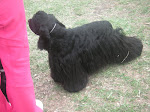
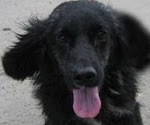
If you go back far enough as a reader of these blogs, you know about Aló Presidente, the beautiful Spaniel mix dog with long black curly fur Nora and I rescued from the streets of Vedado.  Four of us were walking from Nora's apartment to our Hotel Presidente, when we encountered this friendly little guy, not yet fully grown.  He started following us and wouldn't stop.  In the distance of a few city blocks we decided to rescue him.  The complete story is available in a blog titled, Aló Presidente, from August 20, 2010.
We named him Aló Presidente for the Hotel Presidente, in the shadow of which we took the decision to rescue him.  Also, Hugo Chávez, Venezuela's President and benefactor of Cuba, had a weekly Saturday radio show he called Aló Presidente during which he assailed Cuban ears with his views on politics and everything else under the sun.
I'm happy to say Aló, whom I think of as my dog, is living out a happy life as the only male (fixed, that is) in a harem of several females in the Aniplant Headquarters on Principe Street in Central Havana.  Hugo Chávez, who died a few days ago, was not so lucky.
Chávez was a military man who wanted to be like the many Latin American strongmen in all ways but one.  He was a leftist while most of the old Latin strongmen were hard rightists.  Frankly, as a leader, he didn't do Venezuela much good.  Coming to power after failing in a coup and finally winning an election, he mismanaged Venezuela's vast oil resources for his own political purposes more than for the welfare of Venezuela's needy people.  But politically he succeeded, and today most Latin strongmen are leftists, like he was.
Hugo was a friend and admirer of Fidel Castro, Cuba's guiding light of the last 54 years.  In spite of this, Chávez never called his political system Communism, but he surely pushed it in that direction.  He saw the Cuban economic crisis after the fall of the Soviet Union, and he made large regular gifts of oil to help his friends, Fidel and Raul.  Many Cubans now worry if with his passing, Cuba will suffer.
A couple of years ago, when he was diagnosed with cancer, Chávez opted to seek his medical care in Cuba.  He knew Cuba's medical establishment was the pride of the island nation.  In fact, to reciprocate for the gifts of oil, Cuba sent 20,000 doctors into the Venezuelan countryside to improve the health of the Bolivarian campesinos.
As often happens with cancer patients, Chávez underwent surgeries and infections and long recuperations, during many trips to Cuba—all at the hands of Cuba's finest doctors.  If curing him were possible, he'd be alive today as nothing was spared in his medical treatment.  Throughout all this he kept his position as President, even winning reelection in the past few months while he lay in his Cuban hospital bed.
My little Aló Presidente passed through the era of all these events oblivious to the entire drama of Cuban-Venezuelan relations.  Instead, he played with Bella, a long haired, light brown beauty of a Daschund mix rescued by British flight attendant, Angela, who every few months brings the headquarters dogs new treats and toys,
Sometimes, a dog's life is better than the ones we can arrange for ourselves.
Les Inglis

Sunday, March 3, 2013


Karma

In the 1980's we used to drive between our homes in Indiana and Sarasota.  That meant long hours of windshield time as we snaked along Interstate 75 through Kentucky, Tennessee, Georgia, and northern Florida.  The task of driving that far can lull you into an almost hypnotic trance, and I promised myself I would never attempt it if I wasn't well rested and feeling in tip-top condition.  Possibly that policy kept me and my family safe, but this story is about saving a little white Spitz dog.

Our long car trips to Florida almost always included our Beagle, Annie, the first dog of our family.  She was a good traveler and would just go to sleep somewhere in the cavernous space in the back of our Toyota minivan.  Come to think of it, Annie was a big reason we drove and didn't fly.  While she was just as nonchalant about flying in her little travel carrier as she was about a car ride, I wasn't so passive.  One time we flew we found out Annie made the trip in another plane than the one we used.  We ended up at the same time and place, but after that I had a low opinion of dogs flying in baggage compartments, and we seldom flew with the dog again.

It was early in 1985, and we were headed south near Lake City in northern Florida.  We approached what appeared to be a dead dog ahead on the side of the road.  We felt a familiar wave of sadness.  Just as we got near, the dog raised her head, our hearts jumped, and we braked to a stop a little past where the dog lay.

Charlene lives by her motto—Never be so busy you can't help an animal in trouble—and I've made it my motto too, since I want to stay married.  We walked back to the dog and were surprised to see she seemed to be in fairly good shape.  But she had tire marks on her white fur and couldn't walk.  We had to find a vet right away.

We scooped the little dog into the front passenger's floor space and pulled back out onto the road.  In the rear of the car, Annie woke from her slumber when we stopped.  Now she knew instantly there was another dog in the car as we loaded the hapless Spitz onto the front floor.  I was busy driving and Charlene was busy comforting the little Spitz while trying to keep a curious Annie away.

The next exit was several miles ahead, and we got off, found a phone book and located a veterinarian.  The vet examined her and thought her main problem was a concussion.  If he could stabilize her, he said, Lake City had a good humane shelter which could try to rehome her.  We paid for the day's treatment, promised to cover whatever bills might come up, and left the little girl in his capable hands, hitting the road once more.

The dog did indeed go to the Lake City Humane Society, a fine organization run by an Australian lady named Margaret Smith.  Margaret found her a home with a local family, and we later learned that she spent the rest of her life in that family.

Soon I became a member of the Board of Directors of The Humane Society of the US.  HSUS had a regional office in Tallahassee, and it happened that I mentioned Margaret and the Lake City shelter to our Regional Director.  "Oh," she said, "Margaret runs one of the best shelters."  That endorsement and the fact that Margaret had saved the little Spitz, motivated me to try to help.

HSUS manages money bequeathed in trusts to it for animal protection work.  One such trust used HSUS to direct its grants to worthy shelters. Over the five years I served HSUS as a director we were able to award grants totaling more than $100,000 to Lake City Humane Society. They used the money to help finance a doubling of their capacity.

So Charlene's words to live by helped her to set into motion a karmic chain of events that gave a little white Spitz a new lease on life and also helped countless other needy animals of northern Florida.

And the good work goes on.

Les Inglis