
Donate to The Aniplant Project to help Cuban animals

Saturday, October 6, 2012


Pablo 

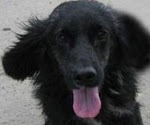
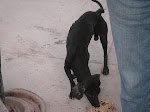
Amanda was on vacation in Havana when she spotted a black dog in Central Park who really looked terrible.  He was thin and listless and not very interested in eating.  She was alarmed, as the reason street dogs hang around the park is to get handouts from the tourists.  If he didn't want to eat, he might be very sick. 

Like lots of animal lovers, Amanda bonded instantly with the dog, and she began to think that it's not right an animal should be anonymous, so she gave him a name.  Pablo was her choice.  She called her vet back home and asked him if there was anything she could do for Pablo, given his circumstances and the fact that she soon had to fly back home to California.  She had a Cipro tablet with her, and the vet counseled her to give half of it to the dog, so she did.
Next, she talked to the concierge in the hotel, the Park Central, about finding a local vet to help the dog.  He told her the carriage horse drivers usually knew vets, and he was right.  Reynaldo, one of the drivers took her and the dog to a state run vet clinic where the vet examined Pablo and gave him more medicine.  All of this took place on a Saturday.  Amanda, who had to leave soon, tried to pay the vet to care for the dog, but he wouldn't take more than a small payment for the medicine.  He did promise to take him home and care for him and bring him back on Tuesday, so she agreed. 
Here the story gets a little confused—the vet said the understanding was that he was going to bring the dog to the clinic at 8:00 am on Monday, and Amanda understood Tuesday was the day.  It didn't help that Reynaldo was the only one who spoke a little English besides Amanda. 
Back at her hotel, she did a search for animal protection in Cuba and came up with a couple of possibilities.  The Aniplant Project (TAP) was one such contact, and we relayed the situation to Nora Garcia, Aniplant's President. 
Here's where it gets crazy.  The vet brought Pablo to the clinic on Monday morning, and, with no one there to pick up the dog, gave him to a person he did not even know.  Nora showed up on Tuesday morning, and all she got was the vet's story.
From a dog lover's standpoint, the vet was irresponsible in trusting the dog to someone he didn't even know and leaving Amanda and Nora with no path to trace his whereabouts.  From the vet's perspective, he was at the clinic at the right time and this was just some other tourist who may already have even left the country.  He had a clinic full of sick dogs to run.  From the dog's standpoint, the chances of his new custodian being a dog lover able to give Pablo a new home were slim to none.  He had a better chance of being abandoned again. 

I was injected into the middle of this polemic translating Amanda's questions to Nora and Nora's answers to Amanda.  Our best hope was that the stranger who received the dog really wanted him and that we could somehow find out who he was to resolve Amanda's anguish. 
If the dog was to be abandoned again, I was hoping it would be again near Central Park.  Dogs in that area know where to search for food and have many more tourists from whom to beg.  That seemed not too likely since abandonment is usually done without regard to the dog's needs.  Amanda had some photos which Nora reproduced and posted in likely spots, hoping someone had seen Pablo recently. 
Meanwhile the emails and phone calls continued.  I really felt sorry for Amanda not knowing how this animal could so completely be lost to her.  But it all came to a happy conclusion when on Sunday, eight days after being taken to the vet; an email arrived from Nora which said: 
We just found Pablo.  He's again in the same park in front of Amanda's hoetl where she found him.  Today I fed him as he is extremely thin.  Tomorrow we start treatment, and we are looking for a foster home.  I'm sending pictures. 
Nora 
All's well that ends well.  In later correspondence, Amanda decided that she wants to adopt Pablo and bring him to her home in California.  That's a long and very complicated procedure, but it has been done before with the help of friends at APAC Varadero, Air Transat and Candi International.  We'll cover that activity as it develops in these blogs. 
Les Inglis

Saturday, September 22, 2012

An Encounter with Big Brother

An Encounter with Big Brother


My friend Ray and his friend Chuck decided they wanted to travel to Cuba, and Ray called me one day to learn how I had managed to go there 8 times. Ray is a successful businessman who has traveled all over the world, so I could understand his wanting to go to a place most of us think is completely forbidden by US law. Remembering Ray was a supporter of TAP, I told him they could probably qualify for the humanitarian exception to the US travel restrictions. His interest in our work in enabling massive spay/neuter campaigns, his willingness to carry some veterinary supplies in his luggage, and his desire to visit Aniplant's headquarters could all be considered in getting a license to travel legally into Cuba.


I started him off with a referral to a friend at Cuba Religious Initiative, an American NGO licensed to permit qualified US travelers to visit Cuba. After that I didn't have much contact with Ray, as he is an experienced world traveler, and I knew he could handle the details of his travel arrangements. I did suggest he stay at Havana's Hotel Nacional, and he told me he had a need to be in Costa Rica, so he would fly from San Jose to Havana for a four day stay. I alerted Nora of his visit so he would be able to visit the Aniplant headquarters and other points of interest.


Several days before he left, instead of vet supplies, I gave Ray a 10 pound pack of TAP brochures which Nora had requested of Charlene during her trip to Havana in April. I had carefully identified the contents and destination of the package. We wished Ray well on his trip.


They bought Cuban Tourist Visas in the San Jose airport and traveled to Havana on a Wednesday arriving at Havana's Terminal 2, a modern facility with all the trimmings like jetways. Their troubles began as they passed through Cuban Immigration. "What is the purpose of your trip to Cuba?" asked the agent. "Religious," said Ray, prompted by his US license from Cuba Religious Initiative. That was really the wrong thing to say. The CRI license is actually not for approving religious travelers. Its name comes from its founder's close connection to Jewish groups in the US and Cuba. I had used the CRI license without incident for a group of 5 travelers earlier this year, and we were all there for humanitarian (spay/neuter, animal protection) purposes.


Ray didn't know Cuban Immigration is particularly sensitive to religious matters. You can visit the country and even call on religious sites and go to church, but they don't want you preaching. They also require a much more expensive religious visa than the tourist visas Ray and Chuck were carrying. That precipitated a 3 1/2 hour long interview in the airport arrival terminal during which Ray and Chuck showed the agents their US license to travel.


Now agents of Havana's Terminal 3 (where all the flights of US origin arrive) are used to seeing such licenses, but they give them little attention as they have nothing to do with Cuban immigration. They aren't in the business of enforcing US travel regulations. Chances are the Terminal 2 agents Ray and Chuck were talking with had never seen a CRI license before, and certainly they rarely saw US citizens at their terminal. Here the agents were with two gringos there for religious purposes (by their own admission) with some sort of curious US paperwork with the word, religious, in its letterhead. From their point of view these guys were very suspicious.


Ray and Chuck were more than a little shaken by their long, contentious interview. At the end of it, they were allowed to go into town and to their hotel, but were instructed to appear at an Immigration office and buy religious visas. Ray called me that evening and I joined them in feeling apprehensive. As a general rule, you don't want to mess around with immigration agents in any country, much less in Cuba. I immediately emailed Nora, and she acted immediately with her friend (and Aniplant Director) Maylin, a competent English translator. They arranged to meet Ray the next day and to call on the Aniplant attorney.


On Thursday, the Aniplant attorney heard the story, felt there was nothing too serious, and advised them to enjoy their brief time in Havana and show up for their return flight to Costa Rica where it would be resolved prior to their departure. The rest of Thursday and all of Friday were therefore devoted to tourist activities. Saturday at the airport, they were told they could not leave and that more steps were needed to resolve the issue. Of course the Immigration office in town was not open on the weekend, so they planned to show up there Monday morning.


They had to return to the hotel, register for two more nights, and kill time for the rest of the weekend. Ray realized the extra costs of the hotel and expenses for the extra time were going to strain their cash resources. Here at home and in most foreign countries that wouldn't be a problem. But in Cuba credit cards on US banks cannot be used. (The originally planned 4 nights had been prepaid, but now the extra expenses of the longer stay were mounting.)


They found time to go the Aniplant's headquarters in Central Havana and see the renovations we had done to the 200 year old building—new utilities, water system, bathroom fixtures, an added second floor, painting and tile work, and a new veterinary clinic. Ray told me how much he had liked Aló Presidente, who I consider sort of my dog. See Aló's story in these blogs dated August 20, 2010 and titled "Aló Presidente." Nora and Maylin took care of Ray and Chuck, never leaving them to sort out problems on their own. They loaned them the money to get home which was needed until they could get back to a place where their credit cards worked again.


They all showed up at their 8:30 am appointment at Immigration thinking a resolution was imminent, but these agents were acting pretty tough. They repeatedly asked, "Did you come to Cuba to work (preach)?" They finally were directed to appear at another Immigration office downtown at 10 am on Tuesday. That meant still another extra night in the hotel as they could not leave on Monday's flight. Worse news: at this Tuesday interview Nora and Maylin would not be allowed to attend. Still worse news: They would travel to that office in an official car (as if they might escape when all they wanted was to go home.).


At 10 am Tuesday they showed up and began still another session of pointed questioning. They had checked out of their seventh night in the hotel and had their luggage ready to go. They were reserved on a 6 pm flight to Costa Rica (3:00 check in) and hoped this meeting would not last long enough to make them miss that flight.


Finally, out of the blue and with no stated reason, one of the agents told them the matter had been resolved. They had determined Ray and Chuck had done nothing wrong. They were free to buy their tickets, go to the airport, and leave.


They had to drive into the western suburbs to change their tickets then drive well out of town to get to the airport. Nora and Maylin were with them and had promised Ray that they wouldn't leave the airport until their plane was off the ground. They arrived at the airport with little time to spare.


Believe it or not, after running this gauntlet of probing agents and of the airport officials questioned them again. Once came the questions, the answers, the uncertainty. Finally a smiling face told them, "OK you can leave; it's clear you did nothing wrong." They barely had time to board the plane.


Nora and Maylin did indeed remain at the airport until they saw the plane lift off from the ground.


Sometimes to be in another world you don't have to be very far from home. Ray and Chuck now have a story from behind the Iron Curtain they can tell their grandchildren, and Nora and Maylin can be proud of their prowess as animal protectors—only this time the animals they protected were human animals.


Les Inglis

Friday, September 7, 2012

Excess Baggage

Excess Baggage

I read a daily newspaper-like website called Havana Times. It seems to be a place for free speech and offers an opportunity to add comments to each article. Writers seem to come from all political leanings—old line Stalinist Communists, modern Cubans who support the government, disidents, Cuban expatriates who have fled to the US, and these last are further divided between those who hate the Castros and those who just long for a return to normal relations between the US and Cuba.

I try my best to keep politics out of what I write about Cuba. After all, our main interest is to improve life for the animals in Cuba, and politics is mostly a "people" business. Therefore, why should I weigh in on political topics? I'm not disposed to criticize my own country and when I'm in Cuba, I know my presence as a guest will only be tolerated so long as I stay away from political themes. Fine by me.

One article by a Cubana seemed to take offense that US visitors there often bring items along to pass out as gifts—like bars of soap, or tubes of toothpaste or perhaps shampoo. She felt it was somewhat demeaning to accept such gifts, as there are sources for them in Cuba and accepting them would suggest Cubans live a much more basic existence than they actually do. Perhaps they can't get US brands because of the embargo, so this means no Colgate toothpaste. But this doesn't mean no toothpaste at all.

Well, in my visits I've always used hotels and talked mostly about animal matters, so I can say that even after eight trips, I don't have a full appreciation of the daily lives of Cubans—their problems, their pleasures. Surely there is pressure on workers to feed, house, clothe, and transport, but I'm sorry to say that I can't articulate the details of these pressures.

Every trip I've made I've taken lots of meds and vet supplies. This is an area where I know the locals sometimes face severe shortages. Once, the organization that gave me the US license to travel to Cuba asked me to carry a few packages of personal items to specific people in Cuba. A box arrived at my house from them with a few packages of toothpaste, vitamins, soap and such. I'm sure that charity believed that mundane personal items were needed and wanted in Cuba.

Xenia and Bob, good friends who have gone there twice with me carry along prodigious quantities of vet items, but Xenia doesn't forget the personal either. On her first trip she had several beautiful women's handbags. They were for Nora to pass out to the volunteer members of Aniplant. We later heard those handbags were some of the most appreciated items we brought.

Charlene decided to clear out some closets and ended up with 150 pounds of women's dresses, slacks, tops, etc. I went to Salvation Army and got a huge rolling suitcase for them. Nora felt they were all useful and carried them back to Cuba as excess baggage after attending the Humane Society of the US Animal Care Expo in 2009.

While I can only speak for myself and a few close friends who have traveled with me, I can state that every donated item is offered in the hope it fills an unmet need in someone's life. There is so much we have that we probably don't need or perhaps will never use. We try to get some of this stuff across the Florida Straits as an act of love. Never is there the connotation of "alms for the poor." Instead we offer "help for our fellow creatures" (human or otherwise.)"

Les Inglis

Friday, August 31, 2012

Tropical Storm

Tropical Storms

Like an unfavorite cousin, Isaac threatened to blow into town earlier this week, and about a day ahead of his expected arrival, he changed his mind and changed course for New Orleans. We heaved a sigh of relief and thought for a minute of the poor New Orleaners sitting there below sea level with only 14 billion dollars worth of new pumps and dikes to protect them from another Katrina disaster. Probably few of us thought of the people who live along hundreds of miles of Cuba's north coast which closely parallels Isaac's track through the Florida Straits.

Well, there is some reason to worry more about New Orleans than Cuba. It's because Cuba has a hurricane protection plan that works, as has been proven time and time again. They evacuate everyone in advance of a storm, and this includes sick, elderly, bedridden, and everyday citizens. This isn't just a sheriff's deputy knocking on your door to tell you the Governor says you should leave. In Cuba it is regular radio broadcasts, arranged transportation, established shelters in reinforced buildings and lots of advance planning. In Cuba there are no gridlocked highways full of frightened fleeing people stalled in the rain and blowing their horns. Only a small fraction of Cubans even own a car. The preplanned busses that everyone must take are there, and their capacity matches the number assigned to them.

Of course here in the US, the Governor can't really tell me to do anything unless I've committed a crime or he has declared martial law, so we always have a certain number of dauntless adventurers who "ride it out" hunkering down at home with varying results. They can get off scot-free and comfortably if the electricity and gas service holds out, or they can lose the gamble and lose power, their house, or their lives in ascending order of importance.

Someone once said the best defense against a hurricane is not to be there when it arrives, and that's the sage advice upon which the Cuban plan is based. They say "go," and you "go." You can do those things in a strong man style government. And to give them their due, since 2001 only 35 Cubans have died in 16 named storms. Compare this with 1836 people dead just in Katrina's 2005 visit to New Orleans.

So we can all agree that as admirable as Cuba's record is in protecting its population from tropical storms, it comes at least partially from the iron grip its leaders have on power and from their control over individual freedoms. It's hard to imagine such power ever being wielded here in the USA.

Considering our different style of governing, I think future US performance in combating storms will be pretty much like our past record: a few lives lost in direct hits and near misses and the occasional Katrina- like disaster when we become lax in flood protection or building codes or evacuation plans or shelter availability.

One hopeful trend I've noticed here in recent years is provision for household pets in public storm shelters. This was completely ignored in the past, but today many shelters have such capability. It's a good thing when you consider that many people think of their companion animals as family members. Really dedicated pet owners would no sooner leave their dog or cat at home to ride it out while they evacuate than they would leave their first born son. Our family is in that category, and you should see us when we evacuate.

We have to rent a large SUV as neither of our cars are big enough for 2 dogs, 6 cats in cages, 2 people, and our necessities for a few days., Preparing all this takes a couple of extra days which injects us into an even more iffy "cone of uncertainty." More than once we have found ourselves 200 miles from home, holed up in a motel, and walking the dogs in the rain while the storm turned, followed us, and the weather back home never got worse than slightly breezy with a light rain.

Les Inglis

Sunday, August 19, 2012

Santeria


Santeria

When he or she feels the need to pray to his god, a Cuban
can be as likely to go to his santero as he would be to go to his priest. For many Cubans, both Santeria and Catholicism
are practiced in a weird duality less common in the rest of the world. It's like spiritual matters are referred to
one of two religious systems which somehow exist side-by-side within the Cuban
culture.

How did this come to be?
Major factors in Cuban history since the arrival of the Spanish have
something to do with it. Cuba is
particularly sensitive to the residual effects of Spanish rule and slavery—having
suffered greatly from both influences longer than all the other new world
countries. Slavery didn't end in Cuba
until 1880, and Spanish domination, with its pervasive corruption continued
until 1898 despite three Cuban wars of independence.

The Spanish, from the time of Columbus oppressed the African
slaves in Cuba to work the plantations.
They required of the slaves faithful participation in the Catholic Church. The slaves, knowing you cannot dominate a
person's mind, gave outward obedience by keeping Catholic shrines, crosses,
saints, etc., but in their minds these symbols represented Santeria orishes
(channeling entities that connect with Santeria's one god, Olorum). Thus a slave girl kneeling in front of an
altar with an idol of a Catholic saint was really communing with Chango, an
orish. The name Santeria was derived
from "santa," the Spanish word for "saint," and because of
the deception involved, was disliked by many as the name of the religion. Some still prefer "the Yoruba Religion"
named for a tribe in Africa.

Common practice is to follow both religions, choosing
between them based on the nature of one's religious need. The Cuban will use the Catholic Church and
the national health system for support during preventative health care, inoculations,
and for surgery, but he would see his santero on spiritual, emotional, or
mental matters. The santero will not
intervene medically beyond giving some herbs, chants, and drumming.

One facet of Santeria widely disliked is the practice of
animal sacrifice. Most sacrifices are
birds and turtles, but goats and sheep are victimized as well. These sacrifices have stimulated opposition
based on animal cruelty laws here in the US.
In the early 1990's a case was taken all the way to the US Supreme Court
with some help from the Humane Society of the US, but the court held the
sacrifices are constitutionally protected as a religious freedom. The Texas court system also upheld a man's right
to religious sacrifice of animals in 2009.

It's too bad that animal sacrifice, one of the most unjust
and unfair of all religious practices, has been upheld in the US. The way I look at it, the animals should have
their own Bill of Rights.

Les Inglis

Monday, August 13, 2012


El Almendrón y Perros Vagos

Cuba is beginning to change as various reforms are made by
the government. But some parts of Cuba
seem immutable, frozen in time. I'm
thinking of the old American cars and the dogs in the streets. No visitor goes home from Cuba without
pictures of both of these especially Cuban sights branded into his or her
brain.

The cars make you feel you're in a time machine—going back
to your youth or perhaps your father's youth.
The mental images are particularly vivid because they were already there
in our heads. Yes, these aren't new
sights, but instead they awaken memories of our own lives many years ago. Fifty some years ago a revolution occurred in
Cuba—not just in the government, but also in the cars on the street.

As Fulgencio Batista's grip on power slipped away, 71
percent of Cuban businesses were American owned. A huge share of foods, house wares,
furnishings, appliances, and, of course, automobiles were made in America. In Cuba, as in the US, Japanese and European
car brands were hardly known in North America.
So, if you think there are lots of old US cars in Cuba now, they were
nearly all American brands in 1959 as Cuba threw out its government.

But, as luck would have it, the two neighbors fell out, and
after a very few years and a nationalization of US businesses, an embargo shut
down all Cuba-bound trade with the US including American cars and their repair
parts. The message was clear, if you had
a car, you'd better take good care of it.
As a result, Cuba developed a huge corps of shade tree mechanics who
keep the fleet running decade after decade.
If you're lucky and rich and well connected, you can buy a Russian or
French or South Korean car in Cuba today, but most people think if they have a
car it's the only one they'll ever have.

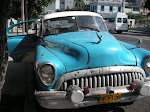
Those bulbous, chrome decorated behemoths of the 1950's have
attracted their own name in Spanish. The
guajiros call them "almendrones", which means big
almonds. The "ón" part is a suffix that means "big" in Spanish,
and almonds have a simple, almost streamlined shape like the cars of the
'50's. In fact, can you picture a more
almond-like shape then the upside-down bathtub design of the 1950's Nash?
That's the best example, but they're all of a type—bloated,
maybe even a little silly looking.

So these iconic cars move and rest all over the city of
Havana. As they wear out, they spend
more time in front of the house on the side of the street, up on jack stands,
with the hood off, one guy on his back underneath and one leaning over half
swallowed in the hood cavity.

Now, as to the dogs of Havana's streets: You can't be sure when you see a stray dog on
the streets if he is homeless or not. As
most Cubans here have no yards, they let their dogs out to relieve
themselves. The best way to guess is by whether
or not his ribs show, suggesting he isn't well fed. But other signs can be found. A dog that has been on the streets long will
likely develop mange, which is easy to recognize. Collars and leashes are nearly unknown as are
ID tags. An owned dog will return to his
master's doorstep—that is, if he doesn't get grabbed by the dogcatcher. So does that dog have an owner or not? You can't be certain, but there are clues.

And why did I compare the old US cars with street dogs? Here are my ideas:

·
Stray dogs and old cars are both slow beasts
whether due either to the
Cuban heat or to a tired old engine.
·
Stray dogs are always hungry and the 10 mpg almendrón always needs a tank of gas.
·
Mange, scratches, and lesions on their fur
attest to the hard life of a stray, while rust, bent fenders, and cracked
windows form a parallel for old cars.
·
We can't help loving the old cars, and the same
emotion stirs when we see a dog we think may not have a home.

Cuba and the US can never really become enemies as the
streets there are filled with icons most of us love.

Les Inglis

Friday, August 3, 2012

Pictures at an Exhibition

Pictures at an Exhibition

As a way to thank TAP for its support of Cuban animals, as few years ago Nora Garcia, President of Aniplant, gave Charlene and me a pair of large posters showing many pictures of Cuban street dogs. These dogs weren't show dogs by any means; they were photographed as they were found on the streets of Havana, and you can see their sad condition in the spots of mange, the patches of scratched off fur from fleas and ticks, and the ribs defined by a lack of fat showing the scant food they live on. But they also show a strange beauty—a dignified look that seems to say, "I may be down, but I'm not out." The posters are among our prized possessions.

That dignity and beauty intrigued a famous Cuban photographer, José Rolando Molina, and he went through Havana's streets documenting a national shame—the neglect of man's best friends. With a truly original collection of moving portraits, José collaborated with Nora to get the pictures into the public eye. I first saw them at the dedication of Aniplant's new headquarters. Aniplant members and the public milled through the beautifully restored and renovated 200 year old building, and the public areas were fittingly decorated by framed color photos of Molina's street dogs—the ultimate beneficiaries of Aniplant's massive spay-neuter programs.

Nora and José didn't stop there. Because one Aniplant mission is humane education, they organized a public demonstration outside one of Havana's theaters to show the public what the organization does. This time, the street dogs photos hung over the shoulders of Aniplant members, sandwich board style. There were no written messages, no logos, no phone numbers—only the poignant photos of the homeless dogs. If a spectator was so moved, he could ask and be told of Aniplant and its animal protection mission.

When José matted and framed his portraits of the street dogs, he decided not to sign them as a photographer usually would do. He wanted nothing in his work to detract in the slightest from his subjects, the noble street dogs. So, if you're in Aniplant's headquarters admiring the art, you have to ask to find out what fine artist found such beauty in homeless street animals.

But José hardly needs more recognition. He is Artistic Director for a Cuban magazine on the sea and fishing in addition to being a painter and photographer. Adding his talent to Aniplant's 25 years of experience in animal protection has created a synergy that can only help those little canine and feline citizens of Havana's streets who live in our midst without homes or human companions.

On a recent trip to Cuba, Nora arranged for me to meet José. I was introduced to a nice looking young man we found on Obispo Street, Havana's street of fine tourist shops. José invited us into a little coffee bar and treated us to a cafecito, Cuba's ritual drink of hospitality. As we sipped the strong black coffee, I could see the same special spark I see in the eyes of so many lovers of animals.

Hardly surprising, I guess.

Les Inglis