













Sunday, August 19, 2012
Santeria
Santeria
When he or she feels the need to pray to his god, a Cuban
can be as likely to go to his santero as he would be to go to his priest. For many Cubans, both Santeria and Catholicism
are practiced in a weird duality less common in the rest of the world. It's like spiritual matters are referred to
one of two religious systems which somehow exist side-by-side within the Cuban
culture.
How did this come to be?
Major factors in Cuban history since the arrival of the Spanish have
something to do with it. Cuba is
particularly sensitive to the residual effects of Spanish rule and slavery—having
suffered greatly from both influences longer than all the other new world
countries. Slavery didn't end in Cuba
until 1880, and Spanish domination, with its pervasive corruption continued
until 1898 despite three Cuban wars of independence.
The Spanish, from the time of Columbus oppressed the African
slaves in Cuba to work the plantations.
They required of the slaves faithful participation in the Catholic Church. The slaves, knowing you cannot dominate a
person's mind, gave outward obedience by keeping Catholic shrines, crosses,
saints, etc., but in their minds these symbols represented Santeria orishes
(channeling entities that connect with Santeria's one god, Olorum). Thus a slave girl kneeling in front of an
altar with an idol of a Catholic saint was really communing with Chango, an
orish. The name Santeria was derived
from "santa," the Spanish word for "saint," and because of
the deception involved, was disliked by many as the name of the religion. Some still prefer "the Yoruba Religion"
named for a tribe in Africa.
Common practice is to follow both religions, choosing
between them based on the nature of one's religious need. The Cuban will use the Catholic Church and
the national health system for support during preventative health care, inoculations,
and for surgery, but he would see his santero on spiritual, emotional, or
mental matters. The santero will not
intervene medically beyond giving some herbs, chants, and drumming.
One facet of Santeria widely disliked is the practice of
animal sacrifice. Most sacrifices are
birds and turtles, but goats and sheep are victimized as well. These sacrifices have stimulated opposition
based on animal cruelty laws here in the US.
In the early 1990's a case was taken all the way to the US Supreme Court
with some help from the Humane Society of the US, but the court held the
sacrifices are constitutionally protected as a religious freedom. The Texas court system also upheld a man's right
to religious sacrifice of animals in 2009.
It's too bad that animal sacrifice, one of the most unjust
and unfair of all religious practices, has been upheld in the US. The way I look at it, the animals should have
their own Bill of Rights.
Les Inglis


Monday, August 13, 2012
El Almendrón y Perros Vagos
Cuba is beginning to change as various reforms are made by
the government. But some parts of Cuba
seem immutable, frozen in time. I'm
thinking of the old American cars and the dogs in the streets. No visitor goes home from Cuba without
pictures of both of these especially Cuban sights branded into his or her
brain.
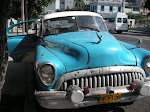
The cars make you feel you're in a time machine—going back
to your youth or perhaps your father's youth.
The mental images are particularly vivid because they were already there
in our heads. Yes, these aren't new
sights, but instead they awaken memories of our own lives many years ago. Fifty some years ago a revolution occurred in
Cuba—not just in the government, but also in the cars on the street.
As Fulgencio Batista's grip on power slipped away, 71
percent of Cuban businesses were American owned. A huge share of foods, house wares,
furnishings, appliances, and, of course, automobiles were made in America. In Cuba, as in the US, Japanese and European
car brands were hardly known in North America.
So, if you think there are lots of old US cars in Cuba now, they were
nearly all American brands in 1959 as Cuba threw out its government.
But, as luck would have it, the two neighbors fell out, and
after a very few years and a nationalization of US businesses, an embargo shut
down all Cuba-bound trade with the US including American cars and their repair
parts. The message was clear, if you had
a car, you'd better take good care of it.
As a result, Cuba developed a huge corps of shade tree mechanics who
keep the fleet running decade after decade.
If you're lucky and rich and well connected, you can buy a Russian or
French or South Korean car in Cuba today, but most people think if they have a
car it's the only one they'll ever have.
Those bulbous, chrome decorated behemoths of the 1950's have
attracted their own name in Spanish. The
guajiros call them "almendrones", which means big
almonds. The "ón" part is a suffix that means "big" in Spanish,
and almonds have a simple, almost streamlined shape like the cars of the
'50's. In fact, can you picture a more
almond-like shape then the upside-down bathtub design of the 1950's Nash?
That's the best example, but they're all of a type—bloated,
maybe even a little silly looking.
So these iconic cars move and rest all over the city of
Havana. As they wear out, they spend
more time in front of the house on the side of the street, up on jack stands,
with the hood off, one guy on his back underneath and one leaning over half
swallowed in the hood cavity.
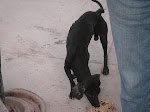
Now, as to the dogs of Havana's streets: You can't be sure when you see a stray dog on
the streets if he is homeless or not. As
most Cubans here have no yards, they let their dogs out to relieve
themselves. The best way to guess is by whether
or not his ribs show, suggesting he isn't well fed. But other signs can be found. A dog that has been on the streets long will
likely develop mange, which is easy to recognize. Collars and leashes are nearly unknown as are
ID tags. An owned dog will return to his
master's doorstep—that is, if he doesn't get grabbed by the dogcatcher. So does that dog have an owner or not? You can't be certain, but there are clues.
And why did I compare the old US cars with street dogs? Here are my ideas:
·
Stray dogs and old cars are both slow beasts
whether due either to the
Cuban heat or to a tired old engine.
·
Stray dogs are always hungry and the 10 mpg almendrón always needs a tank of gas.
·
Mange, scratches, and lesions on their fur
attest to the hard life of a stray, while rust, bent fenders, and cracked
windows form a parallel for old cars.
·
We can't help loving the old cars, and the same
emotion stirs when we see a dog we think may not have a home.
Cuba and the US can never really become enemies as the
streets there are filled with icons most of us love.
Les Inglis
Friday, August 3, 2012
Pictures at an Exhibition
Pictures at an Exhibition
As a way to thank TAP for its support of Cuban animals, as few years ago Nora Garcia, President of Aniplant, gave Charlene and me a pair of large posters showing many pictures of Cuban street dogs. These dogs weren't show dogs by any means; they were photographed as they were found on the streets of Havana, and you can see their sad condition in the spots of mange, the patches of scratched off fur from fleas and ticks, and the ribs defined by a lack of fat showing the scant food they live on. But they also show a strange beauty—a dignified look that seems to say, "I may be down, but I'm not out." The posters are among our prized possessions.
That dignity and beauty intrigued a famous Cuban photographer, José Rolando Molina, and he went through Havana's streets documenting a national shame—the neglect of man's best friends. With a truly original collection of moving portraits, José collaborated with Nora to get the pictures into the public eye. I first saw them at the dedication of Aniplant's new headquarters. Aniplant members and the public milled through the beautifully restored and renovated 200 year old building, and the public areas were fittingly decorated by framed color photos of Molina's street dogs—the ultimate beneficiaries of Aniplant's massive spay-neuter programs.
Nora and José didn't stop there. Because one Aniplant mission is humane education, they organized a public demonstration outside one of Havana's theaters to show the public what the organization does. This time, the street dogs photos hung over the shoulders of Aniplant members, sandwich board style. There were no written messages, no logos, no phone numbers—only the poignant photos of the homeless dogs. If a spectator was so moved, he could ask and be told of Aniplant and its animal protection mission.
When José matted and framed his portraits of the street dogs, he decided not to sign them as a photographer usually would do. He wanted nothing in his work to detract in the slightest from his subjects, the noble street dogs. So, if you're in Aniplant's headquarters admiring the art, you have to ask to find out what fine artist found such beauty in homeless street animals.
But José hardly needs more recognition. He is Artistic Director for a Cuban magazine on the sea and fishing in addition to being a painter and photographer. Adding his talent to Aniplant's 25 years of experience in animal protection has created a synergy that can only help those little canine and feline citizens of Havana's streets who live in our midst without homes or human companions.
On a recent trip to Cuba, Nora arranged for me to meet José. I was introduced to a nice looking young man we found on Obispo Street, Havana's street of fine tourist shops. José invited us into a little coffee bar and treated us to a cafecito, Cuba's ritual drink of hospitality. As we sipped the strong black coffee, I could see the same special spark I see in the eyes of so many lovers of animals.
Hardly surprising, I guess.
Les Inglis
As a way to thank TAP for its support of Cuban animals, as few years ago Nora Garcia, President of Aniplant, gave Charlene and me a pair of large posters showing many pictures of Cuban street dogs. These dogs weren't show dogs by any means; they were photographed as they were found on the streets of Havana, and you can see their sad condition in the spots of mange, the patches of scratched off fur from fleas and ticks, and the ribs defined by a lack of fat showing the scant food they live on. But they also show a strange beauty—a dignified look that seems to say, "I may be down, but I'm not out." The posters are among our prized possessions.
That dignity and beauty intrigued a famous Cuban photographer, José Rolando Molina, and he went through Havana's streets documenting a national shame—the neglect of man's best friends. With a truly original collection of moving portraits, José collaborated with Nora to get the pictures into the public eye. I first saw them at the dedication of Aniplant's new headquarters. Aniplant members and the public milled through the beautifully restored and renovated 200 year old building, and the public areas were fittingly decorated by framed color photos of Molina's street dogs—the ultimate beneficiaries of Aniplant's massive spay-neuter programs.
Nora and José didn't stop there. Because one Aniplant mission is humane education, they organized a public demonstration outside one of Havana's theaters to show the public what the organization does. This time, the street dogs photos hung over the shoulders of Aniplant members, sandwich board style. There were no written messages, no logos, no phone numbers—only the poignant photos of the homeless dogs. If a spectator was so moved, he could ask and be told of Aniplant and its animal protection mission.
When José matted and framed his portraits of the street dogs, he decided not to sign them as a photographer usually would do. He wanted nothing in his work to detract in the slightest from his subjects, the noble street dogs. So, if you're in Aniplant's headquarters admiring the art, you have to ask to find out what fine artist found such beauty in homeless street animals.
But José hardly needs more recognition. He is Artistic Director for a Cuban magazine on the sea and fishing in addition to being a painter and photographer. Adding his talent to Aniplant's 25 years of experience in animal protection has created a synergy that can only help those little canine and feline citizens of Havana's streets who live in our midst without homes or human companions.
On a recent trip to Cuba, Nora arranged for me to meet José. I was introduced to a nice looking young man we found on Obispo Street, Havana's street of fine tourist shops. José invited us into a little coffee bar and treated us to a cafecito, Cuba's ritual drink of hospitality. As we sipped the strong black coffee, I could see the same special spark I see in the eyes of so many lovers of animals.
Hardly surprising, I guess.
Les Inglis
Sunday, July 29, 2012
What's New At The Zoo
What's New At The Zoo?
Prominent in the news these days is Namibia's gift of 146 of its indigenous animals to Cuba for its zoos. Most animal advocates are strongly opposed or at the very least ambivalent about zoos. It's hard to justify confining a wild animal to a small space and unnatural food for the rest of its life—all for the entertainment and curiosity of the general public. But that is what's going on, and starting in October those hapless Namibian animals will begin to arrive at Cuba's zoos.
Maybe justice and fairness are human ideas not understood by animals, but animals nevertheless deserve justice and fair treatment. I maintain that zoo animals deprived of their natural habitat and denied the opportunity to live their lives without human interference are being treated unfairly and unjustly.
I've heard all the tired old rationalizations about biblically ordained "dominion" over animals and how animals, lacking a sense of self, do not deserve humane treatment. Well, "dominion" talk is clap trap. We can see them suffer, we can hear them cry, and we can observe the empty eyes of a caged chimp that has already tried and failed thousands of times to enjoy the grass and trees he can see from behind his bars.
Ideas like "dominion," come from the writings of men, and certainly not from the mind of God. And the men who promoted those ideas did so for their own reasons, to the detriment of the animals. Where does anyone get off interfering in the normal life activities of an animal? Doing that is detestable speciesism.
Oh, and don't bring up that I treated my house for an attack of Chinese ants last year. That's no different from a bird fighting off another to protect its nestlings—it's a natural behavior to protect ones home and family. Also I admit I keep several dogs and cats in my house, but that's not equivalent to a zoo's jailing them forever and putting them on display. My dogs and cats enjoy our home as much as I do. This house, in which I sit writing, is their natural habitat.
Namibia and Cuba should know better than to uproot animals and send them to zoos. A look at Cuba's zoos should be all it takes to convince you it is wrong. The only zoo in Cuba with possibly enough support is the National Zoo in Havana's far flung outskirts. With the exception of a cell block of iron cages for smaller animals, the larger land animals are in huge fields simulating their natural habitat. Visitors ride through in protected vans (sort of like Lion Country Safari). But "simulating" is the key word here. It's not the same thing, and you can be sure the animals know it.
The Havana Zoo is much worse, and it isn't well maintained. Candy wrappers and discarded water bottles are everywhere. Ponds are green with slime, and some spaces have no visible drinking water. Here concrete grottos try to simulate natural habitats, but what part of "concrete" is natural?
And don't even mention the hundreds of smaller "attractions" all over the country that hold animals for curious people to look at. In a country without one law requiring humane treatment of animals, I'll leave you to imagine how the captive animals enjoy their lives.
Philosopher Jeremy Bentham got it right about 200 years ago when he stated, The question is not, Can they reason? nor, Can they talk? but Can they suffer?
Les Inglis
Prominent in the news these days is Namibia's gift of 146 of its indigenous animals to Cuba for its zoos. Most animal advocates are strongly opposed or at the very least ambivalent about zoos. It's hard to justify confining a wild animal to a small space and unnatural food for the rest of its life—all for the entertainment and curiosity of the general public. But that is what's going on, and starting in October those hapless Namibian animals will begin to arrive at Cuba's zoos.
Maybe justice and fairness are human ideas not understood by animals, but animals nevertheless deserve justice and fair treatment. I maintain that zoo animals deprived of their natural habitat and denied the opportunity to live their lives without human interference are being treated unfairly and unjustly.
I've heard all the tired old rationalizations about biblically ordained "dominion" over animals and how animals, lacking a sense of self, do not deserve humane treatment. Well, "dominion" talk is clap trap. We can see them suffer, we can hear them cry, and we can observe the empty eyes of a caged chimp that has already tried and failed thousands of times to enjoy the grass and trees he can see from behind his bars.
Ideas like "dominion," come from the writings of men, and certainly not from the mind of God. And the men who promoted those ideas did so for their own reasons, to the detriment of the animals. Where does anyone get off interfering in the normal life activities of an animal? Doing that is detestable speciesism.
Oh, and don't bring up that I treated my house for an attack of Chinese ants last year. That's no different from a bird fighting off another to protect its nestlings—it's a natural behavior to protect ones home and family. Also I admit I keep several dogs and cats in my house, but that's not equivalent to a zoo's jailing them forever and putting them on display. My dogs and cats enjoy our home as much as I do. This house, in which I sit writing, is their natural habitat.
Namibia and Cuba should know better than to uproot animals and send them to zoos. A look at Cuba's zoos should be all it takes to convince you it is wrong. The only zoo in Cuba with possibly enough support is the National Zoo in Havana's far flung outskirts. With the exception of a cell block of iron cages for smaller animals, the larger land animals are in huge fields simulating their natural habitat. Visitors ride through in protected vans (sort of like Lion Country Safari). But "simulating" is the key word here. It's not the same thing, and you can be sure the animals know it.
The Havana Zoo is much worse, and it isn't well maintained. Candy wrappers and discarded water bottles are everywhere. Ponds are green with slime, and some spaces have no visible drinking water. Here concrete grottos try to simulate natural habitats, but what part of "concrete" is natural?
And don't even mention the hundreds of smaller "attractions" all over the country that hold animals for curious people to look at. In a country without one law requiring humane treatment of animals, I'll leave you to imagine how the captive animals enjoy their lives.
Philosopher Jeremy Bentham got it right about 200 years ago when he stated, The question is not, Can they reason? nor, Can they talk? but Can they suffer?
Les Inglis
Saturday, July 21, 2012
Triangulating the USS Maine
On February 15, 1898 there was an explosion aboard the USS Maine which sank at her mooring in the mouth of Havana Bay. The battleship had been dispatched to Cuba the month before because of instability in the area caused by a war between Cuban revolutionaries fighting for independence and Spanish colonial occupiers. It was the Cubans' third revolt against Spain, and victory for the revolutionaries was by no means certain. The tragic loss of life and of the ship was a shock to the US, but the resulting American declaration of war surely shocked the Spaniards and led to an ignominious end to what was left of the Spanish colonial empire. Spain in rapid succession lost Puerto Rico, Cuba, and the Philippines. Several investigations, some as late as the 1990's, failed to fix the blame for the explosion. "Remember the Maine" was that era's equivalent of "Remember Pearl Harbor" a few decades later.
Well, from my history classes, I remembered the Maine, and when I got to Cuba the first time I wanted to see where this historic event happened. We had been out to Cojímar, Papa Hemingway's little fishing village east of Havana, and on our way back to town Nora directed the driver to see some places of interest.
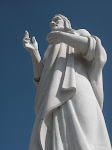
We came to a little green park on a bluff overlooking Havana Bay and the city beyond it. We were at the feet of a 65 foot tall statue of Christ overlooking the city. A plaque at the foot of the statue told us it had been a gift of Dictator Fulgencio Batista to the people of Havana on December 25, 1958, just a week before Castro's Revolution was won and Batista high-tailed it out of the country. (See Cristo de la Habana, my blog of December 2011.)
Several teenagers patrolled the park offering to point out sights and answer any questions. They were after tips, of course, and one by one we were all approached. When a young man asked me if I had any questions, I did—I wanted to know where in the waters below us was the USS Maine when it exploded. He hesitated a minute and then told me it had happened in a part of the Bay not visible from this overlook. I wondered if he really knew and didn't put much stock in his answer.
Later at home, I got busy with my computer and found a photo of the wrecked man-of-war with only part of its superstructure, bent and broken, showing above the water. I was struck by the apparent point of view of the picture. The photo could only have been taken from the same overlook—the site of the future statue of Christ.
Well, this was getting interesting as a few landmarks were visible in the city beyond the submerged wreck. Practically in line with the ship and behind it was a distinctive mission church bell tower in Old Havana. Remember, there were few tall structures in Havana in the 1890's, and this church was one of the tallest structures visible in the sweeping photo of the Bay and city. With the help of my souvenir map of Havana (see last week's blog, Souvenir), and photos from my friend, Bob Skogland, I identified the San Francisco Plaza in Old Havana and the church with its distinctive bell tower.
I estimated the wreck was practically centered in the wide mouth of Havana Bay, and I then had all the coordinates I needed to pin down the spot where the Maine had sunk. I can locate the spot without doubt whenever I set foot in that little park.
The Spanish American War is now 114 years behind us and not well remembered by most Americans. But, it was a momentous occasion, as it ended Spanish rule which at one time had reigned in most of this hemisphere. Even though the US and Cuba don't see eye to eye on much these days, the war was the final step in changing Spain from an oppressive global colonial power to the quiet, charming tourist destination it is today.
Les Inglis
On February 15, 1898 there was an explosion aboard the USS Maine which sank at her mooring in the mouth of Havana Bay. The battleship had been dispatched to Cuba the month before because of instability in the area caused by a war between Cuban revolutionaries fighting for independence and Spanish colonial occupiers. It was the Cubans' third revolt against Spain, and victory for the revolutionaries was by no means certain. The tragic loss of life and of the ship was a shock to the US, but the resulting American declaration of war surely shocked the Spaniards and led to an ignominious end to what was left of the Spanish colonial empire. Spain in rapid succession lost Puerto Rico, Cuba, and the Philippines. Several investigations, some as late as the 1990's, failed to fix the blame for the explosion. "Remember the Maine" was that era's equivalent of "Remember Pearl Harbor" a few decades later.
Well, from my history classes, I remembered the Maine, and when I got to Cuba the first time I wanted to see where this historic event happened. We had been out to Cojímar, Papa Hemingway's little fishing village east of Havana, and on our way back to town Nora directed the driver to see some places of interest.
We came to a little green park on a bluff overlooking Havana Bay and the city beyond it. We were at the feet of a 65 foot tall statue of Christ overlooking the city. A plaque at the foot of the statue told us it had been a gift of Dictator Fulgencio Batista to the people of Havana on December 25, 1958, just a week before Castro's Revolution was won and Batista high-tailed it out of the country. (See Cristo de la Habana, my blog of December 2011.)
Several teenagers patrolled the park offering to point out sights and answer any questions. They were after tips, of course, and one by one we were all approached. When a young man asked me if I had any questions, I did—I wanted to know where in the waters below us was the USS Maine when it exploded. He hesitated a minute and then told me it had happened in a part of the Bay not visible from this overlook. I wondered if he really knew and didn't put much stock in his answer.
Later at home, I got busy with my computer and found a photo of the wrecked man-of-war with only part of its superstructure, bent and broken, showing above the water. I was struck by the apparent point of view of the picture. The photo could only have been taken from the same overlook—the site of the future statue of Christ.
Well, this was getting interesting as a few landmarks were visible in the city beyond the submerged wreck. Practically in line with the ship and behind it was a distinctive mission church bell tower in Old Havana. Remember, there were few tall structures in Havana in the 1890's, and this church was one of the tallest structures visible in the sweeping photo of the Bay and city. With the help of my souvenir map of Havana (see last week's blog, Souvenir), and photos from my friend, Bob Skogland, I identified the San Francisco Plaza in Old Havana and the church with its distinctive bell tower.
I estimated the wreck was practically centered in the wide mouth of Havana Bay, and I then had all the coordinates I needed to pin down the spot where the Maine had sunk. I can locate the spot without doubt whenever I set foot in that little park.
The Spanish American War is now 114 years behind us and not well remembered by most Americans. But, it was a momentous occasion, as it ended Spanish rule which at one time had reigned in most of this hemisphere. Even though the US and Cuba don't see eye to eye on much these days, the war was the final step in changing Spain from an oppressive global colonial power to the quiet, charming tourist destination it is today.
Les Inglis
Sunday, July 15, 2012
Souvenir
The Plaza de las Armas is a little one block square park in
Old Havana, surrounded by book stalls and booksellers in the style of Paris'
Left Bank. Most tourists in Havana
eventually pass through the Plaza to browse through the books. I had already decided what I wanted to find
as a souvenir of my first trip to Cuba—a book or perhaps a map would be
perfect. This choice was aided by US
government attitudes towards buying anything in Cuba and bringing it back to
the US. Basically they don't want you to
buy anything or to bring it back unless it is printed material or works of
art. Books, magazines, maps, etc. are
obvious choices as souvenirs, and the friendly merchants of the Plaza are there
to help you find them.
The book stalls encircle the park nearly completely facing
outward toward the square of sidewalks and streets. I had thought about maps as they could be
framed easily and displayed on a wall of my study at home. Thus the first merchant who asked was told I
had an interest in old maps. "Just
a minute," he said and disappeared behind his stall He came back with a worn old Texaco road map
of Cuba—the kind that years ago one could get free in a gas station.
I tried to explain that gas station maps weren't what I
wanted, and he began another search behind the stalls. This time we walked on, slowly perusing the
books and magazines on display. I hadn't
yet come to the end of the block when he appeared and showed me his second
choice. I was surprised at how well he
had chosen this time.
The map was produced by the Cuban Tourist Commission in 1951
for tourists. It was 20 x 24 inches in
size and was a perspective drawing of the entire city and all the major
buildings. The artist's (Rogelio L.
Mirabal) viewpoint was about one mile above the Plaza de las Armas looking down
on the city in a southwesterly direction.
Thus Havana Bay was in the lower left, and the airport was in the upper
left. The entrance to Havana Bay guarded
by El Morro Castle was in the lower right, and the far-flung suburbs of Miramar
and Playa were in the upper right.
Street and Parks were shown and tiny letters named all the streets. Notable buildings were numbered and
identified by a legend placed in the open waters of the Florida Straits.
The map was worn, but restorable, and I knew I could look
all day and not find a better choice, as I rushed to find he 5 CUC (about
$5.00) he was asking. I couldn't believe
my good luck.
Well, the booksellers at the Plaza seem to be a tight knit
community, and it took no time at all for them to know what I had bought. As we walked along the other three sides of
the Plaza, several of them offered me maps as well. One even had a 1953 edition of the same map,
which I bought for 3 CUC.
At home I found a fine art restorer who was able to lay the
map flat and mount it on a board that matched the color of the faded paper of
the map in color. This made practically
invisible several worn holes at the fold lines.
His careful matting and framing created a finished product which now
hangs at a focal point among the picture on my study wall. The 1953 edition was passed on to my good
Cuban friend, Dulce.
I've been in the Plaza de las Armas several times since
then, but I don't spend much time browsing.
Instead, being a public place it is a gathering spot for stray
dogs. They seem to know that handouts of
food are more likely to come from tourists.
Nora and I and my fellow travelers often have lunch in any one of several
restaurants nearby, and, as is standard practice in Cuba, we always come away
with delicious leftovers. It is never
hard to find a happy canine recipient of these scraps.
Bella, a sweet long haired Daschund mix, about which I have
written in the past, was found there in the Plaza by a British Airways flight
attendant, Angela. Her prompt attention
and search for help led to Nora and finding the sick little Bella, and today
she is a beautiful, healthy resident of Aniplant's headquarters. I might add, Angela has made two trips back
to Cuba since Bella's rescue to see the lucky little dog.
I have several reasons for remembering the Plaza de las
Armas.

Les Inglis
Les Inglis
Sunday, July 8, 2012
Once More to Las Terrazas
I've written about Las Terrazas before in these blogs. It's a UNESCO Biosphere Reserve about 50
miles west of Havana, high up in the Sierra Rosario Mountains. On my first visit, Xenia Mathews and Bob
Skogland, accomplished animal activists and good friends were my fellow
travelers, and the second time, Nikki Kil and Marianne Meijer, animal activists
and TAP supporters, were along with Nora and me.
The little mountain town is hardly typical of Cuba, having
been built in the 1990's to cater to the many tourists the UNESCO Reserve
attracts. Formerly a coffee plantation,
the terraced land was rapidly reclaimed by a dense tropical jungle parted by
miles of hiking trails. A beautiful
hotel and a famous restaurant, El Romero, offering only locally grown
vegetarian food are the two main businesses in town. Nora's friend, Tito, who developed the
restaurant for the Cuban government, was with us again for the second visit.
After a memorable meal, we all lingered at our balcony
table, looking out over the neat little cabins of the town and the lake, all
below us in a little valley, making a perfect picture of peace. We talked about how idyllic it would be to
live there, but we questioned if we soon would feel isolated from the music and
bustle of the city. Chickens and a pheasant scratched around in the yard
beneath our balcony, unafraid of the vegetarians in the restaurant.
Nikki and Marianne spotted a horse tethered in a yard far
below us and decided to walk down to see it up close. Not far past the horse was the center of
town, hardly more than a general store and a few cabins.
Nikki returned to say there was a dog lying in the road in
town and then left again to investigate.
I elected to stay with our paraphernalia—a tote bag, a sweater, and a
camera, and to enjoy the mountain air and beautiful view. I watched as the ladies circled around the
dog, but they were way too far away from me to hear what was going on.
Perhaps half an hour passed before they came back one by
one, and this time Nikki had a large shopping bag of stale bread from the
general store. They reported the dog was
unhurt and capable of walking—it had merely been sleeping near the edge of the
road. Like most dogs in Cuba, he was
hungry, and, like most Cuban strays, he had fleas. Nora, who always has treatment for fleas and
mange with her, administered some meds, and Nikki bought the bread and fed him
all he wanted before they all climbed back up the hill to El Romero. We busied ourselves feeding the bread to the
birds patrolling the grass below the balcony.
While down with the dog, Nikki had found a young man in the town, given
him money for more bread, and gotten him to promise to keep the dog fed. Tito's friend, Carlos, who regularly visits
Las Terrazas, was pressured to check up on the dog. Nikki had arranged help for the dog long
after she returned to Holland.
The quiet little town nestled with its lake in a mountain
valley almost had a sedative effect on us.
We were in no hurry to get back to the big city. The horse, the dog, the young man, the clerk
in the general store surely retained memories of the two Dutch women and the
Cuban lady with the medicine in her purse.
Otherwise we left Las Terrazas as we found it—sleeping by a lake in the
mountains.
Les Inglis


Subscribe to:
Posts (Atom)
