














Going Behind What's Left of the Iron Curtain
If you are a US citizen visiting Cuba, it's initially hard to be sure you are welcome or not. As you land at Havana's Jose Martí airport, your plane taxis past a modern airport building bristling with jetways and populated with planes from all over the world, British Airways, Lufthansa, Quantas, and many others. But you keep on taxiing until you come to a low building that looks like something out of the 1950's. No jetways, no Varig from Brazil. If there is another plane around it is another little charter flight from the US like Sky King Airlines.
I remember an afternoon kid's radio program called Sky King in the 1940's. It wasn't very good, and the charter airline with the same name is nothing to write home about, either. Well, back to the airport--it's a ghost of the past, and if you ask a regular traveler, he'll tell you only the US flights use it. The airport terminal seems to be a vestige of the pissing contest the two countries have carried on for 50 years. By now you don't expect a jetway, and you think you'll be lucky if they roll up a set of stairs to help get out of the plane.
Once inside you're in a big room with a line of kiosks across the back side of it. Attendants there keep you standing behind a red line on the floor until you are motioned to one of the agents-in-a-box. This box is different from those at home in that the agent's desk is above your line of sight. You can't see what he's doing as he inspects your passport and customs card. You may get some questions here, especially if you are traveling with some medicines, as I always am. There's no smile, no "welcome to Cuba," just a chilly stare, and finally a bunch of rubber stamping noises, and your papers are handed back. You've been standing in a narrow passage between two kiosks, and you guess that you must leave it through the door you didn't use to enter. You think at least he spoke English.
You emerge into a large baggage room and place your handbags on the conveyor of an x-ray machine. You might ask, "Why do they x-ray arriving passenger's things?" Well, it's their country, and if that's what they want, you have to comply. If you're carrying a bag full of vet meds and supplies, the kiosk guy has probably fingered you for another interview with a Customs agent. It's happened to me 3 out of 5 times. They invite you over to a small circular stand up table and begin a fresh set of questions. This agent is probably female, pleasant, and has a nice smile. The questions are the same as those on your customs form, and after a while, she decides you're not a terrorist, and you can go look for your checked luggage. Of course it isn't up yet because every Cuban national on your flight has spent a fortune on purchases in the US and then checked them as luggage. There are flat screen TV's in huge cardboard cartons, microwaves, computer towers, and almost everything else easy to get in the US and hard to get in Cuba. Most of the stuff comes in a cocoon of blue plastic film, and it takes the baggage crew the better part of an hour to disgorge the plane's checked luggage.
I'm lucky to have made friends with the Havantur agent lady. She recognizes me every time I show up. She assures me and my two traveling companions that our stuff will show up on the carousel eventually. And it does. Another line has formed as an agent checks every traveler's bag tag with his luggage receipt. My Havantur friend walks us around that line, and we emerge from the old building into the rest of Cuba. This is the first opportunity we've had to see the crowds waiting to meet the travelers, and there in the middle of the crowd is Nora and our driver. We leave Cuba's version of the TSA, and our adventure begins.
Les Inglis
Friday, November 19, 2010


Friday, November 12, 2010
Waste Not, Want Not
Waste Not, Want Not
Both Cuba and the US have laws preventing the use of drugs beyond their expiration dates. While some suspect the biggest reason behind these laws is to insure the profits of the drug companies, these laws are studiously respected, and thus we can all rest assured the medicines we receive are fresh. Expiration dates are common for many medical supplies also like latex gloves, injection syringes, sutures and staples, and bandages--even gauze pads. Vets as well as medical doctors respect the expiration dates, so animals as well as humans need not fear drugs which have lost their efficacy.
Here in the US, older drugs are segregated, and, if the nurse in charge is extremely careful, drugs within a couple of weeks of their expiration dates can be returned for credit to the drug manufacturer. More often than not, this tight time frame for returning expired meds is missed, and they end up being destroyed. US vets are as religious as medical doctors in following the law.
In Cuba, however, things are different. While medical doctors and hospitals use fresh drugs only, vets who treat dogs and cats there have to make do with whatever they can find to treat household pets. The state owns the farm animals and the vets apply their best practice and fresh drugs on them. But household pets are of no interest to the state, and it is difficult to find fresh drugs in the doses that apply to smaller animals.
Many Cuba vets work with donated outdated drugs given to them by hospitals. Jose, our vet friend who works in Old Havana (see Making Ends Meet in this blog for June 11) has a box of old injectable drugs given to him by a hospital. He has become an expert in how long past the expiration date various kinds of medicines are still effective. He has found some anesthetic drugs work several years after expiration. He also has found some drugs can be substituted for others and work almost as well. In Cuba--with veterinary medicines--necessity is the mother of invention.
Is it a bad thing these drugs are used after expiry? Well, I'm not so sure. How many dogs and cats have survived surgeries, infections, and other threats due to the good offices of Cuba's fine, hard pressed veterinarians? A huge number, I believe.
Here at The Aniplant Project, we have been collecting drugs too old for return from several vets. With a little trouble these can be inventoried, packed, and shipped to Cuba. If Nora Garcia, the President of Aniplant, can't use them, she can trade them to the may vets she knows for their help in her weekly spay-neuter clinics
If you have a vet, ask him if he has outdated meds and supplies. Tell him we can use them to help Cuban dogs and cats. Good vets care about animals everywhere, and many vets are happy to donate when asked. Another source of these medicines are drugs left over after a pet dies. People often give them back to their vets. Regardless, call me if you get any such meds or supplies (941-928-8343 anytime). I'll take them off your hands, and you can become a participant in helping lots of needy animals really close to us--just across the Florida Straits/
Les Inglis
Both Cuba and the US have laws preventing the use of drugs beyond their expiration dates. While some suspect the biggest reason behind these laws is to insure the profits of the drug companies, these laws are studiously respected, and thus we can all rest assured the medicines we receive are fresh. Expiration dates are common for many medical supplies also like latex gloves, injection syringes, sutures and staples, and bandages--even gauze pads. Vets as well as medical doctors respect the expiration dates, so animals as well as humans need not fear drugs which have lost their efficacy.
Here in the US, older drugs are segregated, and, if the nurse in charge is extremely careful, drugs within a couple of weeks of their expiration dates can be returned for credit to the drug manufacturer. More often than not, this tight time frame for returning expired meds is missed, and they end up being destroyed. US vets are as religious as medical doctors in following the law.
In Cuba, however, things are different. While medical doctors and hospitals use fresh drugs only, vets who treat dogs and cats there have to make do with whatever they can find to treat household pets. The state owns the farm animals and the vets apply their best practice and fresh drugs on them. But household pets are of no interest to the state, and it is difficult to find fresh drugs in the doses that apply to smaller animals.
Many Cuba vets work with donated outdated drugs given to them by hospitals. Jose, our vet friend who works in Old Havana (see Making Ends Meet in this blog for June 11) has a box of old injectable drugs given to him by a hospital. He has become an expert in how long past the expiration date various kinds of medicines are still effective. He has found some anesthetic drugs work several years after expiration. He also has found some drugs can be substituted for others and work almost as well. In Cuba--with veterinary medicines--necessity is the mother of invention.
Is it a bad thing these drugs are used after expiry? Well, I'm not so sure. How many dogs and cats have survived surgeries, infections, and other threats due to the good offices of Cuba's fine, hard pressed veterinarians? A huge number, I believe.
Here at The Aniplant Project, we have been collecting drugs too old for return from several vets. With a little trouble these can be inventoried, packed, and shipped to Cuba. If Nora Garcia, the President of Aniplant, can't use them, she can trade them to the may vets she knows for their help in her weekly spay-neuter clinics
If you have a vet, ask him if he has outdated meds and supplies. Tell him we can use them to help Cuban dogs and cats. Good vets care about animals everywhere, and many vets are happy to donate when asked. Another source of these medicines are drugs left over after a pet dies. People often give them back to their vets. Regardless, call me if you get any such meds or supplies (941-928-8343 anytime). I'll take them off your hands, and you can become a participant in helping lots of needy animals really close to us--just across the Florida Straits/
Les Inglis
Friday, November 5, 2010
Means of Communication
Means of Communication
The only three ways we really have to interact with Aniplant in Cuba are mail, email, and actual visits. And these often seem to be less reliable than I would have them. Mail between the US and Cuba is a somewhat iffy proposition.
Several months back I found a postal regulation covering mailing items to Cuba. Prior to that I had failed to get a letter or a package through to Nora. Starting at the beginning of this year, with a package of vet supplies and that postal regulation in hand, I marched into the local Post Office and accosted a woman behind one of the counters. She looked at the address on the package, saw the destination was Cuba, and began to tell me they couldn't accept the package. She pulled up several screens on the display at her desk and then repeated it couldn't go.
I asked for the Postmistress come over and to read the regulation I had found, and she looked briefly at it and then started pulling pages up on her little screen. "Nope, there's no way to send it," she said, and I was beginning to look bothered. I know hundreds of thousands of Floridians have relatives in Cuba, and they mail them packages all the time.
"Wait a minute," said Alice from the end counter; "I have something on Cuba here." (Alice is the only attendant in the Post Office I can trust to know what can and cannot be done.) She had pulled up a page on her screen, and the Postmistress walked down to her desk. Now the first attendant joined them to make a trio reading Alice's screen, and finally I was told it could be shipped after all. Since then I have sent a half dozen boxes this way, but the staff at the Post Office still look like they wish I would use another Post Office for my Cuba business.
Email is another story. There is no human behind a desk to argue with you, but when your server doesn't deliver everything you send, you wish there were a real person around. I've used Microsoft Outlook for years to send email without a problem, but it has failed completely recently, and it became so unreliable I had to stop using it altogether. Then I started to use Comcast's Smart Zone, but it only thought it was smart. Still, some of my sent items never arrived. I set up Hotmail and Gmail accounts, and now I'm using Windows Live Mail on a new computer.
Well I'd like to tell you that email problems are a thing of the past, but no such luck. All I can say is most stuff arrives here OK, so don't stop writing. Most of my outgoing works too, but every so often, my outgoing emails go into a black hole.
The final and best means of communication is to visit Cuba. I've been there 5 times, and I have another trip planned for late February. Cuba is such an interesting place that it's worth figuring out all the licenses, affiliations, approved agents and charter flights. Of course one little misstep, and they don't let you fly, and then you're no better of than you were with mail or email.
Les Inglis
The only three ways we really have to interact with Aniplant in Cuba are mail, email, and actual visits. And these often seem to be less reliable than I would have them. Mail between the US and Cuba is a somewhat iffy proposition.
Several months back I found a postal regulation covering mailing items to Cuba. Prior to that I had failed to get a letter or a package through to Nora. Starting at the beginning of this year, with a package of vet supplies and that postal regulation in hand, I marched into the local Post Office and accosted a woman behind one of the counters. She looked at the address on the package, saw the destination was Cuba, and began to tell me they couldn't accept the package. She pulled up several screens on the display at her desk and then repeated it couldn't go.
I asked for the Postmistress come over and to read the regulation I had found, and she looked briefly at it and then started pulling pages up on her little screen. "Nope, there's no way to send it," she said, and I was beginning to look bothered. I know hundreds of thousands of Floridians have relatives in Cuba, and they mail them packages all the time.
"Wait a minute," said Alice from the end counter; "I have something on Cuba here." (Alice is the only attendant in the Post Office I can trust to know what can and cannot be done.) She had pulled up a page on her screen, and the Postmistress walked down to her desk. Now the first attendant joined them to make a trio reading Alice's screen, and finally I was told it could be shipped after all. Since then I have sent a half dozen boxes this way, but the staff at the Post Office still look like they wish I would use another Post Office for my Cuba business.
Email is another story. There is no human behind a desk to argue with you, but when your server doesn't deliver everything you send, you wish there were a real person around. I've used Microsoft Outlook for years to send email without a problem, but it has failed completely recently, and it became so unreliable I had to stop using it altogether. Then I started to use Comcast's Smart Zone, but it only thought it was smart. Still, some of my sent items never arrived. I set up Hotmail and Gmail accounts, and now I'm using Windows Live Mail on a new computer.
Well I'd like to tell you that email problems are a thing of the past, but no such luck. All I can say is most stuff arrives here OK, so don't stop writing. Most of my outgoing works too, but every so often, my outgoing emails go into a black hole.
The final and best means of communication is to visit Cuba. I've been there 5 times, and I have another trip planned for late February. Cuba is such an interesting place that it's worth figuring out all the licenses, affiliations, approved agents and charter flights. Of course one little misstep, and they don't let you fly, and then you're no better of than you were with mail or email.
Les Inglis
Friday, October 29, 2010
A Morning Reverie
A Morning Reverie
There’s a little park three blocks from my hotel in Havana. It takes up a full city block and is surrounded by homes and apartment houses on three sides. On the fourth side is the Sala Rodán Theater, a performing arts hall built in the 50’s in the classic style. Panels in the walls are decorated with tributes to classical musicians like Webber, Mozart, and Brahms.
The park has large reflecting pool empty for the last five years, statuary, monuments, Japanese trellises, large grassy areas, some shade trees, benches, and paved walkways. When I’m in Cuba, I visit the park each morning to pass the time between breakfast and my first planned activity. It’s a good time to make cryptic notes in my little pocket notebook which is always with me in Cuba.
The park is dedicated to a mayor of years gone by named Germán López. Don’t try to find him on Google as this name is about as common as Pete Smith is in English. I find a bench near López’s monument and sit to enjoy a slice of Cuban city life.
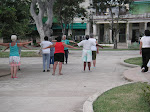
Over in a corner of the park about 30 women have lined up in rank and file and are doing exercises to the call of their leader facing them. They look like a group you might see at the beach or the local Y. They don’t seem any more fit than the average Cuban, but they’re trying to be. My favorite aspect of the park is man’s best friend, several of which lead their human companions around the park.
First a Boston Bulldog sniffs at the legs of my bench and then comes up to check me out. Satisfied, he takes his human off in another direction. Next a little brown short-haired spaniel approaches me, his human standing behind him a respectful distance. Now a dark haired terrier—uh oh, no owner. Well this guy knew exactly where he wanted to go, and didn’t even give me a tumble. Was he stray? Definitely not. You could tell by his well fed look. He moved off diagonally across the park and reached his home, an apartment house nearly a block away. I watched until he disappeared.
A bus stops and unloads its entire capacity of young men and women. They’re all students at the ballet school in the Rodán Theater.
As I write, a lone musician plays scales on a trumpet. After a while he is joined by another horn player, and their perfect tones sound in harmony. I glance at my watch, stand, and slowly move off toward my hotel for another day of exploration.
Les Inglis
There’s a little park three blocks from my hotel in Havana. It takes up a full city block and is surrounded by homes and apartment houses on three sides. On the fourth side is the Sala Rodán Theater, a performing arts hall built in the 50’s in the classic style. Panels in the walls are decorated with tributes to classical musicians like Webber, Mozart, and Brahms.
The park has large reflecting pool empty for the last five years, statuary, monuments, Japanese trellises, large grassy areas, some shade trees, benches, and paved walkways. When I’m in Cuba, I visit the park each morning to pass the time between breakfast and my first planned activity. It’s a good time to make cryptic notes in my little pocket notebook which is always with me in Cuba.
The park is dedicated to a mayor of years gone by named Germán López. Don’t try to find him on Google as this name is about as common as Pete Smith is in English. I find a bench near López’s monument and sit to enjoy a slice of Cuban city life.
Over in a corner of the park about 30 women have lined up in rank and file and are doing exercises to the call of their leader facing them. They look like a group you might see at the beach or the local Y. They don’t seem any more fit than the average Cuban, but they’re trying to be. My favorite aspect of the park is man’s best friend, several of which lead their human companions around the park.
First a Boston Bulldog sniffs at the legs of my bench and then comes up to check me out. Satisfied, he takes his human off in another direction. Next a little brown short-haired spaniel approaches me, his human standing behind him a respectful distance. Now a dark haired terrier—uh oh, no owner. Well this guy knew exactly where he wanted to go, and didn’t even give me a tumble. Was he stray? Definitely not. You could tell by his well fed look. He moved off diagonally across the park and reached his home, an apartment house nearly a block away. I watched until he disappeared.
A bus stops and unloads its entire capacity of young men and women. They’re all students at the ballet school in the Rodán Theater.
As I write, a lone musician plays scales on a trumpet. After a while he is joined by another horn player, and their perfect tones sound in harmony. I glance at my watch, stand, and slowly move off toward my hotel for another day of exploration.
Les Inglis
Friday, October 15, 2010
Dog Show in the Pearl of the Antilles
Dog Show in the Pearl of the Antilles
Animal protectionists seldom take much interest in dog shows. First of all, the owners of show dogs generally keep them in pretty good shape, and secondly there are always demands on protectionists to help less fortunate dogs—often to help with dogs in dire straits. Still, I admit to watching the Westminster Show in New York once a year. I frankly didn’t imagine they had dog shows in Cuba, but they certainly do. Nora and I and Xenia and Bob, my fellow travelers, had been invited to such a show by Nora’s overseer in the ministry of Agriculture, so one Friday morning we found ourselves driving west of Havana toward the suburb of Playa and a dog show being held there.
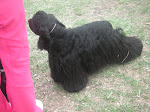
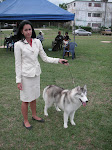
To get to Playa you drive along 5th Avenue through the fancy suburb of Miramar. In Miramar the houses are palatial, and most of the embassies and the homes of foreign businessmen are located here. I remember particularly the little kiosks with armed guards which stand at the corners of the fenced yards of the various embassies. People who live in these mansions can well afford show dogs if they wish. The dog show was in a futbol (soccer) field, and we were shown to comfortable seats in a tent n the middle of the field. The field was parceled off into little show rings, each for one of the many breeds. Next to us on one side were the Huskies, and on the other side the Cocker Spaniels were strutting their stuff. I figured it was a good time to take some pictures and wandered off among the rings.
This isn’t the real Cuba you see in most places. It looks more like a weekend activity in any affluent suburb in the US. One difference I note is that the participants showing their dogs are nearly all quite well dressed. After much wandering and picture taking I realized the show had an international flavor. Many dogs had come there from other countries in Latin America, and a few were there from Europe. This is another reminder that it’s only here in the US that we think of Cuba as a mysterious forbidden island. Practically all the other countries of the world think of Cuba as a great place to visit.
After a pleasant morning watching the show dogs, we prepare for our ride back to town to an invited luncheon at the Ornithological Society. A mix-up with drivers made us an hour late, but in Cuba everyone is on Tropical Standard Time (which means, “whenever”). That day we had a great lunch in a land where you cannot always be sure of getting a good meal.
I think dog shows are good if they stimulate an interest in having a dog in your family and loving it. If those shows are a means of showing off your property and if the dogs are not kept in a loving home situation, their treatment is a source of irritation to protectionists and to the dogs themselves.
Les Inglis
Animal protectionists seldom take much interest in dog shows. First of all, the owners of show dogs generally keep them in pretty good shape, and secondly there are always demands on protectionists to help less fortunate dogs—often to help with dogs in dire straits. Still, I admit to watching the Westminster Show in New York once a year. I frankly didn’t imagine they had dog shows in Cuba, but they certainly do. Nora and I and Xenia and Bob, my fellow travelers, had been invited to such a show by Nora’s overseer in the ministry of Agriculture, so one Friday morning we found ourselves driving west of Havana toward the suburb of Playa and a dog show being held there.
To get to Playa you drive along 5th Avenue through the fancy suburb of Miramar. In Miramar the houses are palatial, and most of the embassies and the homes of foreign businessmen are located here. I remember particularly the little kiosks with armed guards which stand at the corners of the fenced yards of the various embassies. People who live in these mansions can well afford show dogs if they wish. The dog show was in a futbol (soccer) field, and we were shown to comfortable seats in a tent n the middle of the field. The field was parceled off into little show rings, each for one of the many breeds. Next to us on one side were the Huskies, and on the other side the Cocker Spaniels were strutting their stuff. I figured it was a good time to take some pictures and wandered off among the rings.
This isn’t the real Cuba you see in most places. It looks more like a weekend activity in any affluent suburb in the US. One difference I note is that the participants showing their dogs are nearly all quite well dressed. After much wandering and picture taking I realized the show had an international flavor. Many dogs had come there from other countries in Latin America, and a few were there from Europe. This is another reminder that it’s only here in the US that we think of Cuba as a mysterious forbidden island. Practically all the other countries of the world think of Cuba as a great place to visit.
After a pleasant morning watching the show dogs, we prepare for our ride back to town to an invited luncheon at the Ornithological Society. A mix-up with drivers made us an hour late, but in Cuba everyone is on Tropical Standard Time (which means, “whenever”). That day we had a great lunch in a land where you cannot always be sure of getting a good meal.
I think dog shows are good if they stimulate an interest in having a dog in your family and loving it. If those shows are a means of showing off your property and if the dogs are not kept in a loving home situation, their treatment is a source of irritation to protectionists and to the dogs themselves.
Les Inglis
Friday, October 8, 2010
Lifesaving in Cuba
Lifesaving in Cuba
Bella was a homeless dog who had taken to hanging around the Plaza de Las Armas in Havana. This is a tourist destination where booksellers’ stalls surround a small, one block square park. Her staying around there wasn’t so dumb, as the tourists in Cuba are much more likely to have a little extra food than are the residents. Still it wasn’t much of a living, and she looked thin and weak, her appearance was no doubt made worse by a developing case of pneumonia. The little brown and black dog was a mix of breeds, and more to pity than love until you got to know her.
Angela is an international airline flight attendant based in Gatwick who was on a layover in Havana. She was passing time in the Plaza looking at books, maps, and art for sale to the happy tourists.
Nora is an accomplished animal protectionist who runs Aniplant, Cuba’s only officially sanctioned animal protection organization. She still has not met Angela, but as I tell this story, she is very familiar with Bella.
What happened was that Angela spotted Bella begging for attention from the tourists, a few of whom took pity on her and gave her bits of food. Angela and her companion went over to the dog and immediately felt a compassionate drive to help her. While still on her layover, she came back to the Plaza several times to feed Bella a little, for she could not eat very much at one time.
She even gave the dog the name, Bella, reasoning she shouldn’t go though life without a name, and she thought about taking Bella back to England, but she and her companion both work and couldn’t justify having a dog at home. So she finally had to get on the plane without the dog, but Bella was still with her in her mind.
In fact, she wouldn’t leave Angela’s mind. Angela could think of nothing else.
She searched the Internet and found Caribbean Medical Transport, run by the genial Rick Schwag, and via email she asked him if he could help Bella. Well, Rick passed the ball to me, telling Angela I was the one who did CMT’s work in animal protection.
Reading Angel’s forwarded email on Bella and her plight, I knew what we had to do as I had seen such stories several times before. I told her of Aniplant and Nora and the good work she does in helping Cuban animals, and I offered to translate any communication between Angela and Nora. That was on a Friday, and soon the answer came back to me from Nora. She had been to the Plaza and there were only four dogs there. They were all males and all healthy. I passed the unhelpful news on to Angela knowing Nora would not let this go with only one visit to the Plaza.
Sure enough, the next day (Saturday), Nora wrote me with the news she had found Bella. There was no question it was she, even though Nora didn’t have any of Angela’s photos. The color, the thin, weak, maybe sick description, etc. were enough to be sure. The vendors at the Plaza (many of whom Nora knows personally) told Nora that Bella had been staying around the Plaza for a couple of weeks. Nora’s first email to me after finding Bella told us certainly it was Bella. Bella had been found, taken to the vet, who confirmed the pneumonia, gave her antibiotics and inoculations, and told us she would easily survive with good care. Bella was isolated at Aniplant’s Headquarters in Central Havana. Yes, isolated until she could get used to the other eight dogs who live there and there was no chance of contagion between the dogs.
In the meantime, Angela, who had been franticly emailing me with questions every couple of hours was now on another trip with her airline. So it went for another day and a half. Nora and I knew Bella was safe, but Angela, who had started this quest and who was nearly frantic for Bella’s safety, still didn’t know. Finally she had a moment to catch up with her email, and she was overjoyed to read my translation of Nora’s report and that Bella was safe.
I felt as if I had done something very active to help a canine life, even though I had hardly moved from my keyboard. All three of us were very relieved that Bella had a home, and Aló Presidente (remember him from an earlier blog) had a new playmate.
I often write why it is important to support Aniplant. If Bella could write, she could do that job for me.
Les Inglis
PS Don’t forget our website: http://theaniplantproject.org, It is constantly adding new material about Aniplant.
Bella was a homeless dog who had taken to hanging around the Plaza de Las Armas in Havana. This is a tourist destination where booksellers’ stalls surround a small, one block square park. Her staying around there wasn’t so dumb, as the tourists in Cuba are much more likely to have a little extra food than are the residents. Still it wasn’t much of a living, and she looked thin and weak, her appearance was no doubt made worse by a developing case of pneumonia. The little brown and black dog was a mix of breeds, and more to pity than love until you got to know her.
Angela is an international airline flight attendant based in Gatwick who was on a layover in Havana. She was passing time in the Plaza looking at books, maps, and art for sale to the happy tourists.
Nora is an accomplished animal protectionist who runs Aniplant, Cuba’s only officially sanctioned animal protection organization. She still has not met Angela, but as I tell this story, she is very familiar with Bella.
What happened was that Angela spotted Bella begging for attention from the tourists, a few of whom took pity on her and gave her bits of food. Angela and her companion went over to the dog and immediately felt a compassionate drive to help her. While still on her layover, she came back to the Plaza several times to feed Bella a little, for she could not eat very much at one time.
She even gave the dog the name, Bella, reasoning she shouldn’t go though life without a name, and she thought about taking Bella back to England, but she and her companion both work and couldn’t justify having a dog at home. So she finally had to get on the plane without the dog, but Bella was still with her in her mind.
In fact, she wouldn’t leave Angela’s mind. Angela could think of nothing else.
She searched the Internet and found Caribbean Medical Transport, run by the genial Rick Schwag, and via email she asked him if he could help Bella. Well, Rick passed the ball to me, telling Angela I was the one who did CMT’s work in animal protection.
Reading Angel’s forwarded email on Bella and her plight, I knew what we had to do as I had seen such stories several times before. I told her of Aniplant and Nora and the good work she does in helping Cuban animals, and I offered to translate any communication between Angela and Nora. That was on a Friday, and soon the answer came back to me from Nora. She had been to the Plaza and there were only four dogs there. They were all males and all healthy. I passed the unhelpful news on to Angela knowing Nora would not let this go with only one visit to the Plaza.
Sure enough, the next day (Saturday), Nora wrote me with the news she had found Bella. There was no question it was she, even though Nora didn’t have any of Angela’s photos. The color, the thin, weak, maybe sick description, etc. were enough to be sure. The vendors at the Plaza (many of whom Nora knows personally) told Nora that Bella had been staying around the Plaza for a couple of weeks. Nora’s first email to me after finding Bella told us certainly it was Bella. Bella had been found, taken to the vet, who confirmed the pneumonia, gave her antibiotics and inoculations, and told us she would easily survive with good care. Bella was isolated at Aniplant’s Headquarters in Central Havana. Yes, isolated until she could get used to the other eight dogs who live there and there was no chance of contagion between the dogs.
In the meantime, Angela, who had been franticly emailing me with questions every couple of hours was now on another trip with her airline. So it went for another day and a half. Nora and I knew Bella was safe, but Angela, who had started this quest and who was nearly frantic for Bella’s safety, still didn’t know. Finally she had a moment to catch up with her email, and she was overjoyed to read my translation of Nora’s report and that Bella was safe.
I felt as if I had done something very active to help a canine life, even though I had hardly moved from my keyboard. All three of us were very relieved that Bella had a home, and Aló Presidente (remember him from an earlier blog) had a new playmate.
I often write why it is important to support Aniplant. If Bella could write, she could do that job for me.
Les Inglis
PS Don’t forget our website: http://theaniplantproject.org, It is constantly adding new material about Aniplant.
Friday, October 1, 2010
Aniplant Headquarters
ANIPLANT HEADQUARTERS
Aniplant maintains its headquarters at 128 Principe Street in Central Havana. It used to be on the eighth floor of a building with a non-working elevator. I first saw it on my second trip here, and we were all winded by the time we got to the top. During that trip, Nora told us that in Cuba you can’t buy or sell your home. You can only arrange trades between properties. But those trades have to be documented by legal paperwork. In the Cuban “paradise” legal work is free, but it is also in very short supply. Nora had indeed found someone who would trade his home in a central area on the first floor for her HQ on the eighth floor. But she had been waiting four years for her legal project to come to the top of the lawyer’s pile. We found out that a little monetary encouragement would move the matter to the top, and the transaction completed in a couple of days.
Months later I asked her how the new HQ was progressing, and she told me a tale of woe that was hard to understand. It seems the old resident of the Principe property had stripped everything when he left. Even the electrical switches were removed from the walls. She didn’t have the resources to bring it up to a useful space. It was just overwhelming, so we decided to help. On the next trip, we gave her money to fix the place up, and the work began. Still, even a year after that, she was nowhere close to finished. By this time (late 2008), she had enough money resources to get the work done, but the project was clearly on tropical standard time, which suggests it might never be completed. We set a goal to have it done for the November 2009 trip, but when I saw it, I had no idea how well Nora and her group had finished the project.
Every part of the place was painted freshly, and all missing electrical and water piping had been replaced. The front room, a large meeting room had beautiful framed color photos of street dogs of Havana, and two new chandeliers lit the room. The outside passageway to the kitchen area in the rear was also painted, and decorated with hanging tropical plants. The second room, behind the meeting room is to be a veterinarian’s office, and it was painted and furnished. It looked like the vet was ready to set up shop. Two rooms behind the vet’s office were not finished because they contain building materials, and Nora told me of her plans to build a second story over them and beneath the 16 foot ceilings. Every door had a gate of grating on it, so the HQ dogs (eight of them) could be confined wherever they wanted them.
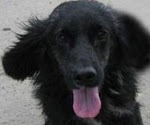
As I was walking around amazed at how much they had accomplished, the dogs were let loose, and we were overcome with a pack of the happiest, barking animals you can imagine. I could immediately spot Aló Presidente, the black dog we had rescued from the streets in 2007. He was the happiest of all of these lovable canines. Well, he should have been, seeing as how he was the only male in the group of eight. Well, such matters are not what you might think, as of course all the HQ dogs are neutered. Aló is not really the boss of the group, however, because there is a large female who seems to call all the shots in the group. Needless to say, the tremendous progress at the headquarters made me feel that everything we and Nora and her volunteers had done was really working, and that Aniplant has a bright future.
Les Inglis
(See lots more about Cuba and its animals on our new website: http://theaniplantproject.org )
Aniplant maintains its headquarters at 128 Principe Street in Central Havana. It used to be on the eighth floor of a building with a non-working elevator. I first saw it on my second trip here, and we were all winded by the time we got to the top. During that trip, Nora told us that in Cuba you can’t buy or sell your home. You can only arrange trades between properties. But those trades have to be documented by legal paperwork. In the Cuban “paradise” legal work is free, but it is also in very short supply. Nora had indeed found someone who would trade his home in a central area on the first floor for her HQ on the eighth floor. But she had been waiting four years for her legal project to come to the top of the lawyer’s pile. We found out that a little monetary encouragement would move the matter to the top, and the transaction completed in a couple of days.
Months later I asked her how the new HQ was progressing, and she told me a tale of woe that was hard to understand. It seems the old resident of the Principe property had stripped everything when he left. Even the electrical switches were removed from the walls. She didn’t have the resources to bring it up to a useful space. It was just overwhelming, so we decided to help. On the next trip, we gave her money to fix the place up, and the work began. Still, even a year after that, she was nowhere close to finished. By this time (late 2008), she had enough money resources to get the work done, but the project was clearly on tropical standard time, which suggests it might never be completed. We set a goal to have it done for the November 2009 trip, but when I saw it, I had no idea how well Nora and her group had finished the project.
Every part of the place was painted freshly, and all missing electrical and water piping had been replaced. The front room, a large meeting room had beautiful framed color photos of street dogs of Havana, and two new chandeliers lit the room. The outside passageway to the kitchen area in the rear was also painted, and decorated with hanging tropical plants. The second room, behind the meeting room is to be a veterinarian’s office, and it was painted and furnished. It looked like the vet was ready to set up shop. Two rooms behind the vet’s office were not finished because they contain building materials, and Nora told me of her plans to build a second story over them and beneath the 16 foot ceilings. Every door had a gate of grating on it, so the HQ dogs (eight of them) could be confined wherever they wanted them.
As I was walking around amazed at how much they had accomplished, the dogs were let loose, and we were overcome with a pack of the happiest, barking animals you can imagine. I could immediately spot Aló Presidente, the black dog we had rescued from the streets in 2007. He was the happiest of all of these lovable canines. Well, he should have been, seeing as how he was the only male in the group of eight. Well, such matters are not what you might think, as of course all the HQ dogs are neutered. Aló is not really the boss of the group, however, because there is a large female who seems to call all the shots in the group. Needless to say, the tremendous progress at the headquarters made me feel that everything we and Nora and her volunteers had done was really working, and that Aniplant has a bright future.
Les Inglis
(See lots more about Cuba and its animals on our new website: http://theaniplantproject.org )
Subscribe to:
Posts (Atom)
