














Getting Around Town
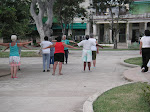
Less than 300 miles from where I sit is a city of 2,000,000 people with a poor excuse for a transportation system. Havana has no subway, no ell, no streetcars, an antiquated and inefficient bus system, and the average citizen can’t afford to use the taxis. Fortunately the city is tightly compacted so most people walk to where they want to go.
When I first visited there, the busses were camellos hardly more than semi trucks where the passengers rode in the trailers. I was amazed at the rush-hour crowds waiting at main intersections—often more than two hundred people. Amazed, that is, until I saw a camello pull up, more than 100 people get out of the double doors in the middle of the trailer. Then more than 100 got on the trailer, and the tired old tractor truck ground through its gears to get up a little speed between stops. Of course there was no air conditioning, and every window was wide open.
The camello name (means camel) came from the twin humps of the trailer as the mid section with the doors was built closer to the street to make entrance and exit a step rather than a climb. Fidel and company replaced the last camellos only very recently with new busses from China, but there still aren’t enough of them.
Taxis prowl the city—usually clean new Peugeots or Hyundais. But they cost too much, and they only accept CUC’s, the Cuban convertible currency which average people don’t use. Thus taxis are only for tourists.
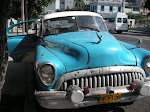
Using the old 50’s style US cars that local mechanics have kept running for 50 years or more is a possibility for a Cuban with a long way to go. They all know a hand signal code to ask for rides from the jitney driver. Nora Garcia showed us how that works as she stepped into the street to flag down a 53 Buick for a ride out to the suburbs. Nora quickly negotiated a price for our ride out to and back from the National Zoo in the suburbs.
Some people think of these iconic relics as collector cars, but most are beyond restoration and in bad condition that would not interest collectors. This one growled with a broken muffler and had two wires sticking out of a hole in the dashboard where the radio used to be. To start the engine the driver touched the two wires together and the engine started. I saw a floor shift and asked the driver about it as Buick got rid of those more than a dozen years before this one was new. The driver told me the car had a Toyota truck chasis, engine, and transmission. The only part of the old Buick left was the shell of the car. Some of these old cars have been rebuilt with Toyota engines repeatedly.
There is a train in Cuba, and it can take you from Old Havana east to Cardenas and Matanzas. A few use the trains to commute, but two legs and shoe leather are the most common transportation.
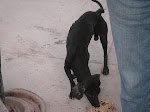
Everywhere you go you see dogs in the streets. All are loose, and many are pets with homes, but a good number are strays with a bleak future. Old, sick, and dying dogs out in public are bad for the tourist business, and the government rounds them up using teams of prisoners and trucks. The strays are kept for a few days and then dispatched with strychnine—a very unpleasant way to die.
But, more about Cuba’s treatment of man’s best friend in a later chapter.
Les Inglis
Friday, July 16, 2010


Friday, July 9, 2010
Evolution
Evolution
In 2007 we began to plan a system of support for Aniplant’s regular weekend spay-neuter clinics. One of the first assumptions I needed to make was the average size of the animals to be neutered. I figured a good sized US cat might weigh over 10 pounds, and dogs at home surely average between 20 and 30 pounds. But I had already noticed that the average Cuban dog is nowhere near 20 pounds. More like 15 pounds, I thought, and we used that weight to estimate the amount of Ketamine we would need per animal for anesthesia.
In succeeding years it has become clear the average dog is even less than 15 pounds as each order of Ketamine seems to go farther than we planned. Why are Cuba’s dogs so much smaller than those in the US?
Well, my engineering training has given me a healthy respect for science, yet I’m ill-disposed to engage in the war of words between religion and science about how everything came to be. Still, I must say Cuba’s small dogs are the result of an evolutionary process. Now before any of you write to take issue with that idea, please hear me out.
Cuba was part of the abundant western world until January 1959, when Castro’s revolution took over. In 1959 with 71% of Cuban businesses owned by the US, Cuba then mirrored our own 20th century success. But very shortly after the
Castro takeover, a schism developed between the US and Cuban governments. These differences rapidly led to the nationalization of US-owned businesses in Cuba and soon also to Cuba’s gravitating into the communist sphere (the only other option).
From the beginning, Cuban people fell onto hard times. Getting enough to eat was a daily problem, not always suitably solved. Pet dogs and cats, used to eating scraps from the family table, began to know the pangs of hunger on a regular basis. You might say, well OK, but 50 years is a short time to see an evolutionary change. And I’d agree with you if we were talking about people, but among dogs and cats, 50 years can easily be 50 generations. For a human comparison, 50 generations is about 1000 years, and surely we’ve seen many evolutionary changes in people in the last 1000 years. For example, the average person’s height and weight have increased as food became more abundant. The lifespan has increased due to modern sanitation and, to a lesser extent, due to modern medicine.
So 50 generations of too little food to eat shows up first in dogs and cats as it has done in Cuba. No doubt John Scopes and Charles Darwin would embrace my evolutionary canine weight theory while William Jennings Bryan would castigate me roundly.
Another side to this discussion is the tameness and near-symbiotic relationship between humans and dogs. That too came from evolutionary selection, as the wolves who had less fear of humans came to live nearer them, ate their leftovers, and gradually took up joint endeavors like sheep herding, protecting homes, etc.
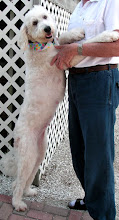
And when Peachy, my beautiful rescued Golden Doodle barks at strangers, I can sense traces of ancient wolves standing guard in my home, and I can thank the process of natural selection.
Les Inglis
In 2007 we began to plan a system of support for Aniplant’s regular weekend spay-neuter clinics. One of the first assumptions I needed to make was the average size of the animals to be neutered. I figured a good sized US cat might weigh over 10 pounds, and dogs at home surely average between 20 and 30 pounds. But I had already noticed that the average Cuban dog is nowhere near 20 pounds. More like 15 pounds, I thought, and we used that weight to estimate the amount of Ketamine we would need per animal for anesthesia.
In succeeding years it has become clear the average dog is even less than 15 pounds as each order of Ketamine seems to go farther than we planned. Why are Cuba’s dogs so much smaller than those in the US?
Well, my engineering training has given me a healthy respect for science, yet I’m ill-disposed to engage in the war of words between religion and science about how everything came to be. Still, I must say Cuba’s small dogs are the result of an evolutionary process. Now before any of you write to take issue with that idea, please hear me out.
Cuba was part of the abundant western world until January 1959, when Castro’s revolution took over. In 1959 with 71% of Cuban businesses owned by the US, Cuba then mirrored our own 20th century success. But very shortly after the
Castro takeover, a schism developed between the US and Cuban governments. These differences rapidly led to the nationalization of US-owned businesses in Cuba and soon also to Cuba’s gravitating into the communist sphere (the only other option).
From the beginning, Cuban people fell onto hard times. Getting enough to eat was a daily problem, not always suitably solved. Pet dogs and cats, used to eating scraps from the family table, began to know the pangs of hunger on a regular basis. You might say, well OK, but 50 years is a short time to see an evolutionary change. And I’d agree with you if we were talking about people, but among dogs and cats, 50 years can easily be 50 generations. For a human comparison, 50 generations is about 1000 years, and surely we’ve seen many evolutionary changes in people in the last 1000 years. For example, the average person’s height and weight have increased as food became more abundant. The lifespan has increased due to modern sanitation and, to a lesser extent, due to modern medicine.
So 50 generations of too little food to eat shows up first in dogs and cats as it has done in Cuba. No doubt John Scopes and Charles Darwin would embrace my evolutionary canine weight theory while William Jennings Bryan would castigate me roundly.
Another side to this discussion is the tameness and near-symbiotic relationship between humans and dogs. That too came from evolutionary selection, as the wolves who had less fear of humans came to live nearer them, ate their leftovers, and gradually took up joint endeavors like sheep herding, protecting homes, etc.
And when Peachy, my beautiful rescued Golden Doodle barks at strangers, I can sense traces of ancient wolves standing guard in my home, and I can thank the process of natural selection.
Les Inglis
Friday, July 2, 2010
Papa in Cuba
Papa in Cuba
For all the animosity that flows back and forth across the Florida Straits between the Cuban and US governments, the two nations celebrate one literary hero in common. That man was Ernest Hemingway. Papa Hemingway made his name in the US literary world, but, after a stint in Key West, he decided to make his home in Cuba, and landed there to stay in 1939 with Martha Gellhorn, his third wife. Martha, wanting roots in the area, soon began a search for a home to replace the hotel rooms they were using.
Finca Vegia is the home she found and talked Ernest into buying. It is situated on a high hill south of Havana, and from its front porch one can see the entire city of Havana and the sea beyond. Every tall building is identifiable in the hazy distance. Papa and Martha bought it, fixed it up, and lived there for the rest of his life. Ernest loved cats and dogs (some say cats more than dogs) and even established a little pet cemetery on the grounds. A half hour away is the village of Cojimar, where he kept his fishing yacht, Pilar.
Life at Finca Vegia was idyllic for them. They traveled; he fished; they received famous visitors; and they played in the Havana of the 40’s and 50’s, scene of tropical revelries and the city at their feet. Papa built a four story tower for an even better view of the city, and he fashioned a writing studio on the top floor. The first floor became a cattery for his many feline companions.
Today Finca Vegia (roughly “farm with a view”) is a Cuban national treasure and a first class museum. You can’t walk in the house, but you can walk all around it and peer into every window, all open for your photographic convenience. Fresh off a full restoration, the place is perfect and kept spotless with Ernest’s personal effects, like reading glasses and pens precisely placed on desks and tables, just as he left them. 9000 books strain shelves built in nearly every room. Ada Rosa Alfonso Rosales is the museum director, and, with her friendly staff are prepared to answer nearly every question about the Hemingway years at the Finca. The museum offices are in the old garage where Papa’s 1947 Lincoln Continental convertible and his 1956 Chrysler New Yorker convertible used to sleep. (Ada Rosa told me last November that the museum had found and acquired the Chrysler, and had plans to restore it.) Today’s descendents of Papa’s animals range through the area.
On my first visit to the finca, Nora Garcia and I were walking up its long driveway. I had just given her a donation, and she said, “That’s great, now Aniplant can become guardian of the animals who live at the museum.” In later years she has kept that promise, and I’ve seen her bring flea treatments and inoculations to the dogs and cats on our return visits. Aniplant has even conducted a spay-neuter clinic in the nearby town of San Francisco de Paula.
Thinking about those little dogs and cats, I can’t help feeling a connection with Papa, his characters, and his life.
Les Inglis
For all the animosity that flows back and forth across the Florida Straits between the Cuban and US governments, the two nations celebrate one literary hero in common. That man was Ernest Hemingway. Papa Hemingway made his name in the US literary world, but, after a stint in Key West, he decided to make his home in Cuba, and landed there to stay in 1939 with Martha Gellhorn, his third wife. Martha, wanting roots in the area, soon began a search for a home to replace the hotel rooms they were using.
Finca Vegia is the home she found and talked Ernest into buying. It is situated on a high hill south of Havana, and from its front porch one can see the entire city of Havana and the sea beyond. Every tall building is identifiable in the hazy distance. Papa and Martha bought it, fixed it up, and lived there for the rest of his life. Ernest loved cats and dogs (some say cats more than dogs) and even established a little pet cemetery on the grounds. A half hour away is the village of Cojimar, where he kept his fishing yacht, Pilar.
Life at Finca Vegia was idyllic for them. They traveled; he fished; they received famous visitors; and they played in the Havana of the 40’s and 50’s, scene of tropical revelries and the city at their feet. Papa built a four story tower for an even better view of the city, and he fashioned a writing studio on the top floor. The first floor became a cattery for his many feline companions.
Today Finca Vegia (roughly “farm with a view”) is a Cuban national treasure and a first class museum. You can’t walk in the house, but you can walk all around it and peer into every window, all open for your photographic convenience. Fresh off a full restoration, the place is perfect and kept spotless with Ernest’s personal effects, like reading glasses and pens precisely placed on desks and tables, just as he left them. 9000 books strain shelves built in nearly every room. Ada Rosa Alfonso Rosales is the museum director, and, with her friendly staff are prepared to answer nearly every question about the Hemingway years at the Finca. The museum offices are in the old garage where Papa’s 1947 Lincoln Continental convertible and his 1956 Chrysler New Yorker convertible used to sleep. (Ada Rosa told me last November that the museum had found and acquired the Chrysler, and had plans to restore it.) Today’s descendents of Papa’s animals range through the area.
On my first visit to the finca, Nora Garcia and I were walking up its long driveway. I had just given her a donation, and she said, “That’s great, now Aniplant can become guardian of the animals who live at the museum.” In later years she has kept that promise, and I’ve seen her bring flea treatments and inoculations to the dogs and cats on our return visits. Aniplant has even conducted a spay-neuter clinic in the nearby town of San Francisco de Paula.
Thinking about those little dogs and cats, I can’t help feeling a connection with Papa, his characters, and his life.
Les Inglis
Friday, June 25, 2010
One Man's Meat...
One Man’s Meat…
If there are two elements of Cuban society that work well, they are education and health systems. These systems intersect in the University where doctors for people and veterinarians for animals are trained. These professional workers deserve and receive the respect of the man in the street, but they are paid little better than any other workers. So the vets often operate a sideline offering medical care to pet dogs and cats.
A cow or a pig is a unit of production, and therefore it is considered the property of the state. In their regular jobs vets often care for farm animals, but your family’s dog or cat is of no interest to the state, only to his owners. Many of the medicines and supplies used by veterinarians for dogs and cats are scarce or nonexistent in Cuba—especially if they are packaged in the smaller doses made for dogs and cats. Products like flea and tick remedies, dog shampoos, and heartworm medicines are needed in Cuba, although they are abundant here.
In the US many of these meds have expiration dates, and it is illegal to use them after their expiration date. They often sit on a veterinarian’s shelf for months after their expiration dates and are then thrown away. In Cuba drugs have expiration dates too, and those dates are observed for humans, but not for dogs and cats. Sometimes a hospital will even donate outdated drugs to veterinarians.
We have been asking US vets to donate outdated pet meds to us for use in Cuba. We have collected significant quantities for Aniplant in Havana. Cuba allows each visitor to bring in 10 kilograms (22 pounds) of “health products,” and most travelers between Miami and Havana use this allowance to bring in soaps, shampoo, or toothpaste for relatives there. But on our trips we have each been carrying 10 kg of donated outdated vet meds and supplies.
Also notable among Cuban vets is a lack of pill-type medicines. When they have medicines, they are usually in injectable form. The outdated pills we bring in from the US are very welcome as they last longer, are easier to apply, and don’t require the use of sterile syringes.
Nora Garcia, the president of Aniplant, dispenses some vet services from her headquarters on Principe Street in Central Havana. But she knows countless other vets who work in her free weekend spay-neuter clinics. Nothing goes to waste in Cuba, and the extra outdated vet items she doesn’t use herself are traded to local vets for help in the clinics.
Cuban vets have become experts in which medicines last the longest after their expiration. One vet from Old Havana told me he had some old anesthesia drugs from the Cuban campaigns in Angola (in the 1990’s) that still worked.
Waste not, want not.
Les Inglis
If there are two elements of Cuban society that work well, they are education and health systems. These systems intersect in the University where doctors for people and veterinarians for animals are trained. These professional workers deserve and receive the respect of the man in the street, but they are paid little better than any other workers. So the vets often operate a sideline offering medical care to pet dogs and cats.
A cow or a pig is a unit of production, and therefore it is considered the property of the state. In their regular jobs vets often care for farm animals, but your family’s dog or cat is of no interest to the state, only to his owners. Many of the medicines and supplies used by veterinarians for dogs and cats are scarce or nonexistent in Cuba—especially if they are packaged in the smaller doses made for dogs and cats. Products like flea and tick remedies, dog shampoos, and heartworm medicines are needed in Cuba, although they are abundant here.
In the US many of these meds have expiration dates, and it is illegal to use them after their expiration date. They often sit on a veterinarian’s shelf for months after their expiration dates and are then thrown away. In Cuba drugs have expiration dates too, and those dates are observed for humans, but not for dogs and cats. Sometimes a hospital will even donate outdated drugs to veterinarians.
We have been asking US vets to donate outdated pet meds to us for use in Cuba. We have collected significant quantities for Aniplant in Havana. Cuba allows each visitor to bring in 10 kilograms (22 pounds) of “health products,” and most travelers between Miami and Havana use this allowance to bring in soaps, shampoo, or toothpaste for relatives there. But on our trips we have each been carrying 10 kg of donated outdated vet meds and supplies.
Also notable among Cuban vets is a lack of pill-type medicines. When they have medicines, they are usually in injectable form. The outdated pills we bring in from the US are very welcome as they last longer, are easier to apply, and don’t require the use of sterile syringes.
Nora Garcia, the president of Aniplant, dispenses some vet services from her headquarters on Principe Street in Central Havana. But she knows countless other vets who work in her free weekend spay-neuter clinics. Nothing goes to waste in Cuba, and the extra outdated vet items she doesn’t use herself are traded to local vets for help in the clinics.
Cuban vets have become experts in which medicines last the longest after their expiration. One vet from Old Havana told me he had some old anesthesia drugs from the Cuban campaigns in Angola (in the 1990’s) that still worked.
Waste not, want not.
Les Inglis
Friday, June 18, 2010
Radio Days
Radio Days
A trip to Cuba is like traveling backwards in a time machine. We’ve all seen the old cars still plying the streets of Old Havana and Vedado. But less known, perhaps, is the prominence of radio in the country’s communications. It’s far more patronized and important than television.
Yes, your hotel room in Havana has a TV set, but it is hooked up to satellite receivers unavailable legally to the man in the street. In your hotel room you can even get CNN, but a Havana man depends upon Radio Progreso for most of his news and some of his entertainment. Radio Progreso, owned and operated by the Cuban government presents news, music, talk shows, soap operas, and educational programming. You can listen to it on 630 kilo Hertz in many parts of Florida.
One daily educational show is about farming, and twice a week Nora Garcia presents a program on caring for your dogs and cats. Her shows are popular and heeded by a population that loves their pets but can’t afford veterinarians or prepared dog food.
Nora deals on the radio with timely issues to help pet owners and their animals. For instance, last November we visited Radio Progreso, just around the corner from Havana’s beautiful Hotel Nacional. It was the height of the H1N1 swine flu scare, and a rumor had started that you could catch the deadly flu from your dog or cat. Nora put that rumor to rest in no uncertain terms in her Saturday morning talk. There is no way to measure how many animals were saved from being banished from their homes in a hysterical, rumor-driven wave of fear, but Nora’s voice for the animals is known and respected, and reason prevailed in Cuba as swine flu season passed.
Radio Progreso has a big neon sign (probably straight out of the 1940’s) on its old building, and I had seen it several times before we arranged to watch Nora’s show. On arrival, we had to be admitted by the station manager, who turned out to be a genial host. But, as we entered, we had one more reminder of the old-timey Cuban environment. He apologized, telling us we’d have to use the stairs to the 4th floor studio as the elevator was on the fritz.
It was worth the climb to see another aspect of the tough fight Nora and Aniplant wage to protect animals in Cuba. a fight I’m proud to be a small part of.
Les Inglis
A trip to Cuba is like traveling backwards in a time machine. We’ve all seen the old cars still plying the streets of Old Havana and Vedado. But less known, perhaps, is the prominence of radio in the country’s communications. It’s far more patronized and important than television.
Yes, your hotel room in Havana has a TV set, but it is hooked up to satellite receivers unavailable legally to the man in the street. In your hotel room you can even get CNN, but a Havana man depends upon Radio Progreso for most of his news and some of his entertainment. Radio Progreso, owned and operated by the Cuban government presents news, music, talk shows, soap operas, and educational programming. You can listen to it on 630 kilo Hertz in many parts of Florida.
One daily educational show is about farming, and twice a week Nora Garcia presents a program on caring for your dogs and cats. Her shows are popular and heeded by a population that loves their pets but can’t afford veterinarians or prepared dog food.
Nora deals on the radio with timely issues to help pet owners and their animals. For instance, last November we visited Radio Progreso, just around the corner from Havana’s beautiful Hotel Nacional. It was the height of the H1N1 swine flu scare, and a rumor had started that you could catch the deadly flu from your dog or cat. Nora put that rumor to rest in no uncertain terms in her Saturday morning talk. There is no way to measure how many animals were saved from being banished from their homes in a hysterical, rumor-driven wave of fear, but Nora’s voice for the animals is known and respected, and reason prevailed in Cuba as swine flu season passed.
Radio Progreso has a big neon sign (probably straight out of the 1940’s) on its old building, and I had seen it several times before we arranged to watch Nora’s show. On arrival, we had to be admitted by the station manager, who turned out to be a genial host. But, as we entered, we had one more reminder of the old-timey Cuban environment. He apologized, telling us we’d have to use the stairs to the 4th floor studio as the elevator was on the fritz.
It was worth the climb to see another aspect of the tough fight Nora and Aniplant wage to protect animals in Cuba. a fight I’m proud to be a small part of.
Les Inglis
Friday, June 11, 2010
Making Ends Meet
Making Ends Meet
Cuba fought three wars for independence from Spain, a colonial power. Finally, with the help of the US, it gained independence in 1902. There followed a succession of Presidents, good and bad, with some really being dictators. Fulgencio Batista, who preceded Fidel Castro in power, was a former President who came back to power as a dictator. In the 1950’s he ran a country that had sold out to the American Mafia, and Cuba became a land of casinos, revelry, and mob influence. Many Cubans made a good living in those days, but those days have been gone for a long time in today’s Cuba.
Fidel Castro came to power on January 1, 1959, and he was welcomed by many, but not by the mobsters who ran the casinos. They were soon sent packing and the casinos closed down. Fidel got off to a rocky start that soon left him estranged with Americans (who owned 71% of Cuban businesses). After a series of nationalizations of US owned businesses, Cuba found itself an outcast in the western world. The only supporter Fidel could find was the Soviet Union.
Economically things went from bad to worse as the sugar industry (Cuba’s largest) steeply declined and a US embargo took hold. In a short time, “el comunismo” reigned in the “Pearl of the Antilles,” formerly the greatest colonial prize of Spain’s empire. Bad times prevailed, everyone pretended to work for the government, and the government pretended to pay them with shrinking pesos. Flash forward 50 years of struggle and you find the Cuba of today—where the average wage owner gets perhaps $20.00 a month and small rations of food staples. Nearly everyone cultivates a sideline to earn a little extra. The only exceptions are high political offices and those who run branches of foreign businesses in Cuba.
For Cuban companion animals this tight money problem is worse than it is for the people. Pets get leftovers to eat, or, if they’re lucky, slaughterhouse waste products (even chicken heads) cooked down with rice as a filler. Only the few rich can afford veterinary care unless they are connected with a moonlighting vet who might work evenings in his basement or garage. Yes, even professionals like veterinarians work a sideline for a little extra money. The average vet earns perhaps $250 a year in his government job. Surgery, when needed for dogs and cats is very rare, and the animals are expected to survive as best they can.
Jose, a veterinarian approaching retirement age, practices in Old Havana. To find his office, look in an empty lot walled off from the street with a rusted sheet metal fence. There’s a hole in the sheet metal, and if you duck down you can enter the yard. On one side, a concrete block lean-to like structure with a corrugated iron roof is Jose’s office. Inside are a few chairs, an old stainless steel table, a sterilizer, and a few shelves fixed to the walls. A few bottles of pills are on the shelves, and Jose shows me a cardboard box with vials of injectable meds he has scrounged from hospitals. They’re all out of date, but he rushes to tell me most still work. He even found medicines made for the Cuban campaign in Angola (in the ‘90’s) which still work as anesthesia.
Jose is a skilled vet with a good education (education still works well in Cuba), but with little support for supplies. But local people in his neighborhood love their pets and bring them to the shed to try to help them when they are sick. Jose is a regular at Aniplant’s weekend spay-neuter clinics as well. Cuban animals don’t have much going for them, but at least they have Jose.
Les Inglis
Cuba fought three wars for independence from Spain, a colonial power. Finally, with the help of the US, it gained independence in 1902. There followed a succession of Presidents, good and bad, with some really being dictators. Fulgencio Batista, who preceded Fidel Castro in power, was a former President who came back to power as a dictator. In the 1950’s he ran a country that had sold out to the American Mafia, and Cuba became a land of casinos, revelry, and mob influence. Many Cubans made a good living in those days, but those days have been gone for a long time in today’s Cuba.
Fidel Castro came to power on January 1, 1959, and he was welcomed by many, but not by the mobsters who ran the casinos. They were soon sent packing and the casinos closed down. Fidel got off to a rocky start that soon left him estranged with Americans (who owned 71% of Cuban businesses). After a series of nationalizations of US owned businesses, Cuba found itself an outcast in the western world. The only supporter Fidel could find was the Soviet Union.
Economically things went from bad to worse as the sugar industry (Cuba’s largest) steeply declined and a US embargo took hold. In a short time, “el comunismo” reigned in the “Pearl of the Antilles,” formerly the greatest colonial prize of Spain’s empire. Bad times prevailed, everyone pretended to work for the government, and the government pretended to pay them with shrinking pesos. Flash forward 50 years of struggle and you find the Cuba of today—where the average wage owner gets perhaps $20.00 a month and small rations of food staples. Nearly everyone cultivates a sideline to earn a little extra. The only exceptions are high political offices and those who run branches of foreign businesses in Cuba.
For Cuban companion animals this tight money problem is worse than it is for the people. Pets get leftovers to eat, or, if they’re lucky, slaughterhouse waste products (even chicken heads) cooked down with rice as a filler. Only the few rich can afford veterinary care unless they are connected with a moonlighting vet who might work evenings in his basement or garage. Yes, even professionals like veterinarians work a sideline for a little extra money. The average vet earns perhaps $250 a year in his government job. Surgery, when needed for dogs and cats is very rare, and the animals are expected to survive as best they can.
Jose, a veterinarian approaching retirement age, practices in Old Havana. To find his office, look in an empty lot walled off from the street with a rusted sheet metal fence. There’s a hole in the sheet metal, and if you duck down you can enter the yard. On one side, a concrete block lean-to like structure with a corrugated iron roof is Jose’s office. Inside are a few chairs, an old stainless steel table, a sterilizer, and a few shelves fixed to the walls. A few bottles of pills are on the shelves, and Jose shows me a cardboard box with vials of injectable meds he has scrounged from hospitals. They’re all out of date, but he rushes to tell me most still work. He even found medicines made for the Cuban campaign in Angola (in the ‘90’s) which still work as anesthesia.
Jose is a skilled vet with a good education (education still works well in Cuba), but with little support for supplies. But local people in his neighborhood love their pets and bring them to the shed to try to help them when they are sick. Jose is a regular at Aniplant’s weekend spay-neuter clinics as well. Cuban animals don’t have much going for them, but at least they have Jose.
Les Inglis
Friday, June 4, 2010
Family Walks miles for Their Pet
In Cuba, the government uses prisoners to range through the ciities in trucks to pick up stray dogs. Those poor souls are caged in a facility 15 miles west of Central Havana for 10 days without food but with water. On the 10th day they get a meal laced with strychnine. Adults and puppies, males and females, they lie on the cement cage floors for up to a few hours enduring an indescribable agony. Finally their bodies are relegated to a dump.
This ridding the streets of strays is done in the name of tourism, as the spectacle of straving animals wandering, fighting, or even languishing is bad for tourism, Cuba’s biggest source of hard currency. It doesn’t matter that the zoonosis center where they are killed is staffed with technicians trained to give IV injections—there is no budget for humane injectable drugs. It doesn’t matter the staff hates their work and would love to use IV injections—there’s no budget for anything but strychnine.
And how do the prisoner crews tell owned dogs from strays? Not very well apparently, as Cuban city dwellers usually have no yards, and their dogs are let out into the street to relieve themselves. Collars and tags are rare, and many family pets have been taken away in these stray sweeps. To atone for this, the families are permitted to go to the center and find their pet and take him home during the 10 day impoundment.
On my first trip to Arroyo, the zoonosis center, I remarked on how far it was from the town center as we rode in a cab. I thought it would be hard for a Cuban family to go to Arroyo to look for their pet, since most people don’t have cars. While we talked with the staff, a man, a woman, and a little boy appeared at the entrance at the top of the hill. After a brief conversation at the gate, they were allowed to walk through the long rows of cages until the boy screamed the name of his dog. Yes, against the odds, their long walk had paid off, and they found their dog. A while later, after filling out forms, they started the trek back home, this time leading the dog on a leash.
Nora Garcia, as President of Aniplant, is negotiating with the government to replace the strychnine with injections. If it happens, the change to humane euthanasia will use humane euthanasia medicines furnished by Aniplant, but it will be worthwhile to the 2000 dogs a year being sacrificed to tourism.
Les Inglis
In Cuba, the government uses prisoners to range through the ciities in trucks to pick up stray dogs. Those poor souls are caged in a facility 15 miles west of Central Havana for 10 days without food but with water. On the 10th day they get a meal laced with strychnine. Adults and puppies, males and females, they lie on the cement cage floors for up to a few hours enduring an indescribable agony. Finally their bodies are relegated to a dump.
This ridding the streets of strays is done in the name of tourism, as the spectacle of straving animals wandering, fighting, or even languishing is bad for tourism, Cuba’s biggest source of hard currency. It doesn’t matter that the zoonosis center where they are killed is staffed with technicians trained to give IV injections—there is no budget for humane injectable drugs. It doesn’t matter the staff hates their work and would love to use IV injections—there’s no budget for anything but strychnine.
And how do the prisoner crews tell owned dogs from strays? Not very well apparently, as Cuban city dwellers usually have no yards, and their dogs are let out into the street to relieve themselves. Collars and tags are rare, and many family pets have been taken away in these stray sweeps. To atone for this, the families are permitted to go to the center and find their pet and take him home during the 10 day impoundment.
On my first trip to Arroyo, the zoonosis center, I remarked on how far it was from the town center as we rode in a cab. I thought it would be hard for a Cuban family to go to Arroyo to look for their pet, since most people don’t have cars. While we talked with the staff, a man, a woman, and a little boy appeared at the entrance at the top of the hill. After a brief conversation at the gate, they were allowed to walk through the long rows of cages until the boy screamed the name of his dog. Yes, against the odds, their long walk had paid off, and they found their dog. A while later, after filling out forms, they started the trek back home, this time leading the dog on a leash.
Nora Garcia, as President of Aniplant, is negotiating with the government to replace the strychnine with injections. If it happens, the change to humane euthanasia will use humane euthanasia medicines furnished by Aniplant, but it will be worthwhile to the 2000 dogs a year being sacrificed to tourism.
Les Inglis
Subscribe to:
Posts (Atom)
